Centralian earless dragon (Tympanocryptis centralis)
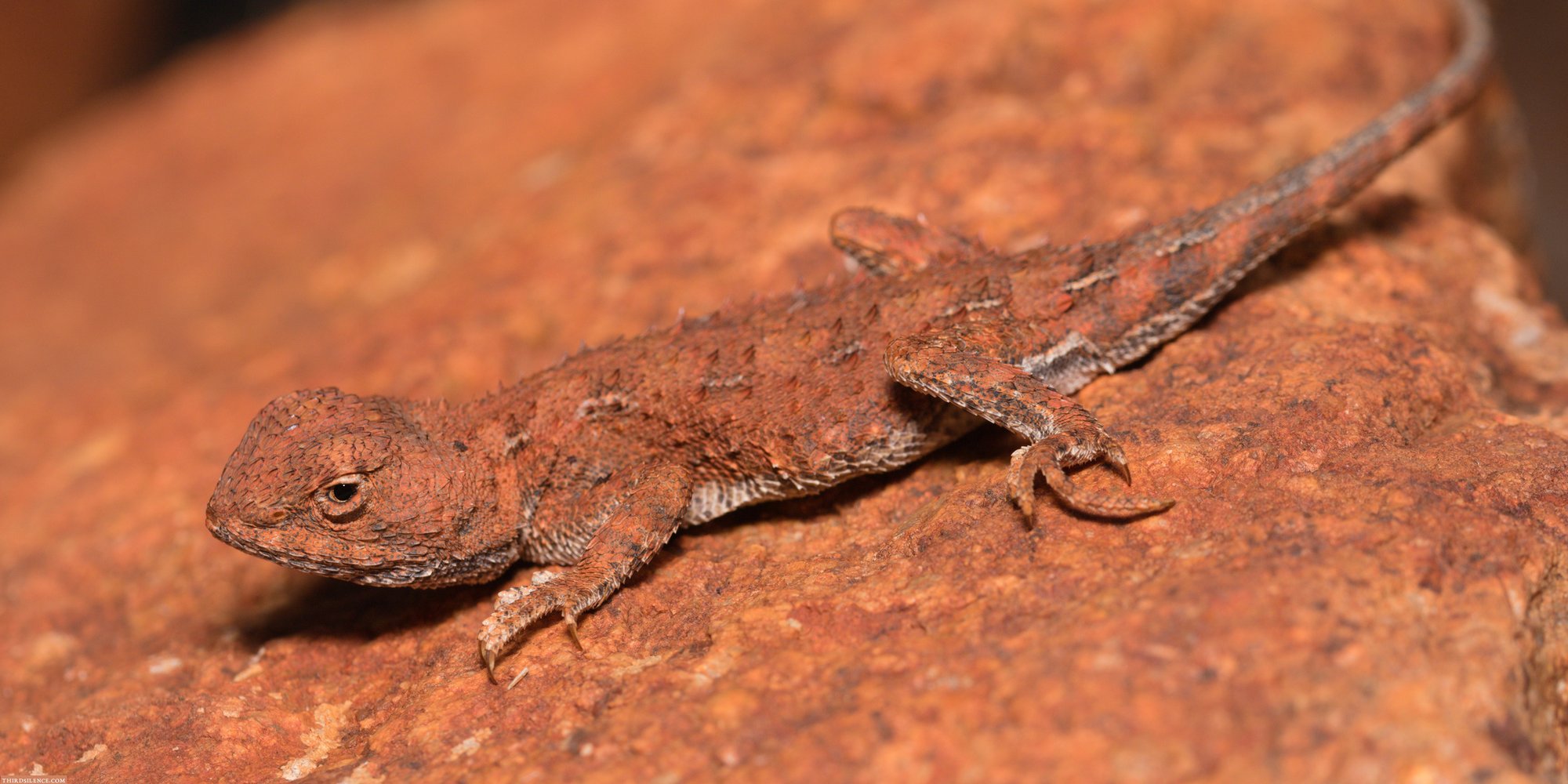
Agamas · Difficulty: Expert
Key facts and care guidance for Centralian earless dragon (Tympanocryptis centralis) (origin: The arid central region of Australia: NT, SA, WA; stony and gibber-like dry habitats (the central pebble dragon)). Adult size around approx. 12–14 cm total length (females somewhat larger than males). Life expectancy unknown, estimated at 3–5 years. The values below are carefully researched guidance.
Short answers
Centralian earless dragon: How big does the enclosure need to be?
80 × 50 × 50 cm for a single animal or a pair; 120 × 60 × 60 cm for a group (1 male, 2–3 females).
Centralian earless dragon: What temperature does it need?
Daytime 28–34 °C, basking spot 42–48 °C, at night 15–20 °C.
Centralian earless dragon: Does it need UVB lighting?
UVB: UVB needed (Ferguson zone 4, UV index 5–8; full desert sun).
Centralian earless dragon: How long do they live?
Life expectancy: unknown, estimated at 3–5 years.
Centralian earless dragon: Is it suitable for beginners?
No – better suited to experienced keepers (difficulty: Expert).
Climate
- Daytime temperature
- 28–34 °C
- Night temperature
- 15–20 °C
- Basking spot
- 42–48 °C
- Humidity
- 25–45 % (arid, central Australia)
- UVB
- UVB needed (Ferguson zone 4, UV index 5–8; full desert sun)
Enclosure
- Minimum size
- 80 × 50 × 50 cm for a single animal or a pair; 120 × 60 × 60 cm for a group (1 male, 2–3 females)
- Substrate
- Red-brown sand-loam with a covering of gravel or scree and flat stones
Feeding
- Food
- Omnivorous: small grasshoppers, crickets, house crickets, large fruit flies, firebrats and small roaches, plus regular dandelion, herbs, flowers and lettuce
- Feeding interval
- Insects about 3×/week, plant matter about 5×/week, plus 1–2 fasting days; gravid females more often, juveniles daily
Key facts
- Adult size
- approx. 12–14 cm total length (females somewhat larger than males)
- Life expectancy
- unknown, estimated at 3–5 years
- Origin
- The arid central region of Australia: NT, SA, WA; stony and gibber-like dry habitats (the central pebble dragon)
- Protection status
- Protected: CITES Appendix III, EU Annex C - proof of origin required at purchase and resale. Australian native wildlife, export banned under the EPBC Act (no legal EU trade).
- Brumation
- Winter rest recommended: 2–3 months at 16–18 °C (roughly November to January), without a heat lamp and with lighting shortened to around 10 hours; important for breeding
- Cohabitation
- Single housing is possible, as is a year-round group of 1 male and 1–3 females, because females are barely territorial. Never two males together. A way to separate them should always be on hand.
Notes
A small arid ground dweller; no husbandry literature, so the figures are derived from its habitat. Not in the trade. It camouflages itself on stony ground.
Do you keep this species?
Add your animal to Reptoria – Reptoria reminds you about feeding and shedding. Add your animal for free →
Look for Centralian earless dragon (Tympanocryptis centralis) in the marketplace →
Related species
- Inland earless dragon (Tympanocryptis intima) – Expert
- Condamine earless dragon (Tympanocryptis condaminensis) – Expert
- Even-scaled earless dragon (Tympanocryptis uniformis) – Expert
- Long-tailed earless dragon (Tympanocryptis tetraporophora) – Intermediate
- Pebble-mimic dragon (Tympanocryptis cephalus) – Expert
- Fortescue earless dragon (Tympanocryptis fortescuensis) – Expert
- Lined earless dragon (Tympanocryptis lineata) – Expert
- Smooth-snouted earless dragon (Tympanocryptis parviceps) – Expert
What you need to start
To keep Centralian earless dragon (Tympanocryptis centralis) you typically need: a suitable enclosure (80 × 50 × 50 cm for a single animal or a pair; 120 × 60 × 60 cm for a group (1 male, 2–3 females)), substrate (Red-brown sand-loam with a covering of gravel or scree and flat stones), a heat source with a thermostat, UVB lighting, thermometer and hygrometer, a water dish and hides. You will find equipment in the Reptoria marketplace.
The complete, interactive care database is in the Reptoria app.
Last updated: 2 November 2026 · Editor: Reptoria editorial team · Sources include: wissen.reptilienkosmos.de, mountain-monitors.ch, dragonzoo.de, sauriakeller.at, australian-monitors.jimdofree.com
All values are non-binding guidance and do not replace expert advice. Research thoroughly from several sources before acquiring and keeping an animal, and observe the applicable law (species and animal protection in particular).