Common blue-tongued skink (Tiliqua scincoides)
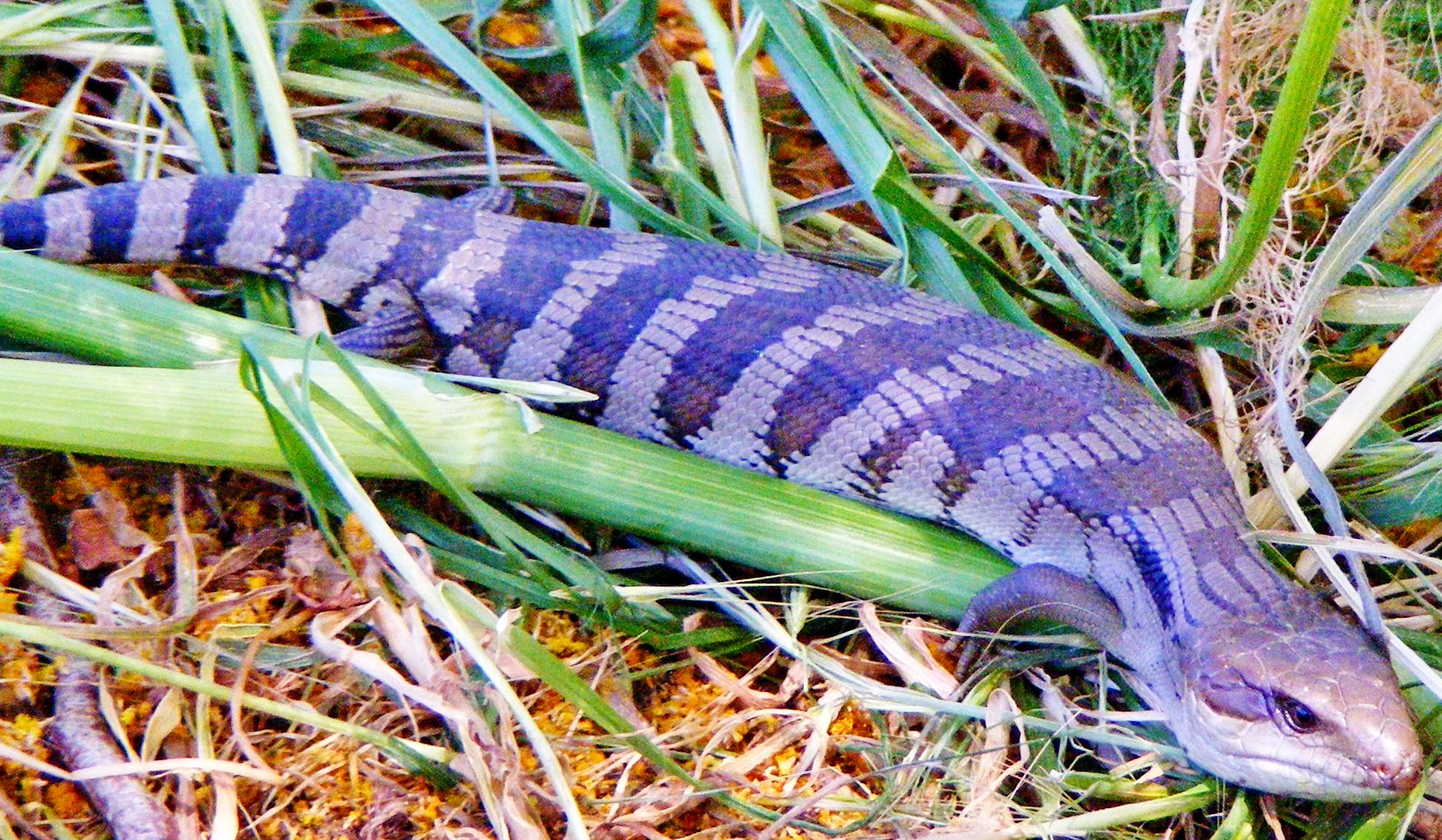
Skinks · Difficulty: Beginner
Key facts and care guidance for Common blue-tongued skink (Tiliqua scincoides) (origin: Eastern and northern Australia). Adult size around 45–55 cm. Life expectancy 15–20 years, individual animals over 30. The values below are carefully researched guidance.
Short answers
Common blue-tongued skink: How big does the enclosure need to be?
From 150×80×60 cm for a single animal, 200×80×80 cm for a pair; substrate 10–15 cm deep and diggable.
Common blue-tongued skink: What temperature does it need?
Daytime 25–30 °C, basking spot 35–40 °C, at night 18–22 °C.
Common blue-tongued skink: Does it need UVB lighting?
UVB: Essential (10–12 % UVB).
Common blue-tongued skink: How long do they live?
Life expectancy: 15–20 years, individual animals over 30.
Common blue-tongued skink: Is it suitable for beginners?
Yes – it is considered suitable for beginners (difficulty: Beginner).
Climate
- Daytime temperature
- 25–30 °C
- Night temperature
- 18–22 °C
- Basking spot
- 35–40 °C
- Humidity
- 40–60 %
- UVB
- Essential (10–12 % UVB)
Enclosure
- Minimum size
- from 150×80×60 cm for a single animal, 200×80×80 cm for a pair; substrate 10–15 cm deep and diggable
- Substrate
- A sand and soil mix or bark mulch
Feeding
- Food
- Omnivorous – vegetables, fruit, snails, insects, occasionally mice
- Feeding interval
- Adults 1–2×/week, juveniles 3×/week, babies daily.
Key facts
- Adult size
- 45–55 cm
- Life expectancy
- 15–20 years, individual animals over 30
- Origin
- Eastern and northern Australia
- Protection status
- —
- Brumation
- Optional: a light winter rest of ~6–10 weeks (cooler, shorter lighting, not below 13 °C), recommended mainly for the eastern form (T. s. scincoides) and for breeding; the northern form (T. s. intermedia) doesn't need one.
- Cohabitation
- Single housing; territorial, pairs only temporarily. The reason: several males fight over territory and basking spot until one is injured or permanently confined to a corner.
Notes
A robust omnivore and a good beginner's animal. A ground dweller (not a climber); UVB and a hot warm spot are essential.
Do you keep this species?
Add your animal to Reptoria – Reptoria reminds you about feeding and shedding. Add your animal for free →
Look for Common blue-tongued skink (Tiliqua scincoides) in the marketplace →
Related species
- Centralian blue-tongued skink (Tiliqua multifasciata) – Intermediate
- Halmahera blue-tongued skink (Tiliqua gigas gigas) – Intermediate
- Indonesian blue-tongued skink (Tiliqua gigas) – Beginner to intermediate
- Irian Jaya blue-tongued skink (Tiliqua sp. „Irian Jaya") – Intermediate
- Kei Island blue-tongued skink (Tiliqua gigas keyensis) – Intermediate
- Shingleback skink (Tiliqua rugosa) – Intermediate
- Merauke blue-tongued skink (Tiliqua gigas evanescens) – Intermediate
- Northern blue-tongued skink (Tiliqua scincoides intermedia) – Beginner
What you need to start
To keep Common blue-tongued skink (Tiliqua scincoides) you typically need: a suitable enclosure (from 150×80×60 cm for a single animal, 200×80×80 cm for a pair; substrate 10–15 cm deep and diggable), substrate (A sand and soil mix or bark mulch), a heat source with a thermostat, UVB lighting, thermometer and hygrometer, a water dish and hides. You will find equipment in the Reptoria marketplace.
The complete, interactive care database is in the Reptoria app.
Last updated: 4 November 2026 · Editor: Reptoria editorial team · Sources include: megazoo-nord.de, exotische-tierwelt.de, tieranzeigen.at, terraon.de, einrichtungsbeispiele.de
All values are non-binding guidance and do not replace expert advice. Research thoroughly from several sources before acquiring and keeping an animal, and observe the applicable law (species and animal protection in particular).