Dice snake (Natrix tessellata)
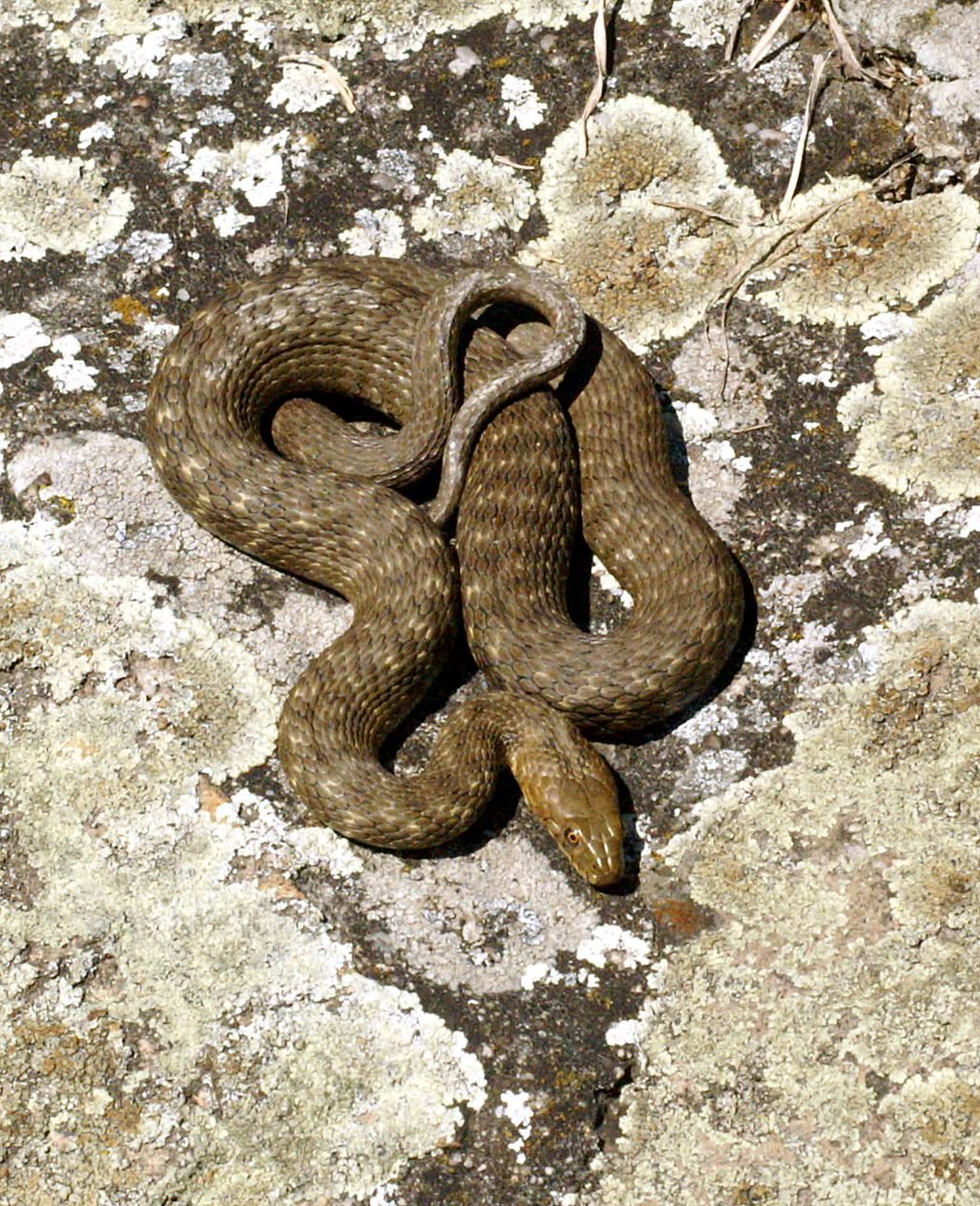
Snakes · Difficulty: Expert
Key facts and care guidance for Dice snake (Natrix tessellata) (origin: Southern and eastern Europe to Central Asia; native to Germany (the Rhine, Moselle, Lahn and Nahe – locally), critically endangered). Adult size around females 100–130 cm, males 70–90 cm. Life expectancy 15–20 years. The values below are carefully researched guidance.
Short answers
Dice snake: How big does the enclosure need to be?
From 165×65×65 cm (minimum size according to the 1997 expert report, Eurasian water snakes).
Dice snake: What temperature does it need?
Daytime 22–28 °C, basking spot 30–35 °C (basking spot above water or land), at night 16–20 °C.
Dice snake: Does it need UVB lighting?
UVB: UVB recommended (diurnal, basks).
Dice snake: How long do they live?
Life expectancy: 15–20 years.
Dice snake: Is it suitable for beginners?
No – better suited to experienced keepers (difficulty: Expert).
Climate
- Daytime temperature
- 22–28 °C
- Night temperature
- 16–20 °C
- Basking spot
- 30–35 °C (basking spot above water or land)
- Humidity
- 50–70 %
- UVB
- UVB recommended (diurnal, basks)
Enclosure
- Minimum size
- from 165×65×65 cm (minimum size according to the 1997 expert report, Eurasian water snakes)
- Substrate
- Absorbent substrate; a very large water section for swimming and diving, a land section with a basking spot and hides
Feeding
- Food
- Almost exclusively fish (smelt and others, live or frozen); adding vitamin B1 is essential
- Feeding interval
- adults every 7–10 days, juveniles every ~5 days
Key facts
- Adult size
- females 100–130 cm, males 70–90 cm
- Life expectancy
- 15–20 years
- Origin
- Southern and eastern Europe to Central Asia; native to Germany (the Rhine, Moselle, Lahn and Nahe – locally), critically endangered
- Protection status
- Strictly protected: Habitats Directive Annex IV, "strictly protected" under German nature conservation law, Federal Species Protection Ordinance; German Red List "Critically Endangered"; registration required, only legal captive-bred animals with proof of origin – wild collection is strictly prohibited
- Brumation
- A winter rest is essential: several months from about October or November to April at ~5–8 °C (at least ~6 weeks)
- Cohabitation
- Keeping it singly is the least stressful option. Pair or group housing is possible in a very large, deep enclosure if feeding is strictly separated - food competition is documented in this species and makes group housing more demanding than in the grass snake.
Notes
A strongly water-bound, diving fish hunter → a very large, deep water basin is essential. High legal requirements because of its strict protected status. A fish specialist → vitamin B1 is essential against thiamine deficiency. A winter rest is essential. A demanding species.
Do you keep this species?
Add your animal to Reptoria – Reptoria reminds you about feeding and shedding. Add your animal for free →
Look for Dice snake (Natrix tessellata) in the marketplace →
Related species
- Barred grass snake (Natrix helvetica) – Intermediate
- Grass snake (Natrix natrix) – Intermediate
- Viperine water snake (Natrix maura) – Intermediate
- Ahumada's alpine garter snake (Thamnophis ahumadai) – Expert
- Northern water snake (Nerodia sipedon) – Intermediate
- Bogert's garter snake (Thamnophis bogerti) – Expert
- Dekay's brown snake (Storeria dekayi) – Intermediate
- Butler's garter snake (Thamnophis butleri) – Intermediate
What you need to start
To keep Dice snake (Natrix tessellata) you typically need: a suitable enclosure (from 165×65×65 cm (minimum size according to the 1997 expert report, Eurasian water snakes)), substrate (Absorbent substrate; a very large water section for swimming and diving, a land section with a basking spot and hides), a heat source with a thermostat, UVB lighting, thermometer and hygrometer, a water dish and hides. You will find equipment in the Reptoria marketplace.
The complete, interactive care database is in the Reptoria app.
Last updated: 9 October 2026 · Editor: Reptoria editorial team · Sources include: https://de.wikipedia.org/wiki/W%C3%BCrfelnatter, https://reptile-database.reptarium.cz/species?genus=Natrix&species=tessellata
All values are non-binding guidance and do not replace expert advice. Research thoroughly from several sources before acquiring and keeping an animal, and observe the applicable law (species and animal protection in particular).