Grass snake (Natrix natrix)
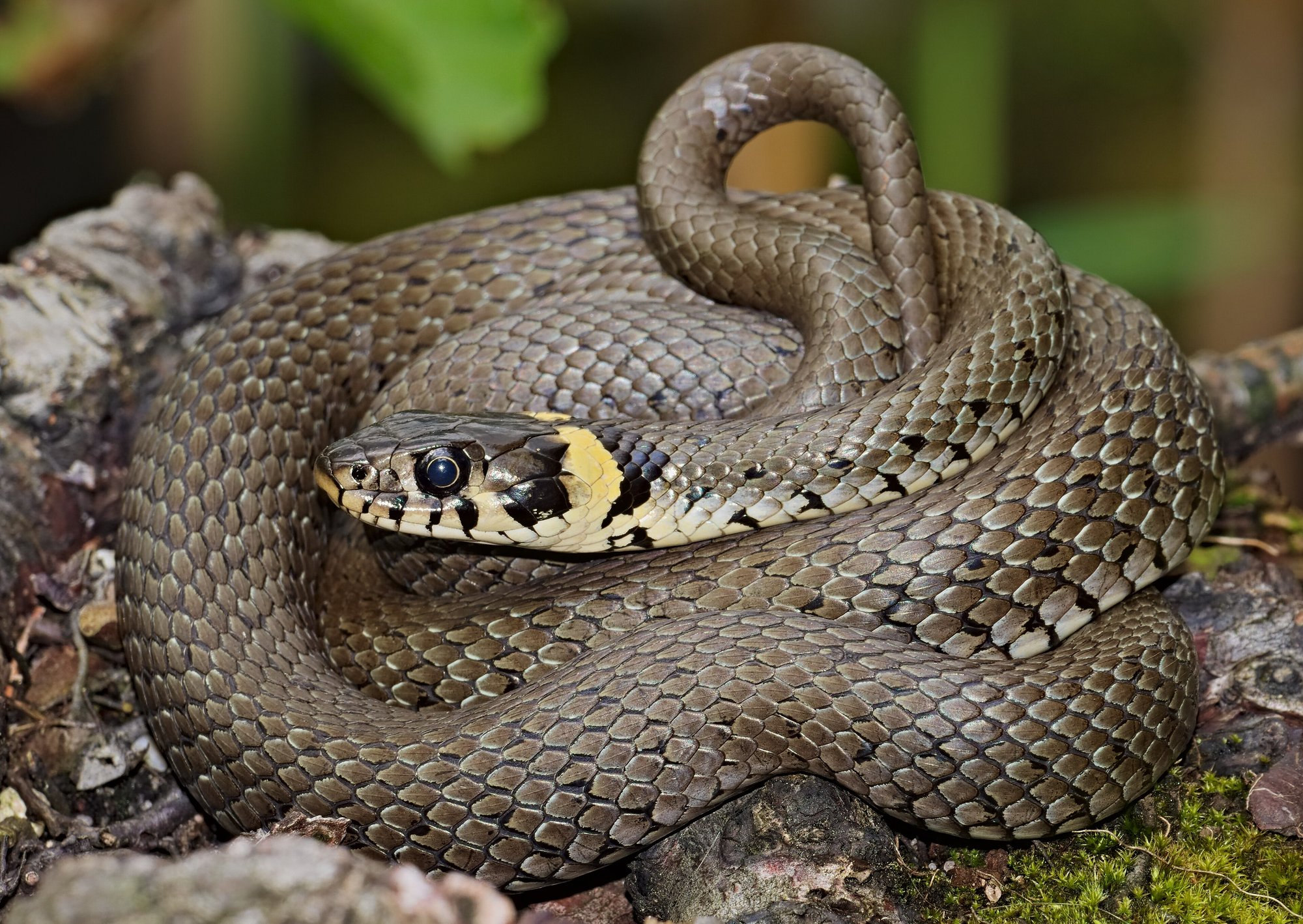
Snakes · Difficulty: Intermediate
Key facts and care guidance for Grass snake (Natrix natrix) (origin: Europe (native to Germany) to Central Asia). Adult size around females 100–120 cm (up to 150 cm), males 70–90 cm. Life expectancy 15–20 years. The values below are carefully researched guidance.
Short answers
Grass snake: How big does the enclosure need to be?
From 190×75×75 cm (minimum size according to the 1997 expert report, Eurasian water snakes); with a large water pool.
Grass snake: What temperature does it need?
Daytime 20–26 °C, basking spot 30–35 °C (basking spot), at night 15–20 °C.
Grass snake: Does it need UVB lighting?
UVB: UVB recommended (a diurnal sun-worshipper, Ferguson zone 2).
Grass snake: How long do they live?
Life expectancy: 15–20 years.
Grass snake: Is it suitable for beginners?
Rather not – it is considered an intermediate species (difficulty: Intermediate).
Climate
- Daytime temperature
- 20–26 °C
- Night temperature
- 15–20 °C
- Basking spot
- 30–35 °C (basking spot)
- Humidity
- 50–70 %
- UVB
- UVB recommended (a diurnal sun-worshipper, Ferguson zone 2)
Enclosure
- Minimum size
- from 190×75×75 cm (minimum size according to the 1997 expert report, Eurasian water snakes); with a large water pool
- Substrate
- Soil or a sand-soil mix, leaf litter and moss, a humid box; a large bath for swimming
Feeding
- Food
- Amphibians (frogs), fish (smelt or trout), rarely mice; add vitamin B1 when feeding fish
- Feeding interval
- adults ~1×/week, juveniles ~2×/week
Key facts
- Adult size
- females 100–120 cm (up to 150 cm), males 70–90 cm
- Life expectancy
- 15–20 years
- Origin
- Europe (native to Germany) to Central Asia
- Protection status
- Specially protected (German nature conservation law, Species Protection Ordinance Annex 1); registration required; only legal captive-bred animals with proof of origin – taking from the wild is prohibited
- Brumation
- A winter rest is essential: several months from about mid-October to March or April at ~4–8 °C
- Cohabitation
- Keeping it singly is the least stressful option - grass snakes are solitary in the wild and only come together in larger numbers for mating and communal hibernation. Pair or group housing in a spacious enclosure is possible and commonly practised as long as feeding is done separately; the feeding accident remains a risk.
Notes
A native, specially protected species → keep it only with proof of origin or as a legal captive-bred animal. It eats mainly amphibians and fish; under stress it plays dead and releases a foul-smelling cloacal secretion. A winter rest is indispensable for health and breeding.
Do you keep this species?
Add your animal to Reptoria – Reptoria reminds you about feeding and shedding. Add your animal for free →
Related species
- Barred grass snake (Natrix helvetica) – Intermediate
- Viperine water snake (Natrix maura) – Intermediate
- Dice snake (Natrix tessellata) – Expert
- Ahumada's alpine garter snake (Thamnophis ahumadai) – Expert
- Northern water snake (Nerodia sipedon) – Intermediate
- Bogert's garter snake (Thamnophis bogerti) – Expert
- Dekay's brown snake (Storeria dekayi) – Intermediate
- Butler's garter snake (Thamnophis butleri) – Intermediate
What you need to start
To keep Grass snake (Natrix natrix) you typically need: a suitable enclosure (from 190×75×75 cm (minimum size according to the 1997 expert report, Eurasian water snakes); with a large water pool), substrate (Soil or a sand-soil mix, leaf litter and moss, a humid box; a large bath for swimming), a heat source with a thermostat, UVB lighting, thermometer and hygrometer, a water dish and hides. You will find equipment in the Reptoria marketplace.
The complete, interactive care database is in the Reptoria app.
Last updated: 9 October 2026 · Editor: Reptoria editorial team · Sources include: https://de.wikipedia.org/wiki/Ringelnatter, https://reptile-database.reptarium.cz/species?genus=Natrix&species=natrix, https://reptilica.de/ringelnatter
All values are non-binding guidance and do not replace expert advice. Research thoroughly from several sources before acquiring and keeping an animal, and observe the applicable law (species and animal protection in particular).