Giant centipede (Ethmostigmus rubripes)
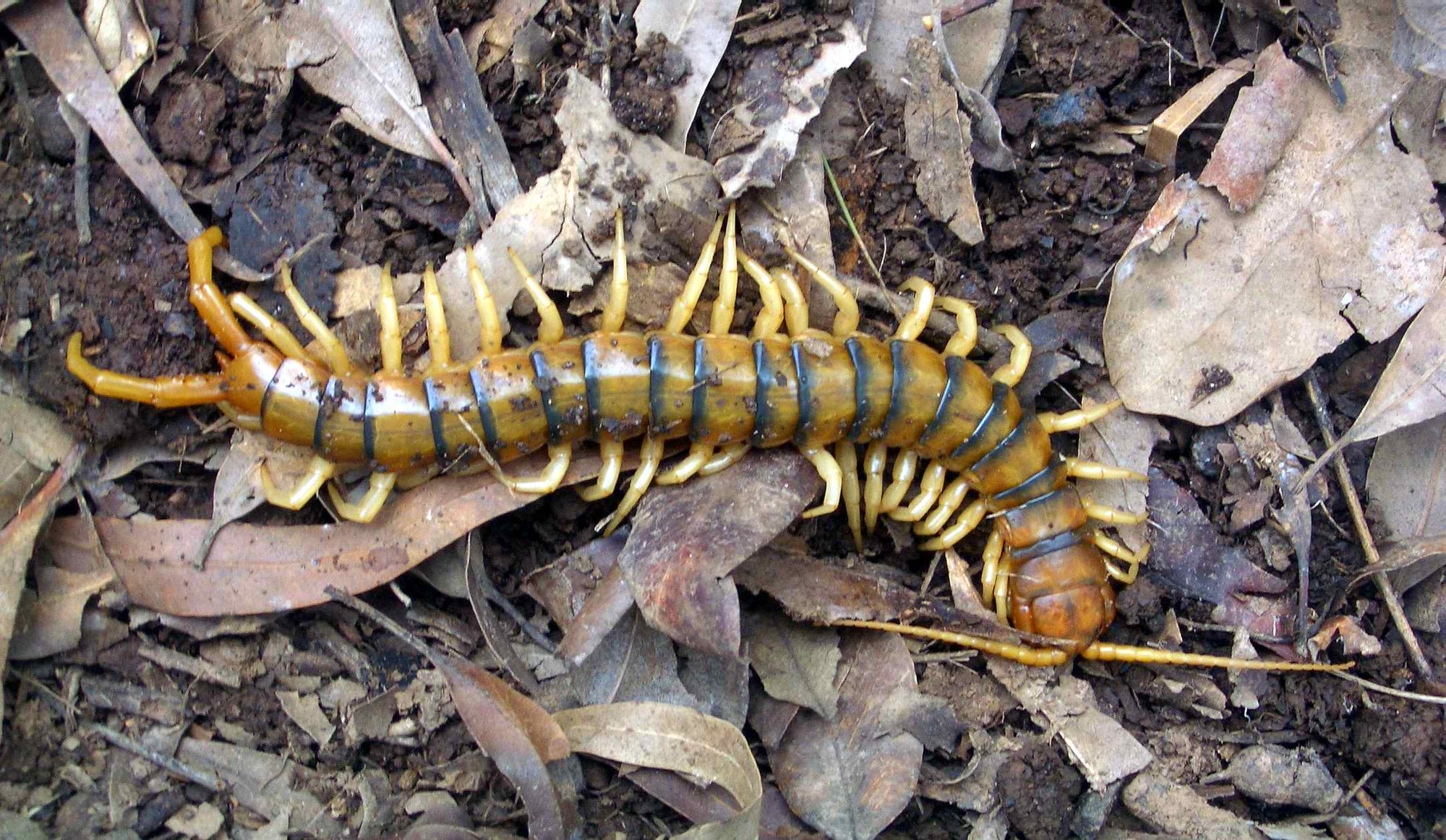
Invertebrates · Difficulty: Expert
Key facts and care guidance for Giant centipede (Ethmostigmus rubripes) (origin: Australia (widespread, from desert to rainforest), plus New Guinea and parts of Southeast Asia; three subspecies and many colour forms). Adult size around approx. 10–16 cm, individual animals up to about 20 cm. Life expectancy up to ~5 years (sometimes more). The values below are carefully researched guidance.
Short answers
Giant centipede: How big does the enclosure need to be?
30×30×30 cm, horizontal, escape-proof.
Giant centipede: What temperature does it need?
Daytime 24–29 °C, at night ~20–22 °C.
Giant centipede: Does it need UVB lighting?
UVB: No UVB needed.
Giant centipede: How long do they live?
Life expectancy: up to ~5 years (sometimes more).
Giant centipede: Is it suitable for beginners?
No – better suited to experienced keepers (difficulty: Expert).
Climate
- Daytime temperature
- 24–29 °C
- Night temperature
- ~20–22 °C
- Basking spot
- —
- Humidity
- 75–85 % (humidity gradient)
- UVB
- No UVB needed
Enclosure
- Minimum size
- 30×30×30 cm, horizontal, escape-proof
- Substrate
- 10–15 cm of damp coco humus plus sphagnum, bark and cork hides
Feeding
- Food
- Insects (crickets, roaches)
- Feeding interval
- 1–2×/week
Key facts
- Adult size
- approx. 10–16 cm, individual animals up to about 20 cm
- Life expectancy
- up to ~5 years (sometimes more)
- Origin
- Australia (widespread, from desert to rainforest), plus New Guinea and parts of Southeast Asia; three subspecies and many colour forms
- Protection status
- No CITES; export from Australia is regulated (mostly captive-bred animals in the trade)
- Brumation
- None (for the tropical forms)
- Cohabitation
- Keep them strictly singly. Solitary and cannibalistic. The reason is not fighting but feeding: these animals take anything that fits in the mouth, and a second animal in the enclosure counts.
Notes
Venomous and defensive – no handling. A humid but well-ventilated and escape-proof enclosure; mist one side only (a humidity gradient).
Do you keep this species?
Add your animal to Reptoria – Reptoria reminds you about feeding and shedding. Add your animal for free →
Look for Giant centipede (Ethmostigmus rubripes) in the marketplace →
Related species
- Blue-ring centipede (Ethmostigmus trigonopodus) – Intermediate
- Amazonian giant centipede (Scolopendra gigantea) – Intermediate to expert
- Chinese red-headed centipede (Scolopendra subspinipes) – Expert
- Chinese red-headed centipede (Scolopendra mutilans) – Expert
- Tanzanian blue ringleg centipede (Scolopendra morsitans) – Intermediate
- Indian tiger centipede (Scolopendra hardwickei) – Expert
- Caribbean giant centipede (Scolopendra alternans) – Expert
- Mediterranean banded centipede (Scolopendra cingulata) – Intermediate
What you need to start
To keep Giant centipede (Ethmostigmus rubripes) you typically need: a suitable enclosure (30×30×30 cm, horizontal, escape-proof), substrate (10–15 cm of damp coco humus plus sphagnum, bark and cork hides), a heat source with a thermostat, UVB lighting, thermometer and hygrometer, a water dish and hides. You will find equipment in the Reptoria marketplace.
The complete, interactive care database is in the Reptoria app.
Last updated: 9 October 2026 · Editor: Reptoria editorial team · Sources include: Wikipedia EN, australian.museum, dimensions.com, eu_annex.txt (lokal, VO (EU) 2026/1383), scolohub.com
All values are non-binding guidance and do not replace expert advice. Research thoroughly from several sources before acquiring and keeping an animal, and observe the applicable law (species and animal protection in particular).