Giant garter snake (Thamnophis gigas)
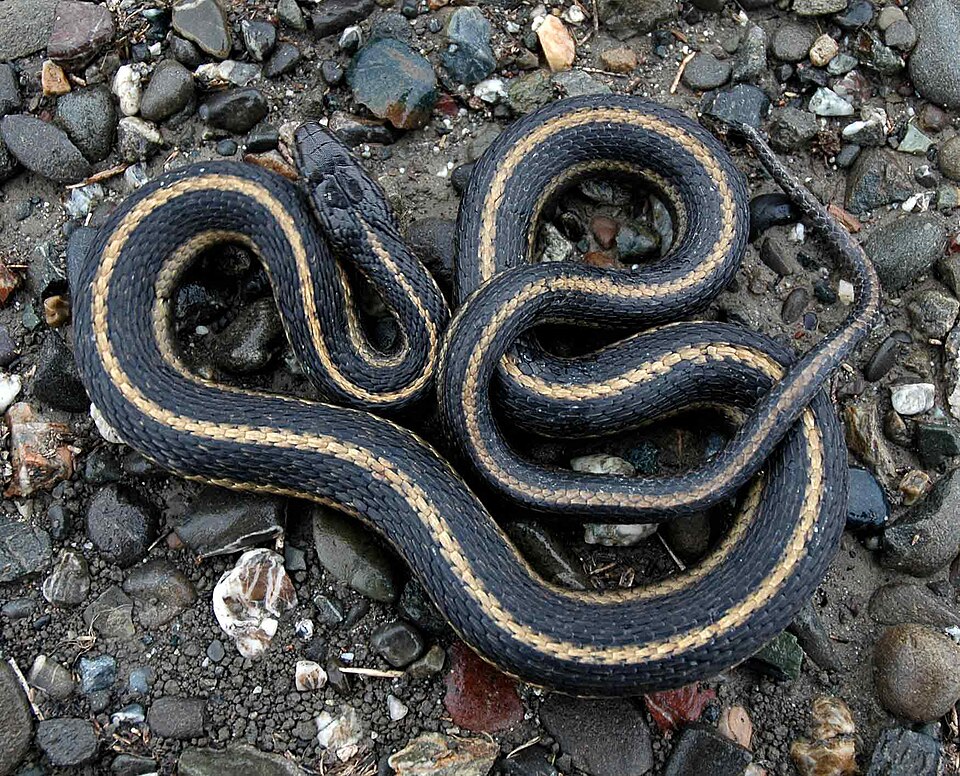
Snakes · Difficulty: Expert
Key facts and care guidance for Giant garter snake (Thamnophis gigas) (origin: USA: only California's Central Valley (Sacramento and San Joaquin valleys), lowlands up to about 120 m elevation). Adult size around 90–150 cm (females larger, rarely up to 165 cm – the largest garter snake). Life expectancy 10–15 years. The values below are carefully researched guidance.
Short answers
Giant garter snake: How big does the enclosure need to be?
From 190×115×75 cm (minimum size per the 1997 expert report, garter snakes; considerably more floor space for each additional animal).
Giant garter snake: What temperature does it need?
Daytime 24–30 °C, basking spot Basking spot 30–32 °C, at night 18–22 °C.
Giant garter snake: Does it need UVB lighting?
UVB: Recommended.
Giant garter snake: How long do they live?
Life expectancy: 10–15 years.
Giant garter snake: Is it suitable for beginners?
No – better suited to experienced keepers (difficulty: Expert).
Climate
- Daytime temperature
- 24–30 °C
- Night temperature
- 18–22 °C
- Basking spot
- Basking spot 30–32 °C
- Humidity
- 50–65 % (keep the land area dry; humidity comes from the large water section)
- UVB
- Recommended
Enclosure
- Minimum size
- from 190×115×75 cm (minimum size per the 1997 expert report, garter snakes; considerably more floor space for each additional animal)
- Substrate
- Aqua-terrarium: a large, shallow water section (at least a third of the floor) with dense planting, a dry land area of coco humus or a soil-sand mix, several hides and basking spots right at the water's edge
Feeding
- Food
- A pronounced fish and amphibian eater: in captivity mainly low-thiaminase fish (e.g. trout, smelt), plus earthworms; frozen-thawed mice or mouse fillets only if the snake accepts them (switching can take time)
- Feeding interval
- adults 1–2×/week, juveniles more often
Key facts
- Adult size
- 90–150 cm (females larger, rarely up to 165 cm – the largest garter snake)
- Life expectancy
- 10–15 years
- Origin
- USA: only California's Central Valley (Sacramento and San Joaquin valleys), lowlands up to about 120 m elevation
- Protection status
- Not listed under CITES
- Brumation
- A winter rest of 8–12 weeks at 8–12 °C
- Cohabitation
- Pairs or a small group are possible, but only in a very large aqua-terrarium; because of their size, keeping them singly is often more practical. Fish eaters strike hard at feeding time: always feed them singly, ideally in separate boxes, and only house animals of the same size together.
Notes
Hardly any captive experience; the values are derived from the habitat and from close relatives. Strongly tied to water in the wild and protected in the USA – animals from legal captive breeding are practically unobtainable in Europe. When feeding fish, choose low-thiaminase species.
Do you keep this species?
Add your animal to Reptoria – Reptoria reminds you about feeding and shedding. Add your animal for free →
Look for Giant garter snake (Thamnophis gigas) in the marketplace →
Related species
- Ahumada's alpine garter snake (Thamnophis ahumadai) – Expert
- Bogert's garter snake (Thamnophis bogerti) – Expert
- Butler's garter snake (Thamnophis butleri) – Intermediate
- Cope's mountain meadow snake (Thamnophis copei) – Expert
- Fox's mountain meadow snake (Thamnophis foxi) – Expert
- Yellow-throated garter snake (Thamnophis pulchrilatus) – Expert
- Common garter snake (Thamnophis sirtalis) – Beginner
- Godman's garter snake (Thamnophis godmani) – Expert
What you need to start
To keep Giant garter snake (Thamnophis gigas) you typically need: a suitable enclosure (from 190×115×75 cm (minimum size per the 1997 expert report, garter snakes; considerably more floor space for each additional animal)), substrate (Aqua-terrarium: a large, shallow water section (at least a third of the floor) with dense planting, a dry land area of coco humus or a soil-sand mix, several hides and basking spots right at the water's edge), a heat source with a thermostat, UVB lighting, thermometer and hygrometer, a water dish and hides. You will find equipment in the Reptoria marketplace.
The complete, interactive care database is in the Reptoria app.
Last updated: 27 October 2026 · Editor: Reptoria editorial team · Sources include: CaliforniaHerps: Giant Gartersnake – 91–165 cm, Jungtiere 22–29 cm – https://californiaherps.com/snakes/pages/t.gigas.html, Wikipedia EN: Giant garter snake – 94–165 cm, Weibchen größer – https://en.wikipedia.org/wiki/Giant_garter_snake, gartersnake.co.uk Maintenance (Gattung) – Thiaminase in Fisch, trockene Haltung – https://www.gartersnake.co.uk/maintenance/, gartersnake.co.uk Maintenance (Gattung) – Gruppenhaltung, Futterunfälle, trächtige Weibchen einzeln – https://www.gartersnake.co.uk/maintenance/, Center for Biological Diversity: Giant garter snake natural history – Spezialisierung auf kleine Fische – https://biologicaldiversity.org/species/reptiles/giant_garter_snake/natural_history.html
All values are non-binding guidance and do not replace expert advice. Research thoroughly from several sources before acquiring and keeping an animal, and observe the applicable law (species and animal protection in particular).