Giant prickly stick insect (Extatosoma tiaratum)
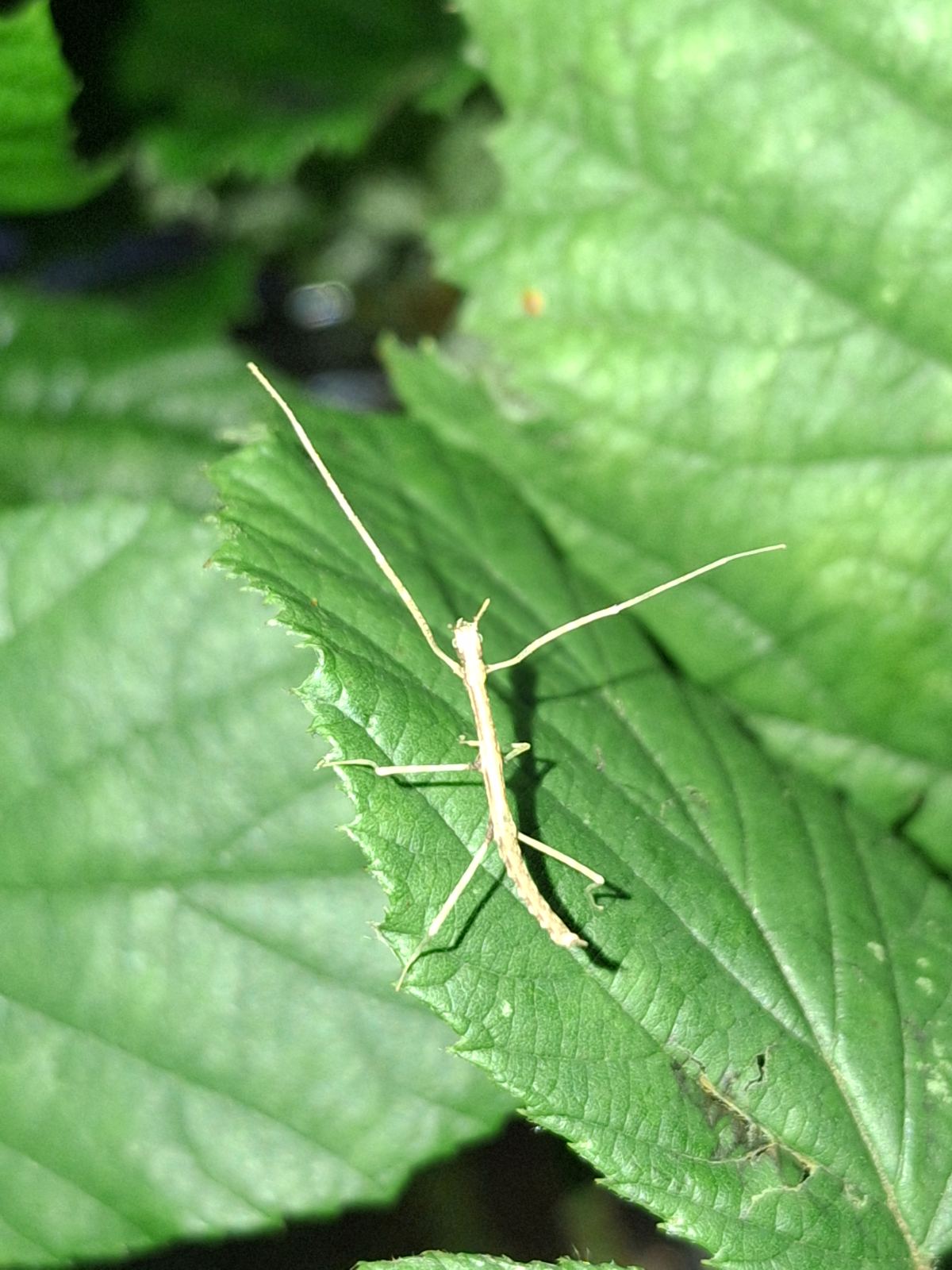
Invertebrates · Difficulty: Beginner
Key facts and care guidance for Giant prickly stick insect (Extatosoma tiaratum) (origin: Eastern Australia (Queensland, New South Wales) and New Guinea; tropical to subtropical, arboreal). Adult size around females approx. 12–15 cm (stocky, spined), males approx. 9–11 cm (slender, able to fly). Life expectancy females approx. 12–18 months, males approx. 5–6 months. The values below are carefully researched guidance.
Short answers
Giant prickly stick insect: How big does the enclosure need to be?
From 40×40×60 cm for 1–2 adult animals (height at least three times body length — moulting happens while hanging); correspondingly larger for groups.
Giant prickly stick insect: What temperature does it need?
Daytime 22–26 °C (20–28 °C tolerated), at night 18–22 °C (not permanently below 18 °C).
Giant prickly stick insect: Does it need UVB lighting?
UVB: No UVB needed; normal room lighting or daylight is enough.
Giant prickly stick insect: How long do they live?
Life expectancy: females approx. 12–18 months, males approx. 5–6 months.
Giant prickly stick insect: Is it suitable for beginners?
Yes – it is considered suitable for beginners (difficulty: Beginner).
Climate
- Daytime temperature
- 22–26 °C (20–28 °C tolerated)
- Night temperature
- 18–22 °C (not permanently below 18 °C)
- Basking spot
- —
- Humidity
- 60–80 %
- UVB
- No UVB needed; normal room lighting or daylight is enough
Enclosure
- Minimum size
- from 40×40×60 cm for 1–2 adult animals (height at least three times body length — moulting happens while hanging); correspondingly larger for groups
- Substrate
- Kitchen paper or slightly damp soil, coco humus or sand and moss; climbing branches for shedding upside down
Feeding
- Food
- A leaf-eater: mainly bramble and raspberry (Rubus), also oak, rose, hazel, firethorn, salal, eucalyptus and strawberry; stand the fresh leaves in water
- Feeding interval
- always offer fresh food leaves (continuous feeding); replace the leaves 1–2×/week
Key facts
- Adult size
- females approx. 12–15 cm (stocky, spined), males approx. 9–11 cm (slender, able to fly)
- Life expectancy
- females approx. 12–18 months, males approx. 5–6 months
- Origin
- Eastern Australia (Queensland, New South Wales) and New Guinea; tropical to subtropical, arboreal
- Protection status
- No CITES or special protection; widely available captive-bred
- Brumation
- None (keep them warm all year)
- Cohabitation
- Group keeping is straightforward – peaceful plant-eaters with no territoriality. Mind the space and food supply; a balanced sex ratio is recommended. (Documented as group-tolerant.)
Notes
A classic beginner's stick insect. Parthenogenesis is possible – unfertilised females produce only female clones. Sufficient height is essential: the moult happens hanging upside down, and too low an enclosure leads to moulting failures and deformities. The nymphs mimic ants. It eats its old skin after moulting. It can shed legs when threatened (autotomy).
Do you keep this species?
Add your animal to Reptoria – Reptoria reminds you about feeding and shedding. Add your animal for free →
Look for Giant prickly stick insect (Extatosoma tiaratum) in the marketplace →
Related species
- Annam stick insect (Ramulus artemis) – Beginner
- Brueckner's stick insect (Trachyaretaon brueckneri) – Beginner
- Ceylon leaf insect (Phyllium bioculatum) – Intermediate
- Chan's megastick (Phobaeticus chani) – Expert
- Giant spiny stick insect (Aretaon asperrimus) – Beginner
- Giant spiny stick insect (Eurycantha calcarata) – Beginner
- Jungle nymph (Heteropteryx dilatata) – Intermediate
- Common leaf insect (Phyllium siccifolium) – Intermediate
What you need to start
To keep Giant prickly stick insect (Extatosoma tiaratum) you typically need: a suitable enclosure (from 40×40×60 cm for 1–2 adult animals (height at least three times body length — moulting happens while hanging); correspondingly larger for groups), substrate (Kitchen paper or slightly damp soil, coco humus or sand and moss; climbing branches for shedding upside down), a heat source with a thermostat, UVB lighting, thermometer and hygrometer, a water dish and hides. You will find equipment in the Reptoria marketplace.
The complete, interactive care database is in the Reptoria app.
Last updated: 24 September 2026 · Editor: Reptoria editorial team · Sources include: insektenliebe.com, exotische-tierwelt.de, tropic-shop.de, megazoo-nord.de, einrichtungsbeispiele.de
All values are non-binding guidance and do not replace expert advice. Research thoroughly from several sources before acquiring and keeping an animal, and observe the applicable law (species and animal protection in particular).