Giant spiny stick insect (Eurycantha calcarata)
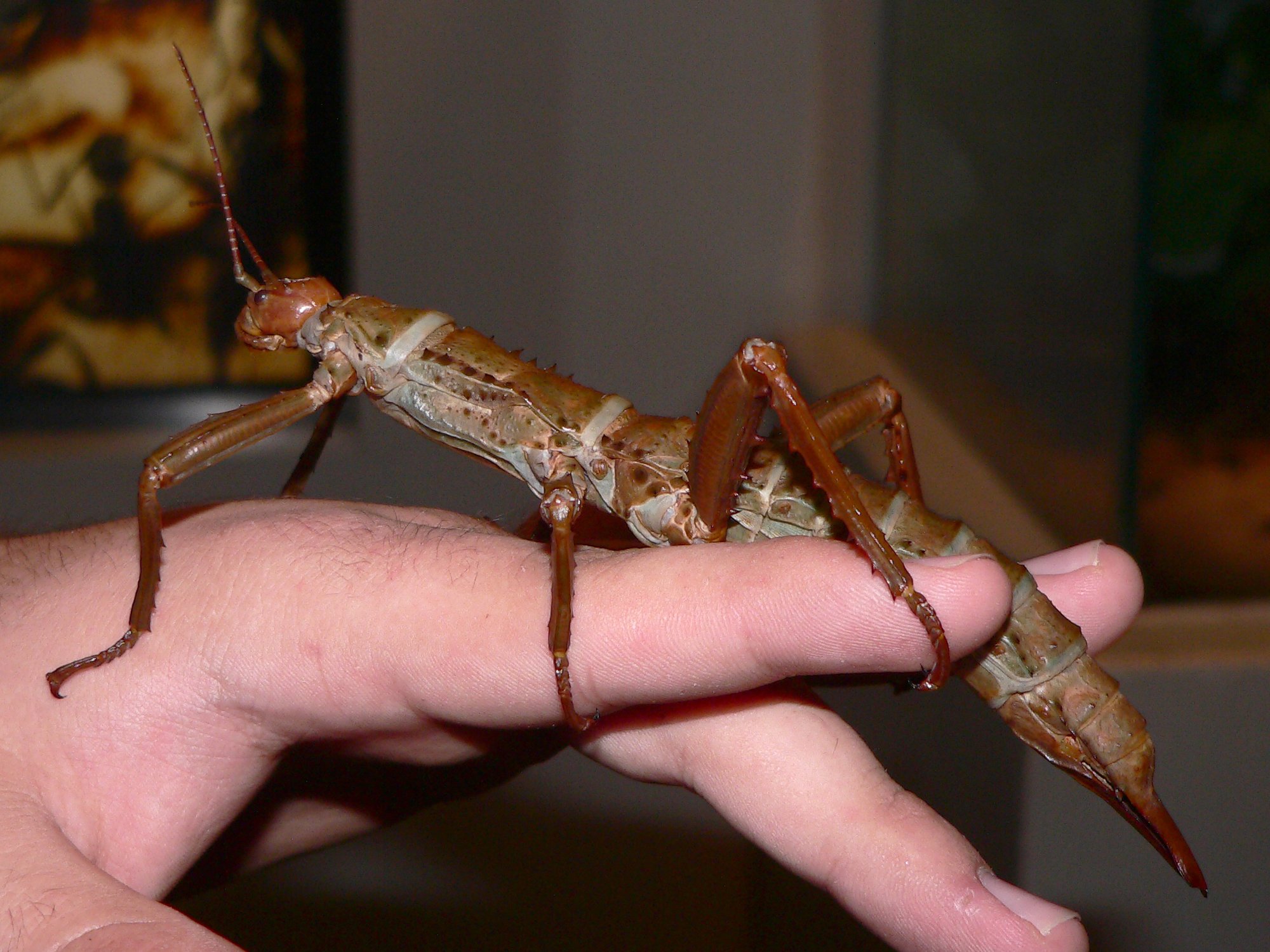
Invertebrates · Difficulty: Beginner
Key facts and care guidance for Giant spiny stick insect (Eurycantha calcarata) (origin: New Guinea, the Solomon Islands (humid lowland forest)). Adult size around females ~13–15 cm, males ~10 cm (stocky, wingless). Life expectancy approx. 10–18 months (figures range from 10–12 months to ~2 years). The values below are carefully researched guidance.
Short answers
Giant spiny stick insect: How big does the enclosure need to be?
30×30×45 cm (a pair or small group; larger is better, rather ground-oriented).
Giant spiny stick insect: What temperature does it need?
Daytime 20–25 °C, at night ~18 °C.
Giant spiny stick insect: Does it need UVB lighting?
UVB: No UVB needed.
Giant spiny stick insect: How long do they live?
Life expectancy: approx. 10–18 months (figures range from 10–12 months to ~2 years).
Giant spiny stick insect: Is it suitable for beginners?
Yes – it is considered suitable for beginners (difficulty: Beginner).
Climate
- Daytime temperature
- 20–25 °C
- Night temperature
- ~18 °C
- Basking spot
- —
- Humidity
- 70–80 %
- UVB
- No UVB needed
Enclosure
- Minimum size
- 30×30×45 cm (a pair or small group; larger is better, rather ground-oriented)
- Substrate
- Damp coco humus at least 5 cm; cork tubes, pieces of bark or a flowerpot as daytime hides on the floor
Feeding
- Food
- Bramble, oak, raspberry, ivy; adults like to drink misted droplets
- Feeding interval
- fresh leaves at all times; mist daily or every other day
Key facts
- Adult size
- females ~13–15 cm, males ~10 cm (stocky, wingless)
- Life expectancy
- approx. 10–18 months (figures range from 10–12 months to ~2 years)
- Origin
- New Guinea, the Solomon Islands (humid lowland forest)
- Protection status
- Not protected (not listed under CITES or German nature conservation law); commonly available captive-bred
- Brumation
- None
- Cohabitation
- A group of several females is least stressful, since females are peaceful towards each other and even huddle together sociably by day. Keep only one male per enclosure or plan for a clear surplus of females (roughly two to three females per male): males fight over females with their spined hind legs and can seriously injure or even kill each other.
Notes
A ground dweller, in hides by day and active at night. The males have heavily spined hind legs: they pinch hard in defence and can break the skin – handle them carefully. It needs enough humidity for a good moult.
Do you keep this species?
Add your animal to Reptoria – Reptoria reminds you about feeding and shedding. Add your animal for free →
Look for Giant spiny stick insect (Eurycantha calcarata) in the marketplace →
Related species
- Annam stick insect (Ramulus artemis) – Beginner
- Giant prickly stick insect (Extatosoma tiaratum) – Beginner
- Brueckner's stick insect (Trachyaretaon brueckneri) – Beginner
- Ceylon leaf insect (Phyllium bioculatum) – Intermediate
- Chan's megastick (Phobaeticus chani) – Expert
- Giant spiny stick insect (Aretaon asperrimus) – Beginner
- Jungle nymph (Heteropteryx dilatata) – Intermediate
- Common leaf insect (Phyllium siccifolium) – Intermediate
What you need to start
To keep Giant spiny stick insect (Eurycantha calcarata) you typically need: a suitable enclosure (30×30×45 cm (a pair or small group; larger is better, rather ground-oriented)), substrate (Damp coco humus at least 5 cm; cork tubes, pieces of bark or a flowerpot as daytime hides on the floor), a heat source with a thermostat, UVB lighting, thermometer and hygrometer, a water dish and hides. You will find equipment in the Reptoria marketplace.
The complete, interactive care database is in the Reptoria app.
Last updated: 9 October 2026 · Editor: Reptoria editorial team · Sources include: https://de.wikipedia.org/wiki/Dorngespenstschrecke, https://www.keepingexoticpets.com/giant-spiny-stick-insect-eurycantha-calcarata/, https://xoticbugs.com/pages/giant-spiny-stick-insect-care-guide
All values are non-binding guidance and do not replace expert advice. Research thoroughly from several sources before acquiring and keeping an animal, and observe the applicable law (species and animal protection in particular).