Gila monster (Heloderma suspectum)
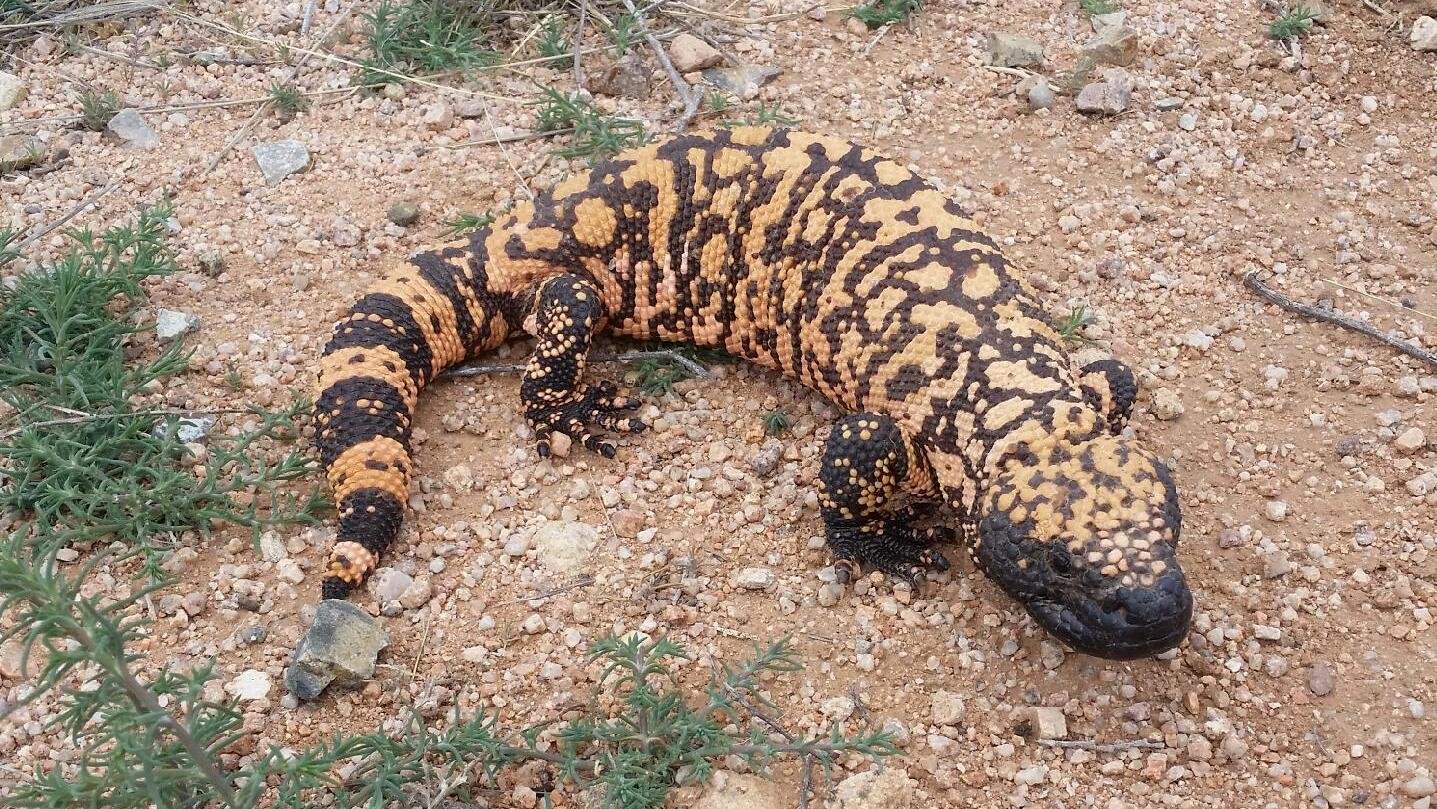
Lizards · Difficulty: Expert
Key facts and care guidance for Gila monster (Heloderma suspectum) (origin: The south-western USA (Arizona, Nevada, Utah, New Mexico) and north-western Mexico (Sonora); desert and dry scrub). Adult size around 35–55 cm total length, up to ~1.5 kg. Life expectancy 20–35 years. The values below are carefully researched guidance.
Short answers
Gila monster: How big does the enclosure need to be?
150×80×80 cm for one animal.
Gila monster: What temperature does it need?
Daytime 28–32 °C, basking spot 35–40 °C (basking spot), at night 18–22 °C.
Gila monster: Does it need UVB lighting?
UVB: UVB recommended (Ferguson zone 1–2, UV index 1–3; crepuscular and burrowing).
Gila monster: How long do they live?
Life expectancy: 20–35 years.
Gila monster: Is it suitable for beginners?
No – better suited to experienced keepers (difficulty: Expert).
Climate
- Daytime temperature
- 28–32 °C
- Night temperature
- 18–22 °C
- Basking spot
- 35–40 °C (basking spot)
- Humidity
- 40–60 % (with a humid floor zone or hide)
- UVB
- UVB recommended (Ferguson zone 1–2, UV index 1–3; crepuscular and burrowing)
Enclosure
- Minimum size
- 150×80×80 cm for one animal
- Substrate
- A sand-loam mix they can dig in (about 10 cm), stone slabs, cork tubes and damp soil areas for burrowing
Feeding
- Food
- Carnivorous: rodents (mice), day-old chicks, quail and other bird eggs, occasionally insects
- Feeding interval
- adults sparingly, approx. 1×/week or every 3–7 days (avoid obesity)
Key facts
- Adult size
- 35–55 cm total length, up to ~1.5 kg
- Life expectancy
- 20–35 years
- Origin
- The south-western USA (Arizona, Nevada, Utah, New Mexico) and north-western Mexico (Sonora); desert and dry scrub
- Protection status
- VENOMOUS. CITES Appendix II / EU Annex B – a commercial-use permit and proof of origin are needed. Keeping venomous animals: several German states require notification, a permit and proof of expertise
- Brumation
- Brumation is essential: about 2–3 months at 12–18 °C (darker and cooler), November to March, with acclimatisation – important for health and breeding
- Cohabitation
- Keeping them singly is the standard. 1.1 (a pair) only for experienced keepers in a large enclosure and under supervision; separate them for brumation. NEVER keep males together (ritualised fights in the mating season); female-on-female aggression is documented too
Notes
A venomous lizard – bite injuries are very painful (handle only with experience and protection, and an emergency plan). It runs strongly to obesity – feed deliberately sparingly. It burrows and digs a lot. Not for beginners.
Do you keep this species?
Add your animal to Reptoria – Reptoria reminds you about feeding and shedding. Add your animal for free →
Look for Gila monster (Heloderma suspectum) in the marketplace →
Related species
- Chiapan beaded lizard (Heloderma alvarezi) – Expert
- Guatemalan beaded lizard (Heloderma charlesbogerti) – Expert
- Mexican beaded lizard (Heloderma horridum) – Expert
- Rio Fuerte beaded lizard (Heloderma exasperatum) – Expert
- Aeolian wall lizard (Podarcis raffonei) – Expert
- Anzueto's arboreal alligator lizard (Abronia anzuetoi) – Expert
- Aran rock lizard (Iberolacerta aranica) – Expert
- Aurelio's rock lizard (Iberolacerta aurelioi) – Expert
What you need to start
To keep Gila monster (Heloderma suspectum) you typically need: a suitable enclosure (150×80×80 cm for one animal), substrate (A sand-loam mix they can dig in (about 10 cm), stone slabs, cork tubes and damp soil areas for burrowing), a heat source with a thermostat, UVB lighting, thermometer and hygrometer, a water dish and hides. You will find equipment in the Reptoria marketplace.
The complete, interactive care database is in the Reptoria app.
Last updated: 8 November 2026 · Editor: Reptoria editorial team · Sources include: Evidence for atypical nest overwintering, Heloderma suspectum (Royal Society, 114-152 Tage) – https://royalsocietypublishing.org/rspb/article/285/1879/20180632/78940/Evidence-for-atypical-nest-overwintering-by, Gila Monster Egg Incubation - DocSeward.com (26-29°C, ~150 Tage) – https://www.docseward.com/incubation.htm, https://de.wikipedia.org/wiki/Gila-Krustenechse, https://en.wikipedia.org/wiki/Gila_monster, https://en.wikipedia.org/wiki/Heloderma
All values are non-binding guidance and do not replace expert advice. Research thoroughly from several sources before acquiring and keeping an animal, and observe the applicable law (species and animal protection in particular).