Malagasy giant hognose (Leioheterodon madagascariensis)
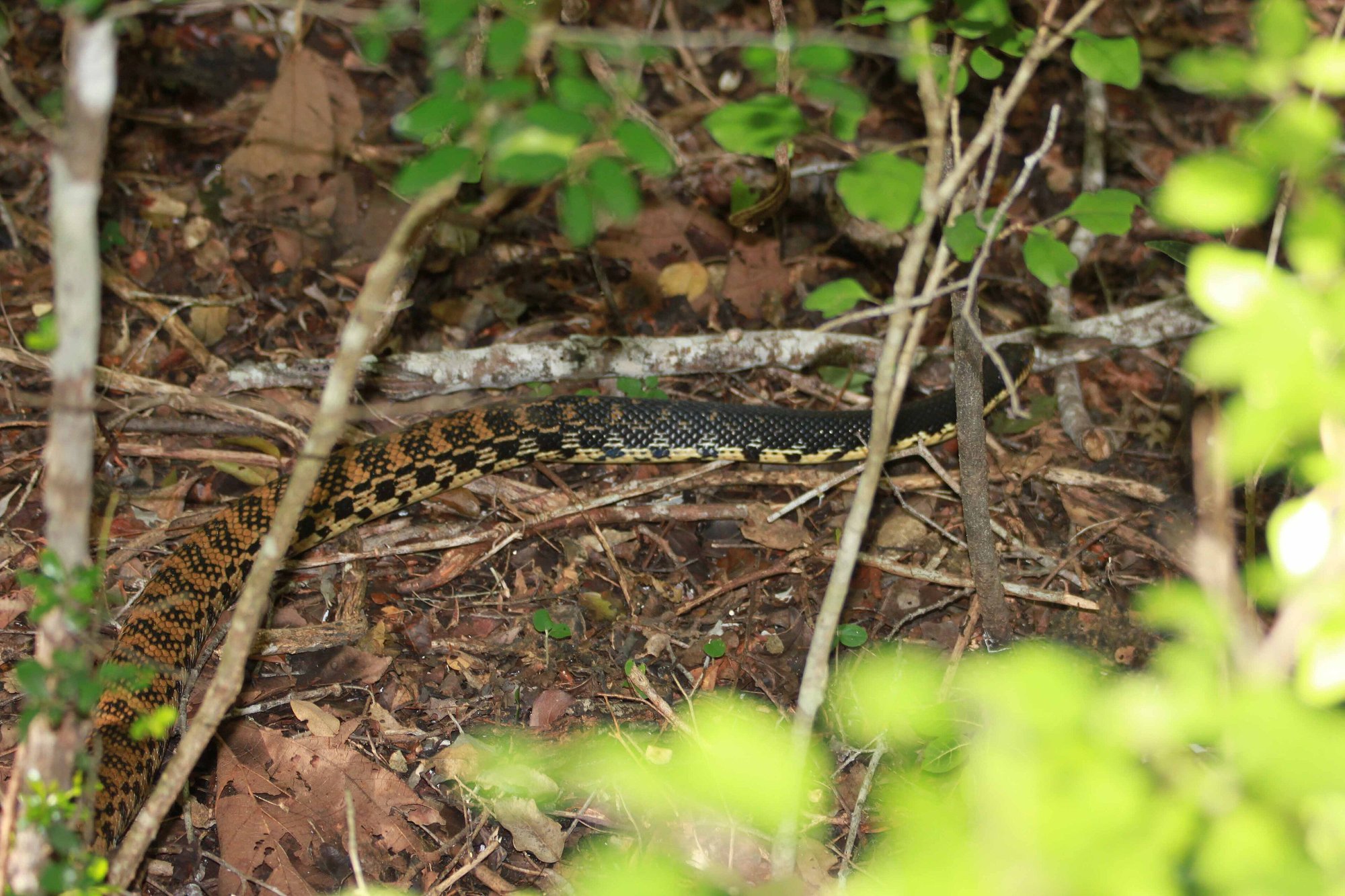
Snakes · Difficulty: Intermediate
Key facts and care guidance for Malagasy giant hognose (Leioheterodon madagascariensis) (origin: Madagascar (endemic), dry forest and open habitats). Adult size around 130–180 cm. Life expectancy approx. 15–20 years (figures from captivity vary). The values below are carefully researched guidance.
Short answers
Malagasy giant hognose: How big does the enclosure need to be?
From 180×90×90 cm (minimum size according to the 1997 expert report, Madagascar colubrids, capable of burrowing, front-opening).
Malagasy giant hognose: What temperature does it need?
Daytime 26–30 °C, basking spot 30–33 °C, at night 22–24 °C.
Malagasy giant hognose: Does it need UVB lighting?
UVB: UVB not essential, weak UVB (Ferguson zone 1–2) recommended.
Malagasy giant hognose: How long do they live?
Life expectancy: approx. 15–20 years (figures from captivity vary).
Malagasy giant hognose: Is it suitable for beginners?
Rather not – it is considered an intermediate species (difficulty: Intermediate).
Climate
- Daytime temperature
- 26–30 °C
- Night temperature
- 22–24 °C
- Basking spot
- 30–33 °C
- Humidity
- 50–60 %
- UVB
- UVB not essential, weak UVB (Ferguson zone 1–2) recommended
Enclosure
- Minimum size
- from 180×90×90 cm (minimum size according to the 1997 expert report, Madagascar colubrids, capable of burrowing, front-opening)
- Substrate
- Deep, mostly dry digging substrate (a sand-soil mix or forest floor), 10–15 cm for digging
Feeding
- Food
- Rodents (mice), occasionally quail or chicks and frogs; a powerful feeder
- Feeding interval
- adults every 7–10 days, juveniles every 5–7 days
Key facts
- Adult size
- 130–180 cm
- Life expectancy
- approx. 15–20 years (figures from captivity vary)
- Origin
- Madagascar (endemic), dry forest and open habitats
- Protection status
- Not listed under CITES; wild-caught animals do occur – look for German captive breeding (DNZ) and proof of origin
- Brumation
- No strict winter rest; a slight seasonal drop in temperature and humidity is possible
- Cohabitation
- Keep singly — a burrowing, very feeding-motivated, rear-fanged natricine with a risk of feeding rivalry or cannibalism; rival combat between males is also documented. Isolated keeper reports of communal housing exist but are not standard; only bring animals together under supervision for breeding.
Notes
Opisthoglyphous (rear-fanged); the venom is not medically significant to humans, but effects are possible from a bite (swelling) – handle it carefully. A burrowing species; it needs deep substrate and hiding options. The life expectancy and humidity figures differ somewhat by source.
Do you keep this species?
Add your animal to Reptoria – Reptoria reminds you about feeding and shedding. Add your animal for free →
Look for Malagasy giant hognose (Leioheterodon madagascariensis) in the marketplace →
Related species
- Blonde hognose snake (Leioheterodon modestus) – Intermediate
- Geay's hognose snake (Leioheterodon geayi) – Intermediate
- Mexican hognose snake (Heterodon kennerlyi) – Beginner
- Eastern hognose snake (Heterodon platirhinos) – Intermediate
- Southern hognose snake (Heterodon simus) – Intermediate
- Tricolor hognose snake (Xenodon pulcher) – Intermediate
- Western hognose snake (Heterodon nasicus) – Beginner
- Common egg-eating snake (Dasypeltis scabra) – Intermediate
What you need to start
To keep Malagasy giant hognose (Leioheterodon madagascariensis) you typically need: a suitable enclosure (from 180×90×90 cm (minimum size according to the 1997 expert report, Madagascar colubrids, capable of burrowing, front-opening)), substrate (Deep, mostly dry digging substrate (a sand-soil mix or forest floor), 10–15 cm for digging), a heat source with a thermostat, UVB lighting, thermometer and hygrometer, a water dish and hides. You will find equipment in the Reptoria marketplace.
The complete, interactive care database is in the Reptoria app.
Last updated: 30 October 2026 · Editor: Reptoria editorial team · Sources include: https://en.wikipedia.org/wiki/Leioheterodon_madagascariensis, https://reptile-database.reptarium.cz/species?genus=Leioheterodon&species=madagascariensis, https://www.reptile-food.ch/grosse-madagaskar-hakennasennatter
All values are non-binding guidance and do not replace expert advice. Research thoroughly from several sources before acquiring and keeping an animal, and observe the applicable law (species and animal protection in particular).