Minor chameleon (Furcifer minor)
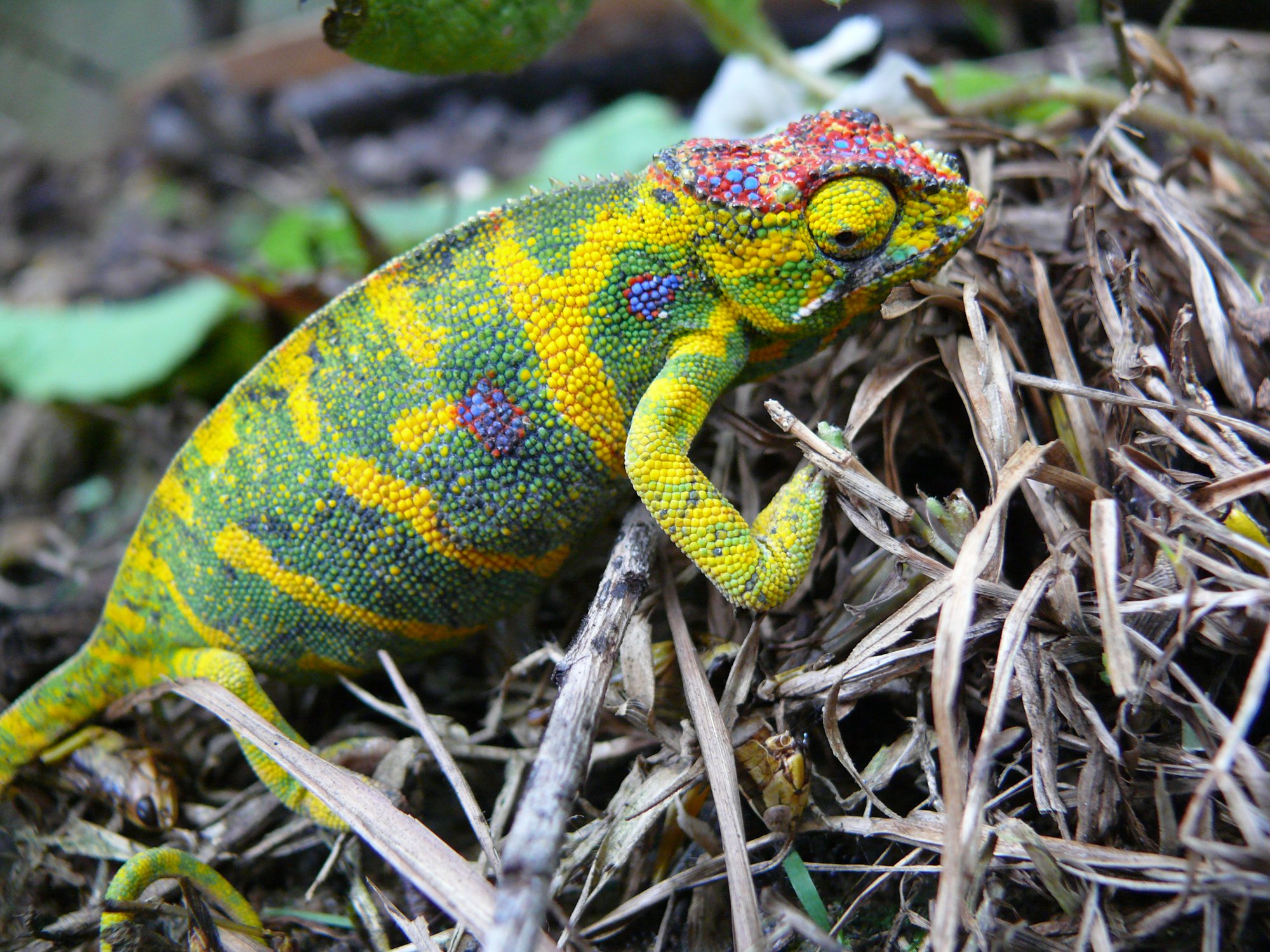
Chameleons · Difficulty: Expert
Key facts and care guidance for Minor chameleon (Furcifer minor) (origin: The central highlands of Madagascar (Ambositra–Itremo, ~800–1,600 m)). Adult size around females ~16 cm, males up to ~23 cm with the tail. Life expectancy ~2–4 years. The values below are carefully researched guidance.
Short answers
Minor chameleon: How big does the enclosure need to be?
60×50×80 cm, planted and well ventilated.
Minor chameleon: What temperature does it need?
Daytime 22–27 °C (highland, moderately warm), basking spot 30–32 °C (small basking spot), at night 12–17 °C (cool nights).
Minor chameleon: Does it need UVB lighting?
UVB: UVB needed (Ferguson zone 2–3, UV index 2–4).
Minor chameleon: How long do they live?
Life expectancy: ~2–4 years.
Minor chameleon: Is it suitable for beginners?
No – better suited to experienced keepers (difficulty: Expert).
Climate
- Daytime temperature
- 22–27 °C (highland, moderately warm)
- Night temperature
- 12–17 °C (cool nights)
- Basking spot
- 30–32 °C (small basking spot)
- Humidity
- 60–80 % with clear drying-out phases; mist morning and evening
- UVB
- UVB needed (Ferguson zone 2–3, UV index 2–4)
Enclosure
- Minimum size
- 60×50×80 cm, planted and well ventilated
- Substrate
- A loose soil and coco humus mix, 10–15 cm deep in one spot (for egg-laying)
Feeding
- Food
- Medium-sized insects: crickets, house crickets, small locusts, flies, roaches
- Feeding interval
- adults every other day, juveniles daily
Key facts
- Adult size
- females ~16 cm, males up to ~23 cm with the tail
- Life expectancy
- ~2–4 years
- Origin
- The central highlands of Madagascar (Ambositra–Itremo, ~800–1,600 m)
- Protection status
- CITES Appendix II, but NO legal export from Madagascar (a zero quota) → only legal captive-bred animals; proof of origin is mandatory
- Brumation
- No real winter rest; a cooler, drier rest period in the southern winter is advisable
- Cohabitation
- Keep them singly – a delicate species; keeping them singly is the standard, and rearing them singly is more successful than in groups; avoid visual and social stress
Notes
A delicate highland species with pronounced sexual dimorphism (the females are colourful). Cool nights matter. Legally available only as captive-bred animals, and rare. Not for beginners.
Do you keep this species?
Add your animal to Reptoria – Reptoria reminds you about feeding and shedding. Add your animal for free →
Look for Minor chameleon (Furcifer minor) in the marketplace →
Related species
- Angel's chameleon (Furcifer angeli) – Expert
- Antimena chameleon (Furcifer antimena) – Intermediate to expert
- Campan's chameleon (Furcifer campani) – Expert
- Unicorn chameleon (Furcifer monoceras) – Expert
- Forked chameleon (Furcifer bifidus) – Expert
- Belted chameleon (Furcifer balteatus) – Expert
- Labord's chameleon (Furcifer labordi) – Expert
- Rhinoceros chameleon (Furcifer rhinoceratus) – Intermediate
What you need to start
To keep Minor chameleon (Furcifer minor) you typically need: a suitable enclosure (60×50×80 cm, planted and well ventilated), substrate (A loose soil and coco humus mix, 10–15 cm deep in one spot (for egg-laying)), a heat source with a thermostat, UVB lighting, thermometer and hygrometer, a water dish and hides. You will find equipment in the Reptoria marketplace.
The complete, interactive care database is in the Reptoria app.
Last updated: 9 October 2026 · Editor: Reptoria editorial team · Sources include: https://en.wikipedia.org/wiki/Lesser_chameleon, https://www.madcham.de/en/furcifer-minor/
All values are non-binding guidance and do not replace expert advice. Research thoroughly from several sources before acquiring and keeping an animal, and observe the applicable law (species and animal protection in particular).