Montpellier snake (Malpolon monspessulanus)
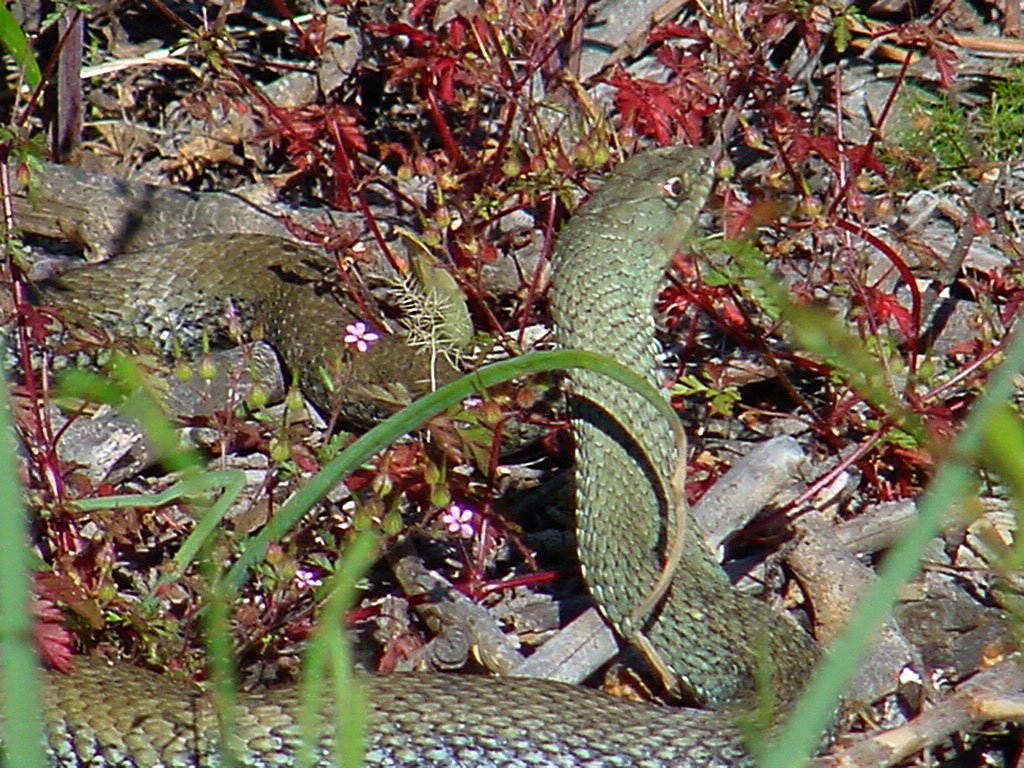
Snakes · Difficulty: Expert
Key facts and care guidance for Montpellier snake (Malpolon monspessulanus) (origin: South-western Europe (the Iberian Peninsula, southern France), north-western Africa, east to the Near East). Adult size around often 100–160 cm, can reach ~200 cm (max. ~2.55 m) – the largest European snake. Life expectancy approx. 15–20 years (not firmly documented). The values below are carefully researched guidance.
Short answers
Montpellier snake: How big does the enclosure need to be?
At least 200×100×100 cm for one adult animal (very large, fast and active); small breeding tanks are unsuitable for permanent keeping.
Montpellier snake: What temperature does it need?
Daytime 26–32 °C, basking spot 35–40 °C, at night 20–22 °C.
Montpellier snake: Does it need UVB lighting?
UVB: UVB needed (diurnal, sun-loving; Ferguson zone 3, UV index 3–5).
Montpellier snake: How long do they live?
Life expectancy: approx. 15–20 years (not firmly documented).
Montpellier snake: Is it suitable for beginners?
No – better suited to experienced keepers (difficulty: Expert).
Climate
- Daytime temperature
- 26–32 °C
- Night temperature
- 20–22 °C
- Basking spot
- 35–40 °C
- Humidity
- 40–60 % (dry)
- UVB
- UVB needed (diurnal, sun-loving; Ferguson zone 3, UV index 3–5)
Enclosure
- Minimum size
- at least 200×100×100 cm for one adult animal (very large, fast and active); small breeding tanks are unsuitable for permanent keeping
- Substrate
- A sand-loam mix, dry, with rock structures and hides
Feeding
- Food
- In the wild mainly lizards, also snakes, small mammals and birds; in captivity they can be switched to mice or rats
- Feeding interval
- adults ~1×/week
Key facts
- Adult size
- often 100–160 cm, can reach ~200 cm (max. ~2.55 m) – the largest European snake
- Life expectancy
- approx. 15–20 years (not firmly documented)
- Origin
- South-western Europe (the Iberian Peninsula, southern France), north-western Africa, east to the Near East
- Protection status
- IUCN "Least Concern"; protected in several countries; not listed under CITES; legal proof of origin required
- Brumation
- A winter rest from November to January or February at ~10–15 °C (for breeding)
- Cohabitation
- Keep them singly – territorial, very large and fast, and it eats snakes too (a risk of cannibalism). Only for supervised breeding
Notes
An opisthoglyphous, weakly venomous rear-fanged colubrid – a bite can cause local swelling and nausea, usually not life-threatening to humans, but take care. Very fast, nervous and defensive (it hisses loudly). It needs a very large terrarium; a lizard eater whose switch to other food is often difficult. Only for very experienced keepers.
Do you keep this species?
Add your animal to Reptoria – Reptoria reminds you about feeding and shedding. Add your animal for free →
Look for Montpellier snake (Malpolon monspessulanus) in the marketplace →
Related species
- Common egg-eating snake (Dasypeltis scabra) – Intermediate
- African house snake (Boaedon fuliginosus) – Beginner
- False water cobra (Hydrodynastes gigas) – Experts
- Spotted house snake (Boaedon maculatus) – Beginner
- Western whip snake (Hierophis viridiflavus) – Intermediate
- Striped house snake (Boaedon lineatus) – Beginner
- Smooth green snake (Opheodrys vernalis) – Expert
- Rough green snake (Opheodrys aestivus) – Intermediate
What you need to start
To keep Montpellier snake (Malpolon monspessulanus) you typically need: a suitable enclosure (at least 200×100×100 cm for one adult animal (very large, fast and active); small breeding tanks are unsuitable for permanent keeping), substrate (A sand-loam mix, dry, with rock structures and hides), a heat source with a thermostat, UVB lighting, thermometer and hygrometer, a water dish and hides. You will find equipment in the Reptoria marketplace.
The complete, interactive care database is in the Reptoria app.
Last updated: 9 October 2026 · Editor: Reptoria editorial team · Sources include: https://de.wikipedia.org/wiki/Westliche_Eidechsennatter, https://en.wikipedia.org/wiki/Malpolon_monspessulanus
All values are non-binding guidance and do not replace expert advice. Research thoroughly from several sources before acquiring and keeping an animal, and observe the applicable law (species and animal protection in particular).