Ornate horned frog (Ceratophrys ornata)
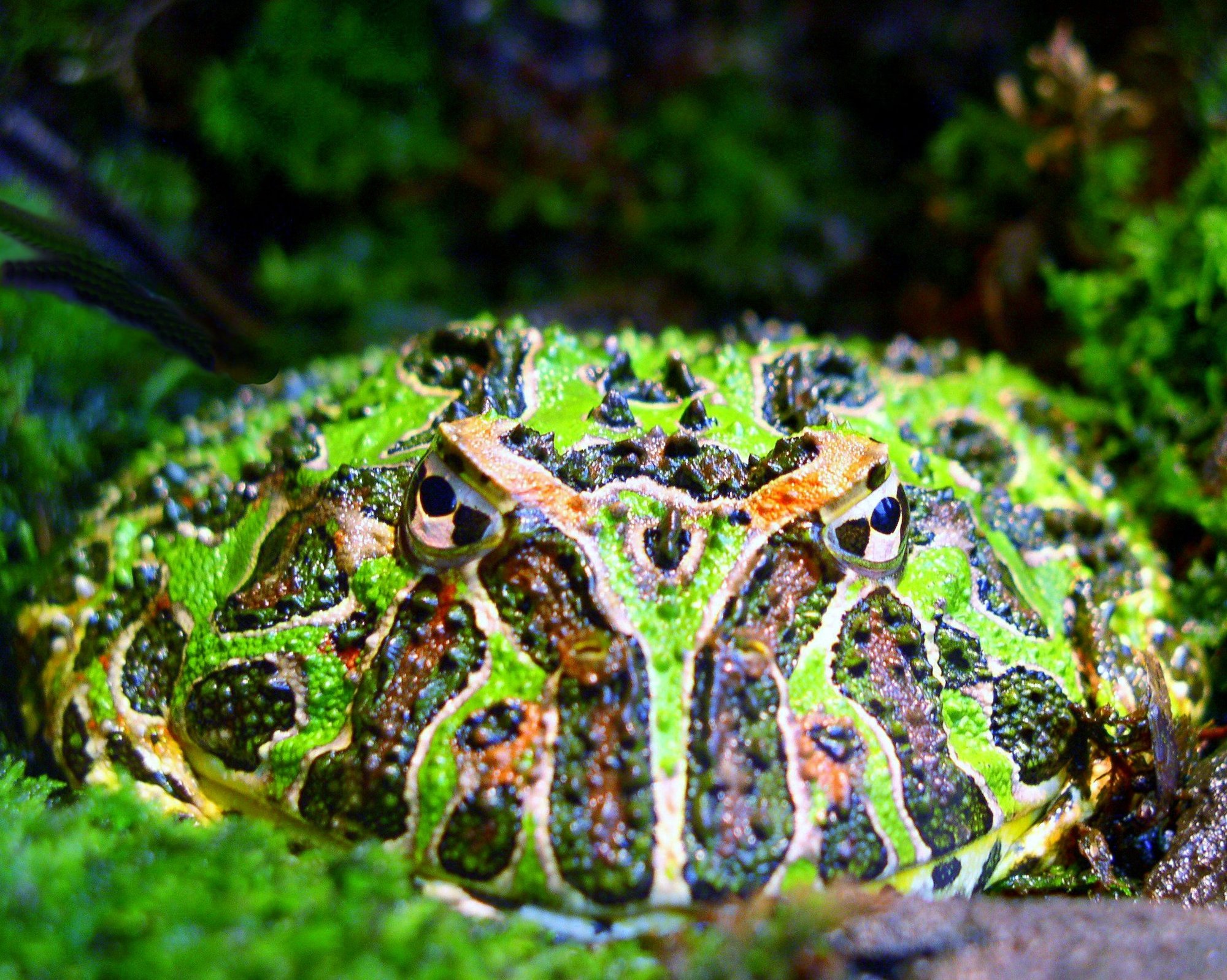
Amphibians · Difficulty: Beginner
Key facts and care guidance for Ornate horned frog (Ceratophrys ornata) (origin: South America – the pampas: Argentina, Uruguay, southern Brazil (Rio Grande do Sul)). Adult size around females approx. 12–17 cm, males approx. 8–11 cm. Life expectancy approx. 10–15 years. The values below are carefully researched guidance.
Short answers
Ornate horned frog: How big does the enclosure need to be?
80 × 40 × 40 cm for 1 adult animal (ground-oriented, little height needed); smaller for juveniles.
Ornate horned frog: What temperature does it need?
Daytime 22–28 °C, at night 20–22 °C.
Ornate horned frog: Does it need UVB lighting?
UVB: UVB not essential (ground-dwelling/nocturnal); weak UVB optional.
Ornate horned frog: How long do they live?
Life expectancy: approx. 10–15 years.
Ornate horned frog: Is it suitable for beginners?
Yes – it is considered suitable for beginners (difficulty: Beginner).
Climate
- Daytime temperature
- 22–28 °C
- Night temperature
- 20–22 °C
- Basking spot
- —
- Humidity
- 70–90 %
- UVB
- UVB not essential (ground-dwelling/nocturnal); weak UVB optional
Enclosure
- Minimum size
- 80 × 40 × 40 cm for 1 adult animal (ground-oriented, little height needed); smaller for juveniles
- Substrate
- Moist, diggable coco fibre or terrarium soil, 10–20 cm deep (at least one and a half times the animal's body height), partly covered with moss and leaf litter; plus a shallow water dish
Feeding
- Food
- Insects (crickets, house crickets, roaches), earthworms; occasionally young mice or fish
- Feeding interval
- adults approx. 1×/week (do not overfeed), juveniles every 2–3 days
Key facts
- Adult size
- females approx. 12–17 cm, males approx. 8–11 cm
- Life expectancy
- approx. 10–15 years
- Origin
- South America – the pampas: Argentina, Uruguay, southern Brazil (Rio Grande do Sul)
- Protection status
- No CITES protection; captive-bred animals are freely tradable
- Brumation
- An optional dry or winter rest (about December to February: lower the temperature, let the substrate dry out, a cocoon); not essential, but it encourages breeding
- Cohabitation
- Keep them singly – essential. Aggressive and markedly cannibalistic (it eats others of its kind up to its own size). Never keep them in pairs or groups.
Notes
Common mistakes: overfeeding (obesity and fatty organs), conditions that are too dry or too cold, and attempts to house it with others. A sedentary ambush hunter, and bitey. Watch that the substrate is clean and damp (skin infections).
Do you keep this species?
Add your animal to Reptoria – Reptoria reminds you about feeding and shedding. Add your animal for free →
Ornate horned frog (Ceratophrys ornata) currently offered
- Schmuckhorn – Berlin · 100 €
Related species
- Amazonian horned frog (Ceratophrys cornuta) – Intermediate
- Brazilian horned frog (Ceratophrys aurita) – Intermediate
- Caatinga horned frog (Ceratophrys joazeirensis) – Intermediate
- Cranwell's horned frog (Ceratophrys cranwelli) – Beginner
- African bullfrog (Pyxicephalus adspersus) – Beginner to intermediate
- Budgett's frog (Lepidobatrachus laevis) – Intermediate
- Chaco dwarf frog (Chacophrys pierottii) – Intermediate
- Edible bullfrog (Pyxicephalus edulis) – Beginner
What you need to start
To keep Ornate horned frog (Ceratophrys ornata) you typically need: a suitable enclosure (80 × 40 × 40 cm for 1 adult animal (ground-oriented, little height needed); smaller for juveniles), substrate (Moist, diggable coco fibre or terrarium soil, 10–20 cm deep (at least one and a half times the animal's body height), partly covered with moss and leaf litter; plus a shallow water dish), a heat source with a thermostat, UVB lighting, thermometer and hygrometer, a water dish and hides. You will find equipment in the Reptoria marketplace.
The complete, interactive care database is in the Reptoria app.
Last updated: 9 October 2026 · Editor: Reptoria editorial team · Sources include: Wikipedia DE, Wikipedia EN, einrichtungsbeispiele.de, exo-terra.com, megazoo-nord.de
All values are non-binding guidance and do not replace expert advice. Research thoroughly from several sources before acquiring and keeping an animal, and observe the applicable law (species and animal protection in particular).