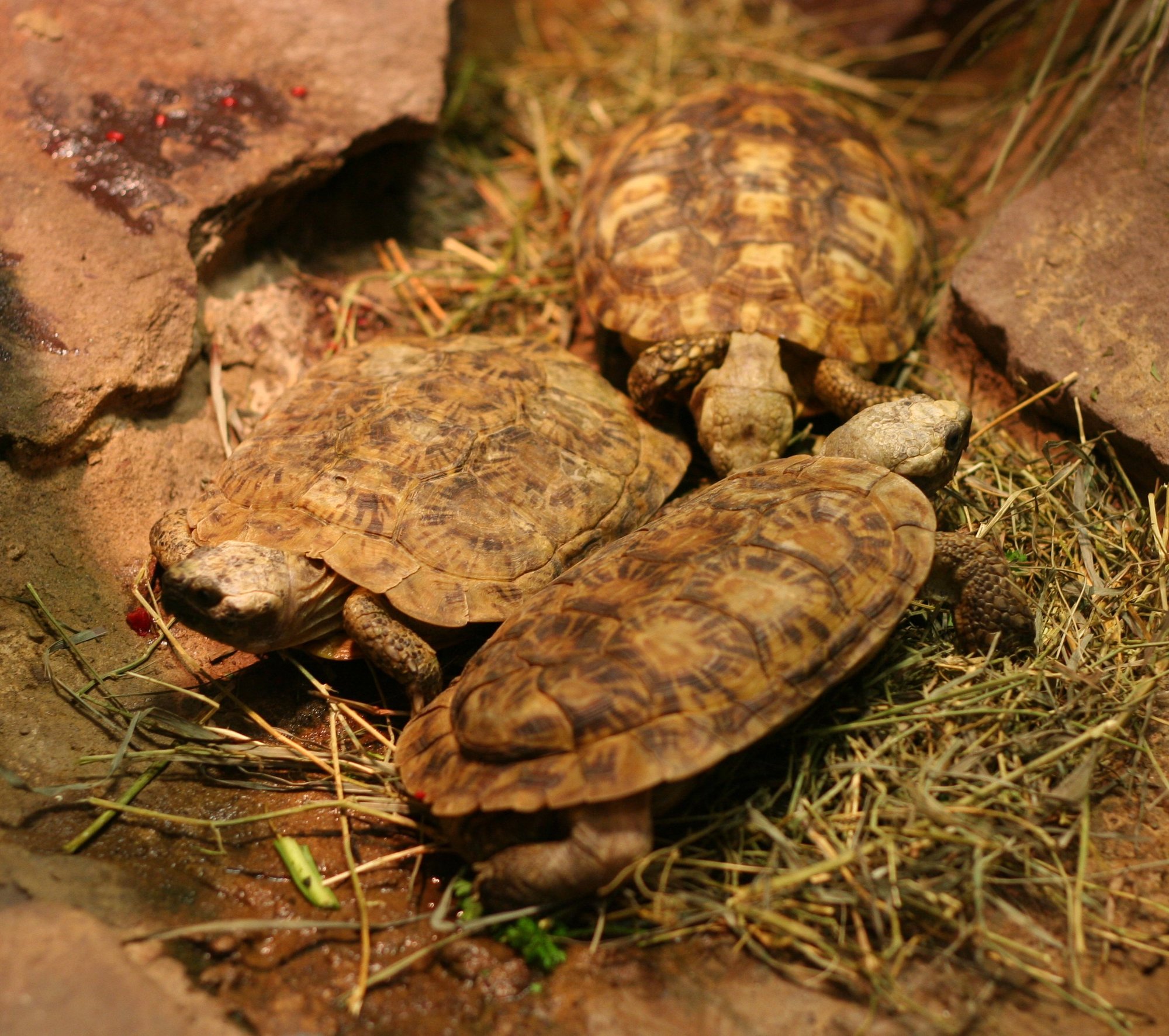
Pancake tortoise (Malacochersus tornieri)
Turtles & tortoises · Difficulty: Intermediate
Key facts and care guidance for Pancake tortoise (Malacochersus tornieri) (origin: Kenya, Tanzania – rocky areas). Adult size around 15–18 cm. Life expectancy 30–50 years. The values below are carefully researched guidance.
Short answers
Pancake tortoise: How big does the enclosure need to be?
From 150×75 cm floor space for one animal; for a pair from 170×75 cm (15 % more floor space per additional animal, as in the 1997 expert report).
Pancake tortoise: What temperature does it need?
Daytime 26–32 °C, basking spot 40 °C, at night 18–22 °C.
Pancake tortoise: Does it need UVB lighting?
UVB: Essential (UVB 10.0).
Pancake tortoise: How long do they live?
Life expectancy: 30–50 years.
Pancake tortoise: Is it suitable for beginners?
Rather not – it is considered an intermediate species (difficulty: Intermediate).
Climate
- Daytime temperature
- 26–32 °C
- Night temperature
- 18–22 °C
- Basking spot
- 40 °C
- Humidity
- 40–55 %
- UVB
- Essential (UVB 10.0)
Enclosure
- Minimum size
- from 150×75 cm floor space for one animal; for a pair from 170×75 cm (15 % more floor space per additional animal, as in the 1997 expert report)
- Substrate
- Sand-loam with stacked, stable stone slabs (crevices)
Feeding
- Food
- Grasses, herbs, hay; rich in calcium
- Feeding interval
- plant food daily
Key facts
- Adult size
- 15–18 cm
- Life expectancy
- 30–50 years
- Origin
- Kenya, Tanzania – rocky areas
- Protection status
- CITES I (EU Annex A) – commercial use only with a certificate
- Brumation
- A cooler dry spell of 6–8 weeks
- Cohabitation
- A pair or a harem (1.2). Two males harass each other and the females; under constant courtship pressure a female visibly loses weight. Hence one male to several females - and plan in the option of separating the male temporarily.
Notes
A flat, soft shell: it climbs and squeezes into rock crevices rather than withdrawing. Stone structures must be absolutely tip-proof. CITES I – papers are essential.
Do you keep this species?
Add your animal to Reptoria – Reptoria reminds you about feeding and shedding. Add your animal for free →
Look for Pancake tortoise (Malacochersus tornieri) in the marketplace →
Related species
- Ploughshare tortoise (Astrochelys yniphora) – Expert
- Speckled padloper (Homopus areolatus) – Expert
- Serrated tent tortoise (Psammobates oculifer) – Expert
- Bell's hinge-back tortoise (Kinixys belliana) – Intermediate
- Speckled padloper tortoise (Chersobius signatus) – Expert
- Angulate tortoise (Chersina angulata) – Intermediate
- Home's hinge-back tortoise (Kinixys homeana) – Expert
- Natal hinge-back tortoise (Kinixys natalensis) – Intermediate
What you need to start
To keep Pancake tortoise (Malacochersus tornieri) you typically need: a suitable enclosure (from 150×75 cm floor space for one animal; for a pair from 170×75 cm (15 % more floor space per additional animal, as in the 1997 expert report)), substrate (Sand-loam with stacked, stable stone slabs (crevices)), a heat source with a thermostat, UVB lighting, thermometer and hygrometer, a water dish and hides. You will find equipment in the Reptoria marketplace.
The complete, interactive care database is in the Reptoria app.
Last updated: 30 October 2026 · Editor: Reptoria editorial team · Sources include: https://de.wikipedia.org/wiki/Spaltenschildkr%C3%B6te, https://en.wikipedia.org/wiki/Pancake_tortoise, https://reptile-database.reptarium.cz/species?genus=Malacochersus&species=tornieri
All values are non-binding guidance and do not replace expert advice. Research thoroughly from several sources before acquiring and keeping an animal, and observe the applicable law (species and animal protection in particular).