Persian rat snake (Zamenis persicus)
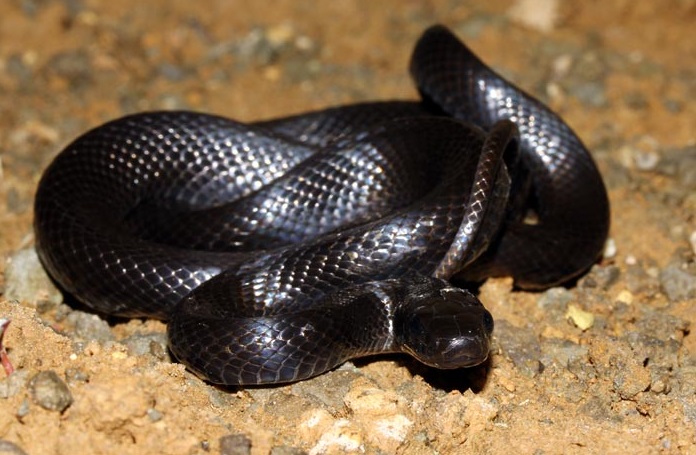
Snakes · Difficulty: Intermediate
Key facts and care guidance for Persian rat snake (Zamenis persicus) (origin: Northern Iran, the Caspian coastal region, Azerbaijan (the Hyrcanian forests)). Adult size around approx. 90 cm, max. ~110 cm. Life expectancy over 20 years is possible. The values below are carefully researched guidance.
Short answers
Persian rat snake: How big does the enclosure need to be?
From 110×55×110 cm (minimum size according to the 1997 expert report, formerly Elaphe); adults like to climb, taller is better.
Persian rat snake: What temperature does it need?
Daytime 22–24 °C, basking spot 28–30 °C (local hot spot), at night 18–20 °C.
Persian rat snake: Does it need UVB lighting?
UVB: UVB not essential.
Persian rat snake: How long do they live?
Life expectancy: over 20 years is possible.
Persian rat snake: Is it suitable for beginners?
Rather not – it is considered an intermediate species (difficulty: Intermediate).
Climate
- Daytime temperature
- 22–24 °C
- Night temperature
- 18–20 °C
- Basking spot
- 28–30 °C (local hot spot)
- Humidity
- 50–70 % (a forest dweller; a humid hide, but never permanently wet)
- UVB
- UVB not essential
Enclosure
- Minimum size
- from 110×55×110 cm (minimum size according to the 1997 expert report, formerly Elaphe); adults like to climb, taller is better
- Substrate
- Forest humus or coco humus with climbing branches; a damp hide with sphagnum moss
Feeding
- Food
- Frozen-thawed mice matched to their girth
- Feeding interval
- adults every 7–14 days, juveniles every 5–7 days
Key facts
- Adult size
- approx. 90 cm, max. ~110 cm
- Life expectancy
- over 20 years is possible
- Origin
- Northern Iran, the Caspian coastal region, Azerbaijan (the Hyrcanian forests)
- Protection status
- Non-European, not protected under CITES, EU law or German nature conservation law; no registration duty in Germany
- Brumation
- A cooler winter spell of about 8–12 weeks at about 10–14 °C is recommended (a temperate origin, and it helps breeding)
- Cohabitation
- Keep them singly – territorial, and they can be intolerant or aggressive towards each other; put them together only temporarily for breeding
Notes
A rarely kept, less well documented species; some figures come from a few keeper reports. Because of its forest origin it needs higher humidity and a slightly damp hide – but permanent wetness leads to intestinal inflammation. Diurnal and fond of climbing.
Do you keep this species?
Add your animal to Reptoria – Reptoria reminds you about feeding and shedding. Add your animal for free →
Look for Persian rat snake (Zamenis persicus) in the marketplace →
Related species
- Aesculapian snake (Zamenis longissimus) – Intermediate
- Leopard snake (Zamenis situla) – Intermediate
- Russian rat snake (Elaphe schrenckii) – Beginner
- Baird's rat snake (Pantherophis bairdi) – Beginner
- Red bamboo rat snake (Oreocryptophis porphyraceus) – Intermediate
- Twin-spotted ratsnake (Elaphe bimaculata) – Beginner
- Western fox snake (Pantherophis vulpinus) – Beginner
- Rhinoceros rat snake (Gonyosoma boulengeri) – Intermediate
What you need to start
To keep Persian rat snake (Zamenis persicus) you typically need: a suitable enclosure (from 110×55×110 cm (minimum size according to the 1997 expert report, formerly Elaphe); adults like to climb, taller is better), substrate (Forest humus or coco humus with climbing branches; a damp hide with sphagnum moss), a heat source with a thermostat, UVB lighting, thermometer and hygrometer, a water dish and hides. You will find equipment in the Reptoria marketplace.
The complete, interactive care database is in the Reptoria app.
Last updated: 9 October 2026 · Editor: Reptoria editorial team · Sources include: https://en.wikipedia.org/wiki/Persian_ratsnake, https://eol.org/pages/794903, https://reptile-database.reptarium.cz/species?genus=Zamenis&species=persicus
All values are non-binding guidance and do not replace expert advice. Research thoroughly from several sources before acquiring and keeping an animal, and observe the applicable law (species and animal protection in particular).