Red-sided garter snake (Thamnophis sirtalis parietalis)
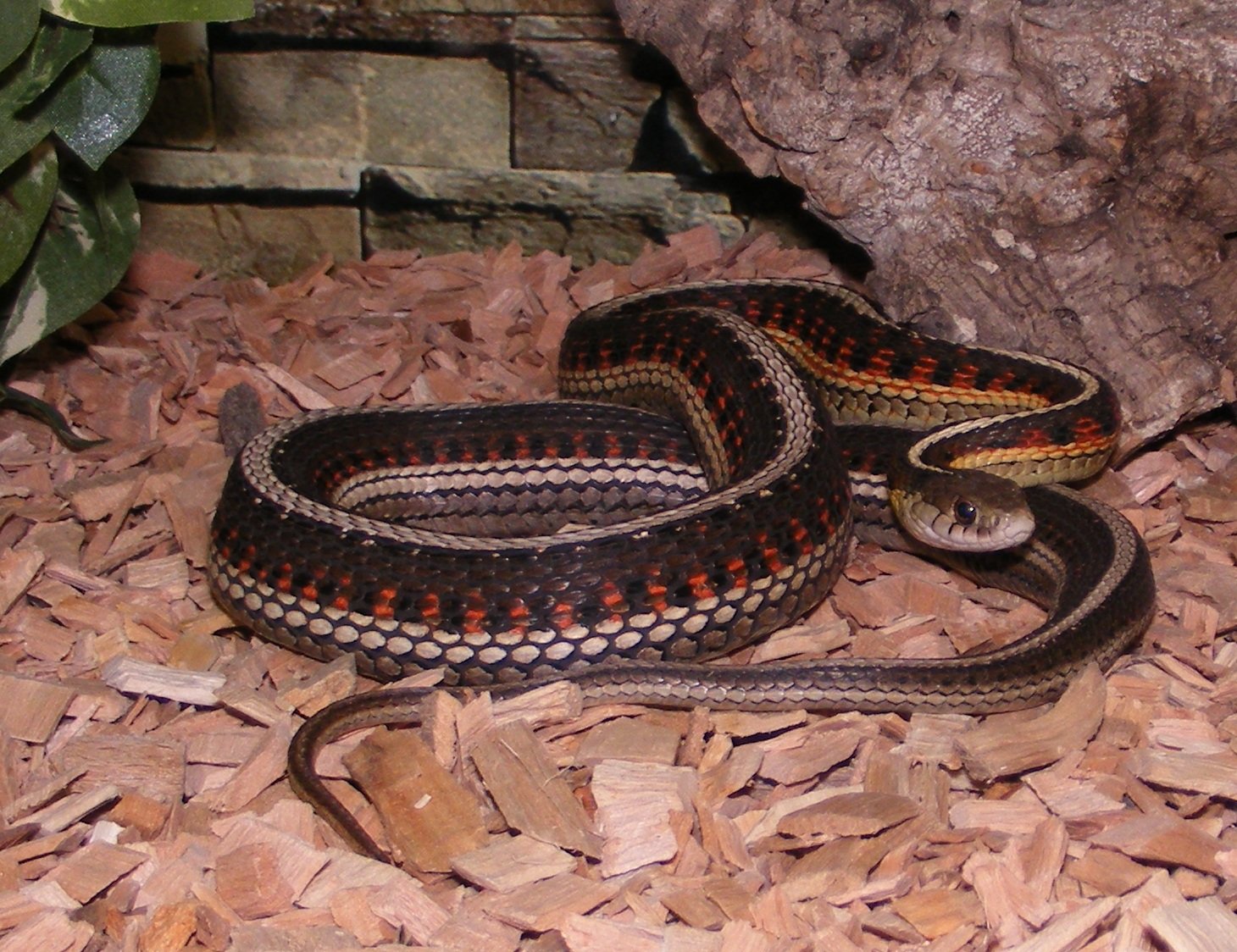
Snakes · Difficulty: Beginner
Key facts and care guidance for Red-sided garter snake (Thamnophis sirtalis parietalis) (origin: Central and northern North America (the USA, Canada); "red-sided" mainly on the Great Plains). Adult size around 45–90 cm (females larger, up to ~1 m). Life expectancy ~6–10 years (up to 12). The values below are carefully researched guidance.
Short answers
Red-sided garter snake: How big does the enclosure need to be?
From 125×75×50 cm (minimum size according to the 1997 expert report, garter snakes, with a large bathing area and a wet box).
Red-sided garter snake: What temperature does it need?
Daytime 22–28 °C, basking spot 30–35 °C (local hot spot), at night 18–20 °C.
Red-sided garter snake: Does it need UVB lighting?
UVB: UVB not essential but recommended (diurnal, basks).
Red-sided garter snake: How long do they live?
Life expectancy: ~6–10 years (up to 12).
Red-sided garter snake: Is it suitable for beginners?
Yes – it is considered suitable for beginners (difficulty: Beginner).
Climate
- Daytime temperature
- 22–28 °C
- Night temperature
- 18–20 °C
- Basking spot
- 30–35 °C (local hot spot)
- Humidity
- 40–60 %
- UVB
- UVB not essential but recommended (diurnal, basks)
Enclosure
- Minimum size
- from 125×75×50 cm (minimum size according to the 1997 expert report, garter snakes, with a large bathing area and a wet box)
- Substrate
- Absorbent soil or a sand-soil mix, one area damp; a humid box; a large bathing spot
Feeding
- Food
- Fish (smelt), earthworms, occasionally pinkie mice; add vitamin B1 if feeding fish only
- Feeding interval
- adults 1–2×/week, juveniles every 2–3 days
Key facts
- Adult size
- 45–90 cm (females larger, up to ~1 m)
- Life expectancy
- ~6–10 years (up to 12)
- Origin
- Central and northern North America (the USA, Canada); "red-sided" mainly on the Great Plains
- Protection status
- Not listed under CITES; not protected
- Brumation
- A winter rest or cooling of 6–8 weeks at ~5–10 °C (a temperate species; for breeding, and in the wild they overwinter communally)
- Cohabitation
- Group housing is possible in this species – water and garter snakes are the exception among snakes: they voluntarily rest together. The feeding accident remains the risk here too, so always feed individually, best in separate boxes, and only house similarly sized animals together.
Notes
A classic, robust beginner's garter snake; live-bearing and diurnal. Feed them separately; vitamin B1 with a pure fish diet against thiamine deficiency.
Do you keep this species?
Add your animal to Reptoria – Reptoria reminds you about feeding and shedding. Add your animal for free →
Look for Red-sided garter snake (Thamnophis sirtalis parietalis) in the marketplace →
Related species
- Ahumada's alpine garter snake (Thamnophis ahumadai) – Expert
- Bogert's garter snake (Thamnophis bogerti) – Expert
- Butler's garter snake (Thamnophis butleri) – Intermediate
- Cope's mountain meadow snake (Thamnophis copei) – Expert
- Fox's mountain meadow snake (Thamnophis foxi) – Expert
- Yellow-throated garter snake (Thamnophis pulchrilatus) – Expert
- Common garter snake (Thamnophis sirtalis) – Beginner
- Godman's garter snake (Thamnophis godmani) – Expert
What you need to start
To keep Red-sided garter snake (Thamnophis sirtalis parietalis) you typically need: a suitable enclosure (from 125×75×50 cm (minimum size according to the 1997 expert report, garter snakes, with a large bathing area and a wet box)), substrate (Absorbent soil or a sand-soil mix, one area damp; a humid box; a large bathing spot), a heat source with a thermostat, UVB lighting, thermometer and hygrometer, a water dish and hides. You will find equipment in the Reptoria marketplace.
The complete, interactive care database is in the Reptoria app.
Last updated: 9 October 2026 · Editor: Reptoria editorial team · Sources include: https://de.wikipedia.org/wiki/Rotseitige_Strumpfbandnatter, https://reptile-database.reptarium.cz/species?genus=Thamnophis&species=sirtalis
All values are non-binding guidance and do not replace expert advice. Research thoroughly from several sources before acquiring and keeping an animal, and observe the applicable law (species and animal protection in particular).