Six-eyed sand spider (Sicarius thomisoides)
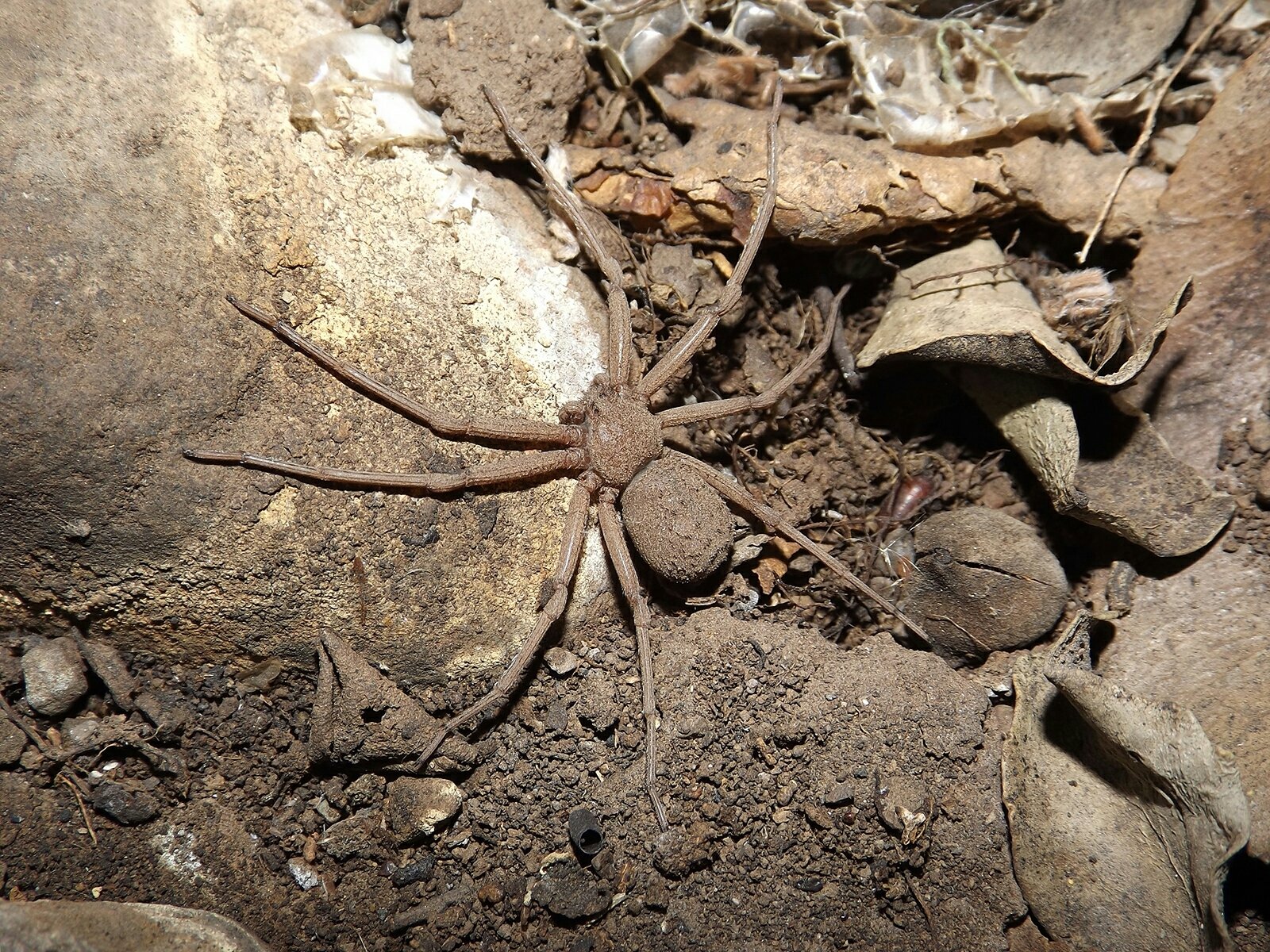
Invertebrates · Difficulty: Expert
Key facts and care guidance for Six-eyed sand spider (Sicarius thomisoides) (origin: The deserts and semi-deserts of northern and central Chile (sandy ground under stones)). Adult size around body ~12–20 mm, ~4–5 cm with the legs; flattened and camouflaged sand-coloured. Life expectancy long-lived, living several years (some Sicariidae over 8–10 years) – conservatively: several years. The values below are carefully researched guidance.
Short answers
Six-eyed sand spider: How big does the enclosure need to be?
A small, escape-proof dry box ~20×20×15 cm with deep sand to bury themselves in.
Six-eyed sand spider: What temperature does it need?
Daytime 25–30 °C, at night 18–22 °C.
Six-eyed sand spider: Does it need UVB lighting?
UVB: No UVB needed (nocturnal, stays buried).
Six-eyed sand spider: How long do they live?
Life expectancy: long-lived, living several years (some Sicariidae over 8–10 years) – conservatively: several years.
Six-eyed sand spider: Is it suitable for beginners?
No – better suited to experienced keepers (difficulty: Expert).
Climate
- Daytime temperature
- 25–30 °C
- Night temperature
- 18–22 °C
- Basking spot
- —
- Humidity
- very dry, 20–40 %
- UVB
- No UVB needed (nocturnal, stays buried)
Enclosure
- Minimum size
- a small, escape-proof dry box ~20×20×15 cm with deep sand to bury themselves in
- Substrate
- Deep fine sand or sand-loam (for burying), flat stones as hides
Feeding
- Food
- Beetles, insects, millipedes, and other spiders too; an ambush hunter
- Feeding interval
- every 1–2 weeks; tolerates long fasting periods
Key facts
- Adult size
- body ~12–20 mm, ~4–5 cm with the legs; flattened and camouflaged sand-coloured
- Life expectancy
- long-lived, living several years (some Sicariidae over 8–10 years) – conservatively: several years
- Origin
- The deserts and semi-deserts of northern and central Chile (sandy ground under stones)
- Protection status
- No species protection; BUT highly venomous – keeping venomous spiders is regulated, prohibited or subject to a permit in several German states (check your state law); no antivenom is available
- Brumation
- None (a slight winter drop is possible)
- Cohabitation
- Keep them singly. Sicarius sand spiders are solitary ambush predators that lie buried waiting for prey; two animals in the same enclosure mean food competition, not social contact. The reason is not fighting but feeding: anything that moves and fits the prey pattern is attacked — including a conspecific. They are only put together under supervision for controlled breeding.
Notes
VERY DANGEROUS – a venom containing sphingomyelinase D (phospholipase D), with potentially severe skin necrosis (similar to loxoscelism). Extremely shy (it flees or freezes rather than threatening) and buries itself completely in the sand; no handling, escape-proof, and only for experienced venomous-animal keepers.
Do you keep this species?
Add your animal to Reptoria – Reptoria reminds you about feeding and shedding. Add your animal for free →
Look for Six-eyed sand spider (Sicarius thomisoides) in the marketplace →
Related species
- Woodlouse spider (Dysdera crocata) – Intermediate
- Huntsman spider (Heteropoda venatoria) – Beginner
- Brown recluse spider (Loxosceles reclusa) – Expert
- David Bowie huntsman spider (Heteropoda davidbowie) – Intermediate
- Tube-web spider (Segestria florentina) – Intermediate
- Raft spider (Dolomedes fimbriatus) – Expert
- Segmented spider (Liphistius sp.) – Expert
- Great raft spider (Dolomedes plantarius) – Expert
What you need to start
To keep Six-eyed sand spider (Sicarius thomisoides) you typically need: a suitable enclosure (a small, escape-proof dry box ~20×20×15 cm with deep sand to bury themselves in), substrate (Deep fine sand or sand-loam (for burying), flat stones as hides), a heat source with a thermostat, UVB lighting, thermometer and hygrometer, a water dish and hides. You will find equipment in the Reptoria marketplace.
The complete, interactive care database is in the Reptoria app.
Last updated: 9 October 2026 · Editor: Reptoria editorial team · Sources include: https://en.wikipedia.org/wiki/Sicarius_(spider), https://en.wikipedia.org/wiki/Sicarius_thomisoides
All values are non-binding guidance and do not replace expert advice. Research thoroughly from several sources before acquiring and keeping an animal, and observe the applicable law (species and animal protection in particular).