Small whip spider (Phrynus parvulus)
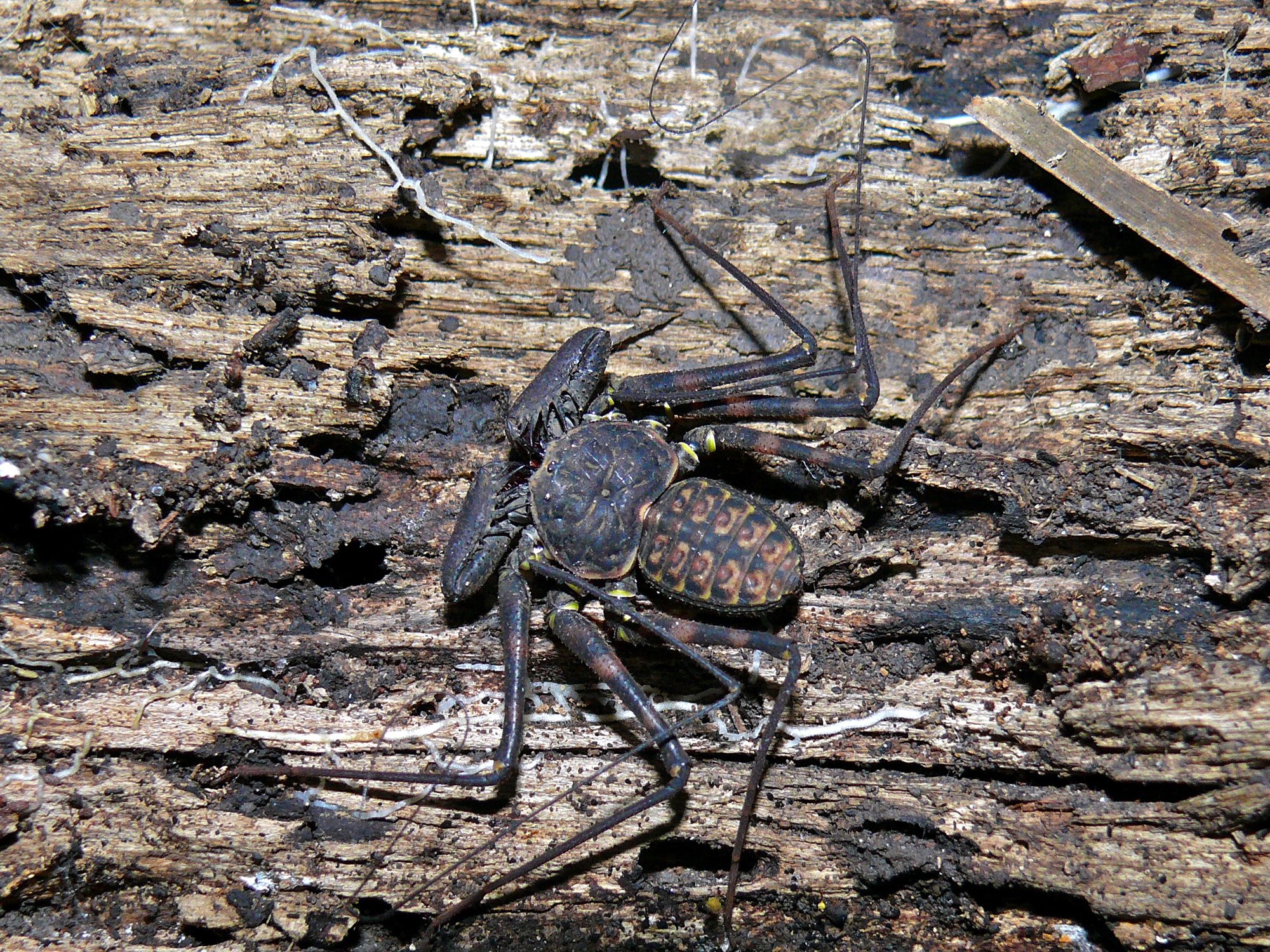
Invertebrates · Difficulty: Intermediate
Key facts and care guidance for Small whip spider (Phrynus parvulus) (origin: Central America (Belize, Guatemala; some Costa Rican records are actually P. pseudoparvulus)). Adult size around body approx. 1.5–2 cm, leg span up to approx. 10–14 cm. Life expectancy 5–10 years (females longer than males). The values below are carefully researched guidance.
Short answers
Small whip spider: How big does the enclosure need to be?
20×20×30 cm (vertical, taller than wide).
Small whip spider: What temperature does it need?
Daytime 24–28 °C, at night 20–23 °C.
Small whip spider: Does it need UVB lighting?
UVB: No UVB needed (nocturnal).
Small whip spider: How long do they live?
Life expectancy: 5–10 years (females longer than males).
Small whip spider: Is it suitable for beginners?
Rather not – it is considered an intermediate species (difficulty: Intermediate).
Climate
- Daytime temperature
- 24–28 °C
- Night temperature
- 20–23 °C
- Basking spot
- —
- Humidity
- 70–80 % (New World species, copes with somewhat drier air)
- UVB
- No UVB needed (nocturnal)
Enclosure
- Minimum size
- 20×20×30 cm (vertical, taller than wide)
- Substrate
- Coco humus or soil, about 5 cm, damp (not wet)
Feeding
- Food
- Crickets, roach nymphs, flies; matched to their body size
- Feeding interval
- 1×/week, prey about a quarter of its body size
Key facts
- Adult size
- body approx. 1.5–2 cm, leg span up to approx. 10–14 cm
- Life expectancy
- 5–10 years (females longer than males)
- Origin
- Central America (Belize, Guatemala; some Costa Rican records are actually P. pseudoparvulus)
- Protection status
- No known CITES or German protection; freely tradable
- Brumation
- None (tropical)
- Cohabitation
- Keeping them singly is recommended – New World whip spiders are more prone to cannibalism than Damon; house them together only with a great deal of space and hides, and at your own risk; never keep males together
Notes
The taxonomy is uncertain: many animals traded as "Phrynus parvulus" are misidentified (P. pseudoparvulus and P. whitei among others). Non-venomous, without silk glands; very shy and fragile, and only to be watched. Moulting needs free height.
Do you keep this species?
Add your animal to Reptoria – Reptoria reminds you about feeding and shedding. Add your animal for free →
Look for Small whip spider (Phrynus parvulus) in the marketplace →
Related species
- Tailless whip scorpion (Phrynus marginemaculatus) – Intermediate
- African whip spider (Euphrynichus amanica) – Beginner to intermediate
- Amazonian whip spider (Heterophrynus elaphus) – Intermediate
- Israeli whip spider (Charinus israelensis) – Expert
- Johnston's whip spider (Damon johnstonii) – Intermediate
- Mexican whip spider (Acanthophrynus coronatus) – Intermediate
- East African whip spider (Damon variegatus) – Intermediate
- Tanzanian whip spider (Damon diadema) – Beginner
What you need to start
To keep Small whip spider (Phrynus parvulus) you typically need: a suitable enclosure (20×20×30 cm (vertical, taller than wide)), substrate (Coco humus or soil, about 5 cm, damp (not wet)), a heat source with a thermostat, UVB lighting, thermometer and hygrometer, a water dish and hides. You will find equipment in the Reptoria marketplace.
The complete, interactive care database is in the Reptoria app.
Last updated: 9 October 2026 · Editor: Reptoria editorial team · Sources include: https://en.wikipedia.org/wiki/Phrynus, https://en.wikipedia.org/wiki/Phrynus_marginemaculatus
All values are non-binding guidance and do not replace expert advice. Research thoroughly from several sources before acquiring and keeping an animal, and observe the applicable law (species and animal protection in particular).