Speke's hinge-back tortoise (Kinixys spekii)
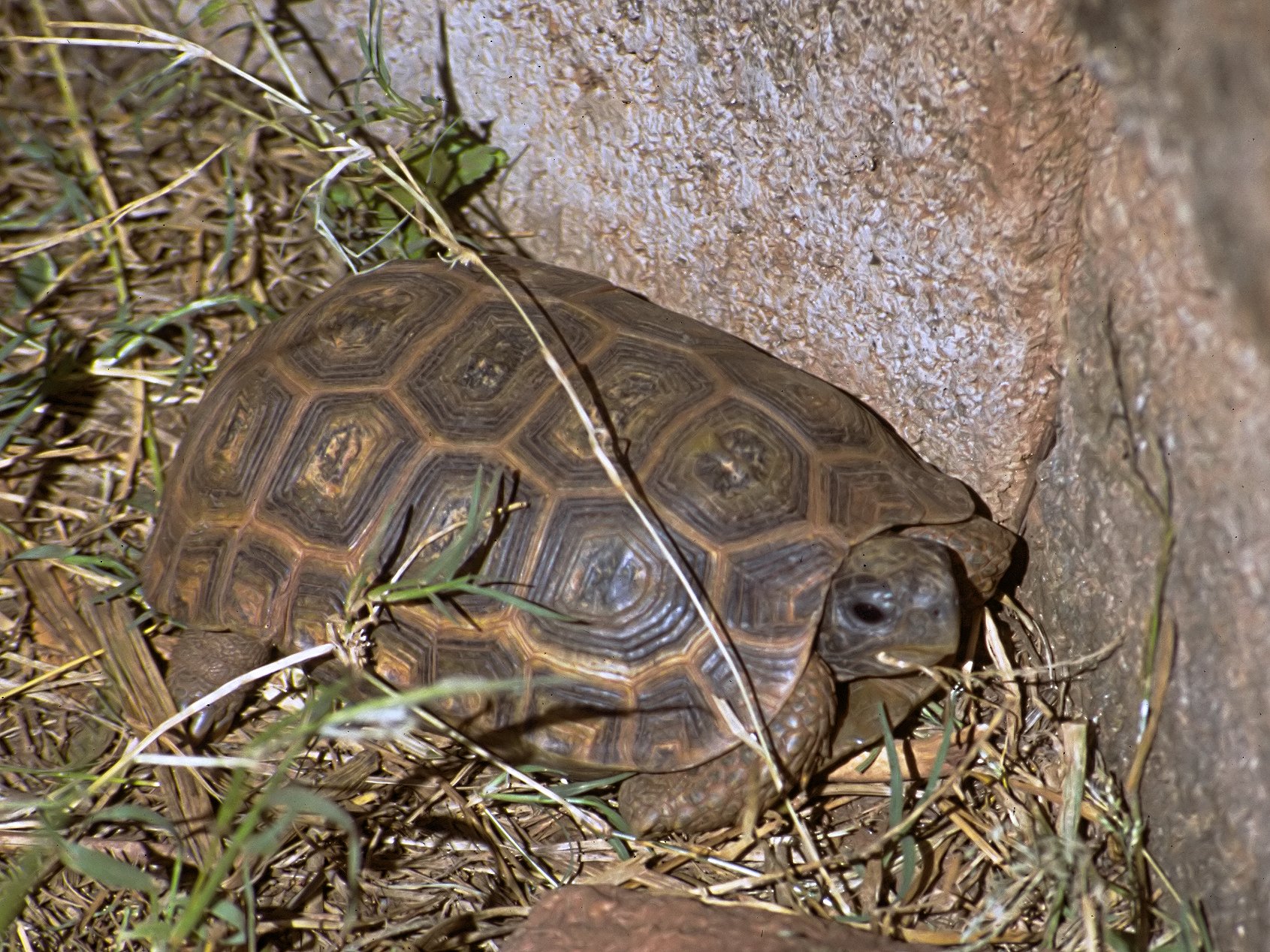
Turtles & tortoises · Difficulty: Intermediate
Key facts and care guidance for Speke's hinge-back tortoise (Kinixys spekii) (origin: Central and southern Africa (savannah and miombo woodland)). Adult size around males up to ~18 cm, females up to ~21 cm. Life expectancy ~25–40 years. The values below are carefully researched guidance.
Short answers
Speke's hinge-back tortoise: How big does the enclosure need to be?
From 155×80 cm floor space for one animal; for a pair from 155×80 cm (1997 expert report, at 19,5 cm shell length).
Speke's hinge-back tortoise: What temperature does it need?
Daytime 26–30 °C, basking spot 35–40 °C, at night 20–22 °C.
Speke's hinge-back tortoise: Does it need UVB lighting?
UVB: UVB needed (Ferguson zone 2–3, UV index 2–3).
Speke's hinge-back tortoise: How long do they live?
Life expectancy: ~25–40 years.
Speke's hinge-back tortoise: Is it suitable for beginners?
Rather not – it is considered an intermediate species (difficulty: Intermediate).
Climate
- Daytime temperature
- 26–30 °C
- Night temperature
- 20–22 °C
- Basking spot
- 35–40 °C
- Humidity
- 60–80 % (savannah with a humid microzone or hide)
- UVB
- UVB needed (Ferguson zone 2–3, UV index 2–3)
Enclosure
- Minimum size
- from 155×80 cm floor space for one animal; for a pair from 155×80 cm (1997 expert report, at 19,5 cm shell length)
- Substrate
- Deep, diggable soil, coco or leaf litter with a damp hide (they like to bury themselves)
Feeding
- Food
- Omnivorous: flowers, leaves, grass, herbs, succulents, fungi plus snails and insects (with a fondness for millipedes)
- Feeding interval
- adults 2–3×/week
Key facts
- Adult size
- males up to ~18 cm, females up to ~21 cm
- Life expectancy
- ~25–40 years
- Origin
- Central and southern Africa (savannah and miombo woodland)
- Protection status
- CITES Appendix II, EU Regulation Annex B; often wild-caught, proof of origin needed
- Brumation
- No true brumation; possibly a dry rest or aestivation in the dry season
- Cohabitation
- Keep them singly; territorial, and the males are aggressive. One male plus females only with a great deal of space; never two males
Notes
Fond of digging – deep ground and a damp microclimate matter. Wild-caught animals are often wormy. Requirements similar to K. belliana (the savannah type).
Do you keep this species?
Add your animal to Reptoria – Reptoria reminds you about feeding and shedding. Add your animal for free →
Look for Speke's hinge-back tortoise (Kinixys spekii) in the marketplace →
Related species
- Bell's hinge-back tortoise (Kinixys belliana) – Intermediate
- Home's hinge-back tortoise (Kinixys homeana) – Expert
- Natal hinge-back tortoise (Kinixys natalensis) – Intermediate
- West African hinge-back tortoise (Kinixys nogueyi) – Intermediate
- Serrated hinge-back tortoise (Kinixys erosa) – Expert
- Ploughshare tortoise (Astrochelys yniphora) – Expert
- Speckled padloper (Homopus areolatus) – Expert
- Serrated tent tortoise (Psammobates oculifer) – Expert
What you need to start
To keep Speke's hinge-back tortoise (Kinixys spekii) you typically need: a suitable enclosure (from 155×80 cm floor space for one animal; for a pair from 155×80 cm (1997 expert report, at 19,5 cm shell length)), substrate (Deep, diggable soil, coco or leaf litter with a damp hide (they like to bury themselves)), a heat source with a thermostat, UVB lighting, thermometer and hygrometer, a water dish and hides. You will find equipment in the Reptoria marketplace.
The complete, interactive care database is in the Reptoria app.
Last updated: 9 October 2026 · Editor: Reptoria editorial team · Sources include: https://en.wikipedia.org/wiki/Speke%27s_hinge-back_tortoise, https://reptile-database.reptarium.cz/species?genus=Kinixys&species=spekii
All values are non-binding guidance and do not replace expert advice. Research thoroughly from several sources before acquiring and keeping an animal, and observe the applicable law (species and animal protection in particular).