Western bearded anole (Chamaeleolis porcus)
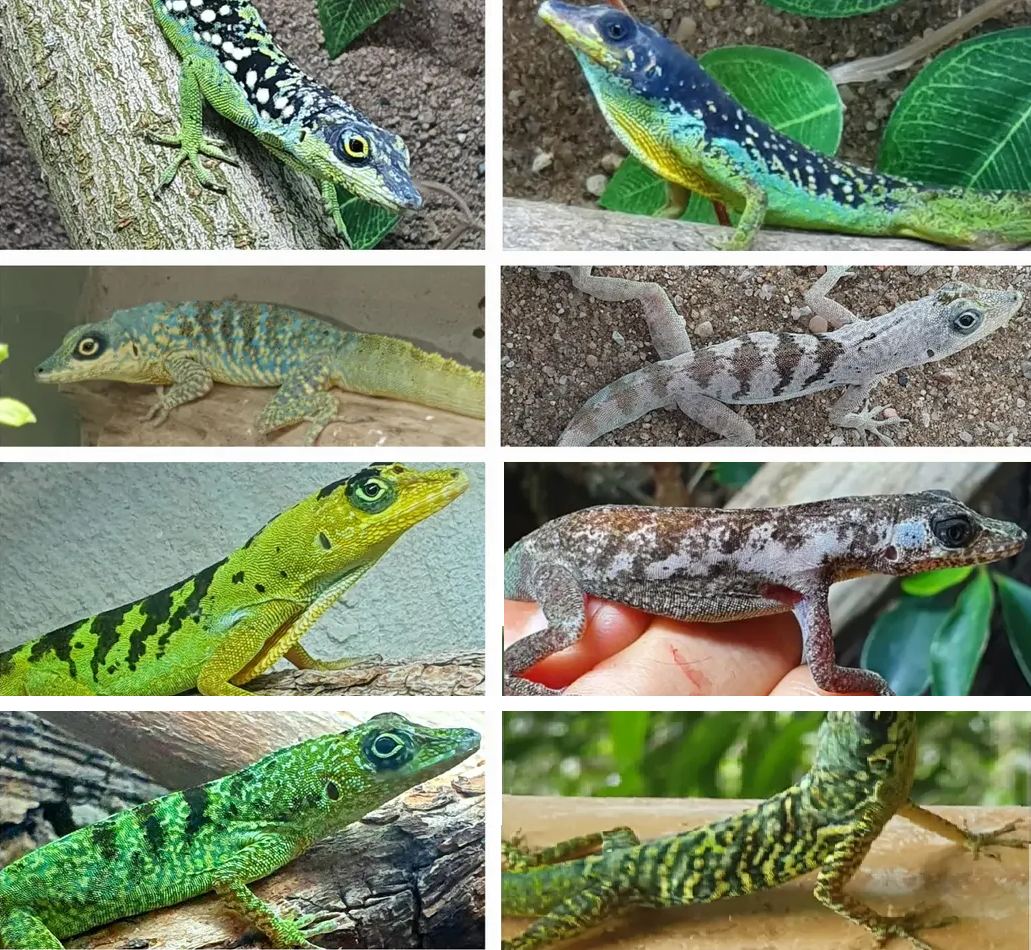
Iguanas · Difficulty: Intermediate
Key facts and care guidance for Western bearded anole (Chamaeleolis porcus) (origin: Endemic to Cuba; forests, gardens and edge habitats. A slow, chameleon-like "false chameleon" anole). Adult size around large and robust: approx. 20–30 cm total length with a strikingly large, angular head. Life expectancy approx. 6–10 years in captivity. The values below are carefully researched guidance.
Short answers
Western bearded anole: How big does the enclosure need to be?
45×45×90 cm for one adult animal (tall, front-ventilated, thin climbing branches).
Western bearded anole: What temperature does it need?
Daytime 24–28 °C (cooler zone 21–23 °C), basking spot 29–32 °C (moderate, does not bask much), at night 18–21 °C.
Western bearded anole: Does it need UVB lighting?
UVB: UVB needed (Ferguson zone 1–2, UV index 2–3; a shade and forest dweller).
Western bearded anole: How long do they live?
Life expectancy: approx. 6–10 years in captivity.
Western bearded anole: Is it suitable for beginners?
Rather not – it is considered an intermediate species (difficulty: Intermediate).
Climate
- Daytime temperature
- 24–28 °C (cooler zone 21–23 °C)
- Night temperature
- 18–21 °C
- Basking spot
- 29–32 °C (moderate, does not bask much)
- Humidity
- 60–80 % (down to ~40 % by day, up to ~100 % at night)
- UVB
- UVB needed (Ferguson zone 1–2, UV index 2–3; a shade and forest dweller)
Enclosure
- Minimum size
- 45×45×90 cm for one adult animal (tall, front-ventilated, thin climbing branches)
- Substrate
- Coco humus or soil with moss and leaf litter (moisture-retaining), thin branches
Feeding
- Food
- A specialist: land snails (captive-bred) as the staple, plus crickets, roaches, silkworms and locusts; calcium and vitamins
- Feeding interval
- adults every 2–3 days, juveniles daily to every other day
Key facts
- Adult size
- large and robust: approx. 20–30 cm total length with a strikingly large, angular head
- Life expectancy
- approx. 6–10 years in captivity
- Origin
- Endemic to Cuba; forests, gardens and edge habitats. A slow, chameleon-like "false chameleon" anole
- Protection status
- No CITES or EU regulation protection; not specially protected. Prefer captive-bred animals (a Cuban endemic).
- Brumation
- A slight, cooler seasonal spell is possible (Cuba); no strict winter rest is required
- Cohabitation
- Keeping singly is the least stressful, especially for males. Alternatively, one male with 1-2 females is possible in a sufficiently large enclosure, with females benefiting from occasional individual housing. Two males must never be together.
Notes
Calm, slow, and not very aggressive towards people, but territorial towards its own kind. A snail eater – the main mistakes: the wrong diet, dehydration, and injury from hungry crickets. Well to moderately documented.
Do you keep this species?
Add your animal to Reptoria – Reptoria reminds you about feeding and shedding. Add your animal for free →
Look for Western bearded anole (Chamaeleolis porcus) in the marketplace →
Related species
- Aguero's false chameleon (Chamaeleolis agueroi) – Intermediate
- Bearded false chameleon (Chamaeleolis barbatus) – Intermediate
- Cuban false chameleon (Chamaeleolis chamaeleonides) – Expert
- Guamuhaya false chameleon (Chamaeleolis guamuhaya) – Expert
- Ghost anole (Anolis lemurinus) – Intermediate
- Ahl's anole (Anolis ahli) – Intermediate
- Aliniger anole (Anolis aliniger) – Beginner with some knowledge
- Allogus anole (Anolis allogus) – Beginner with some knowledge
What you need to start
To keep Western bearded anole (Chamaeleolis porcus) you typically need: a suitable enclosure (45×45×90 cm for one adult animal (tall, front-ventilated, thin climbing branches)), substrate (Coco humus or soil with moss and leaf litter (moisture-retaining), thin branches), a heat source with a thermostat, UVB lighting, thermometer and hygrometer, a water dish and hides. You will find equipment in the Reptoria marketplace.
The complete, interactive care database is in the Reptoria app.
Last updated: 25 September 2026 · Editor: Reptoria editorial team · Sources include: https://en.wikipedia.org/wiki/Chamaeleolis, https://reptile-database.reptarium.cz/species?genus=Anolis&species=porcus
All values are non-binding guidance and do not replace expert advice. Research thoroughly from several sources before acquiring and keeping an animal, and observe the applicable law (species and animal protection in particular).