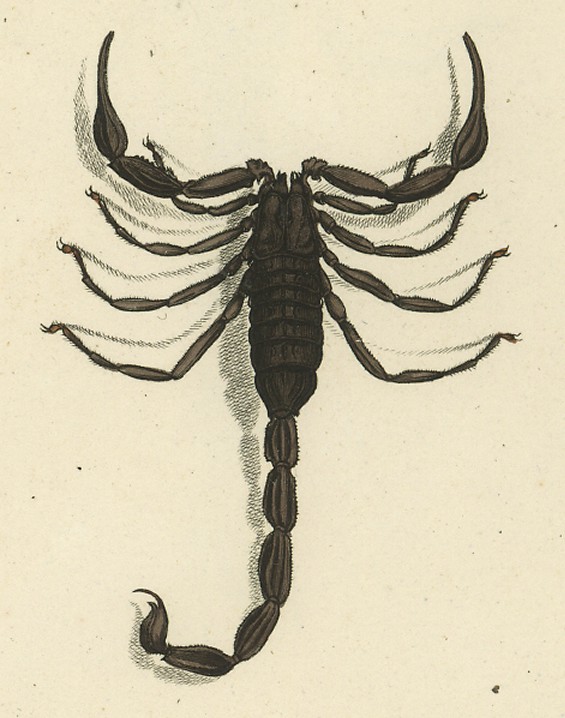
African bark scorpion (Hottentotta hottentotta)
Invertebrates · Difficulty: Intermediate
Key facts and care guidance for African bark scorpion (Hottentotta hottentotta) (origin: West and Central Africa). Adult size around approx. 7–9 cm. Life expectancy approx. 3–5 years. The values below are carefully researched guidance.
Short answers
African bark scorpion: How big does the enclosure need to be?
25×25×25 cm (kept singly).
African bark scorpion: What temperature does it need?
Daytime 30–35 °C, at night 20 °C.
African bark scorpion: Does it need UVB lighting?
UVB: No UVB needed (nocturnal).
African bark scorpion: How long do they live?
Life expectancy: approx. 3–5 years.
African bark scorpion: Is it suitable for beginners?
Rather not – it is considered an intermediate species (difficulty: Intermediate).
Climate
- Daytime temperature
- 30–35 °C
- Night temperature
- 20 °C
- Basking spot
- —
- Humidity
- 40–50 % (arid, dry)
- UVB
- No UVB needed (nocturnal)
Enclosure
- Minimum size
- 25×25×25 cm (kept singly)
- Substrate
- A sand and soil mix about 5 cm deep, pieces of bark as hides
Feeding
- Food
- House crickets, crickets, roaches
- Feeding interval
- adults 1×/week
Key facts
- Adult size
- approx. 7–9 cm
- Life expectancy
- approx. 3–5 years
- Origin
- West and Central Africa
- Protection status
- Not listed under CITES
- Brumation
- None
- Cohabitation
- Keep singly – group housing is problematic due to cannibalism risk. Because of parthenogenesis, females reproduce even without males, which is why groups are occasionally kept anyway, though not without risk.
Notes
The venom is painful, with a risk of cardiac and central nervous symptoms, and is usually not life-threatening to humans – but no hand contact all the same. A buthid, and not one for beginners. Parthenogenesis: reproduction is often unintended.
Do you keep this species?
Add your animal to Reptoria – Reptoria reminds you about feeding and shedding. Add your animal for free →
Look for African bark scorpion (Hottentotta hottentotta) in the marketplace →
Related species
- Giant desert hairy scorpion (Hadrurus arizonensis) – Beginner with some knowledge
- Asian giant forest scorpion (Heterometrus longimanus) – Beginner
- Asian black scorpion (Heterometrus petersii) – Beginner
- Asian forest scorpion (Heterometrus spinifer) – Intermediate
- Brazilian yellow scorpion (Tityus serrulatus) – Expert
- Dictator scorpion (Pandinus dictator) – Intermediate
- Italian scorpion (Euscorpius italicus) – Beginner
- Flat rock scorpion (Hadogenes troglodytes) – Intermediate
What you need to start
To keep African bark scorpion (Hottentotta hottentotta) you typically need: a suitable enclosure (25×25×25 cm (kept singly)), substrate (A sand and soil mix about 5 cm deep, pieces of bark as hides), a heat source with a thermostat, UVB lighting, thermometer and hygrometer, a water dish and hides. You will find equipment in the Reptoria marketplace.
The complete, interactive care database is in the Reptoria app.
Last updated: 9 October 2026 · Editor: Reptoria editorial team · Sources include: https://en.wikipedia.org/wiki/Hottentotta, https://en.wikipedia.org/wiki/Hottentotta_hottentotta
All values are non-binding guidance and do not replace expert advice. Research thoroughly from several sources before acquiring and keeping an animal, and observe the applicable law (species and animal protection in particular).