African helmeted turtle (Pelomedusa subrufa)
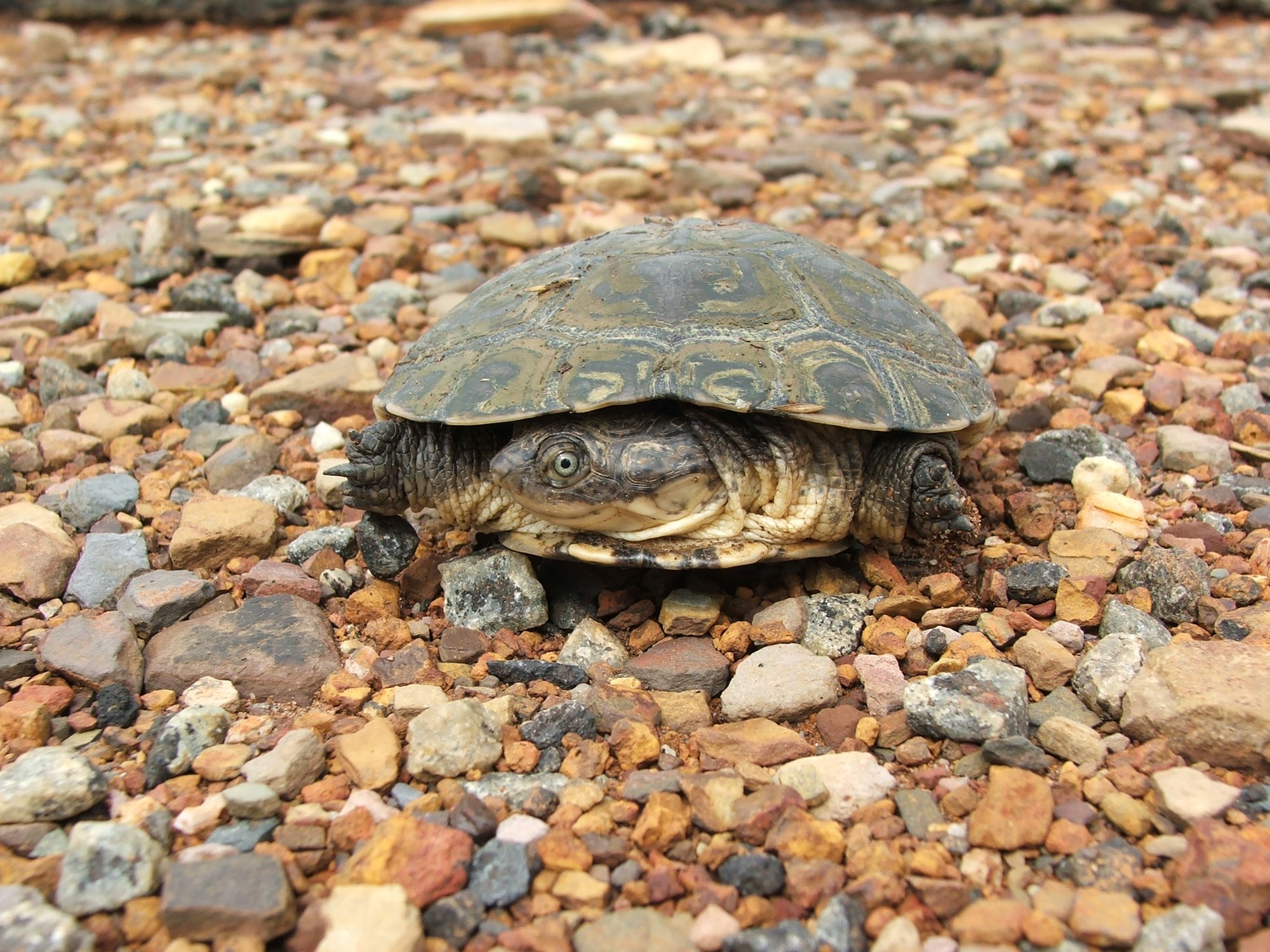
Turtles & tortoises · Difficulty: Beginner to intermediate
Key facts and care guidance for African helmeted turtle (Pelomedusa subrufa) (origin: Sub-Saharan Africa – temporary waters). Adult size around usually 15–21 cm carapace length, individual animals over 30 cm. Life expectancy 25–40 years. The values below are carefully researched guidance.
Short answers
African helmeted turtle: How big does the enclosure need to be?
From 130 × 65 cm aqua-terrarium (rule of thumb: 5 × 2.5 times carapace length; specialist bodies recommend 130–150 cm length), with the land area making up about a third of the space.
African helmeted turtle: What temperature does it need?
Daytime water 22–30 °C, air at the land area around 30 °C, basking spot A heat and UV spot above the dry land area, at night 19–23 °C.
African helmeted turtle: Does it need UVB lighting?
UVB: Essential (UVB 6 %).
African helmeted turtle: How long do they live?
Life expectancy: 25–40 years.
African helmeted turtle: Is it suitable for beginners?
Partly – manageable with some prior knowledge (difficulty: Beginner to intermediate).
Climate
- Daytime temperature
- water 22–30 °C, air at the land area around 30 °C
- Night temperature
- 19–23 °C
- Basking spot
- A heat and UV spot above the dry land area
- Humidity
- Aquatic with a land section
- UVB
- Essential (UVB 6 %)
Enclosure
- Minimum size
- from 130 × 65 cm aqua-terrarium (rule of thumb: 5 × 2.5 times carapace length; specialist bodies recommend 130–150 cm length), with the land area making up about a third of the space
- Substrate
- Water depth 30–40 cm; a sandy substrate is essential because these animals dig a lot; a land area with deep, moist substrate as an egg-laying site, with a heat and UV spot above it
Feeding
- Food
- Predominantly animal-based: earthworms, snails, mussels, fish and aquatic insects, plus some greens. Feeding takes place exclusively in the water; a cuttlebone to gnaw on covers the calcium requirement.
- Feeding interval
- 3×/week
Key facts
- Adult size
- usually 15–21 cm carapace length, individual animals over 30 cm
- Life expectancy
- 25–40 years
- Origin
- Sub-Saharan Africa – temporary waters
- Protection status
- Not listed under CITES
- Brumation
- No winter dormancy. In the wild these animals go into aestivation during droughts, burrowing into the mud; this doesn't need to be replicated in the enclosure.
- Cohabitation
- Solitary or pair. Two males harass each other and the females; during prolonged courtship a female visibly loses weight. So a pair only works if you can remove the male as soon as it harasses the female — a second tank belongs in the planning. Anyone with more space keeps one male with several females, so the courtship is spread out.
Notes
A robust, adaptable species from pools that dry out periodically. In dry conditions it can bury itself and rest. Shallower water than for purely aquatic turtles.
Do you keep this species?
Add your animal to Reptoria – Reptoria reminds you about feeding and shedding. Add your animal for free →
Look for African helmeted turtle (Pelomedusa subrufa) in the marketplace →
Related species
- Argentine snake-necked turtle (Hydromedusa tectifera) – Intermediate
- Eastern long-necked turtle (Chelodina longicollis) – Intermediate
- Gibba turtle (Mesoclemmys gibba) – Intermediate
- Matamata (Chelus fimbriata) – Expert
- Hilaire's toadhead turtle (Phrynops hilarii) – Intermediate
- Murray River turtle (Emydura macquarii) – Intermediate
- Northern snake-necked turtle (Chelodina rugosa) – Intermediate
- Reimann's snake-necked turtle (Chelodina reimanni) – Intermediate
What you need to start
To keep African helmeted turtle (Pelomedusa subrufa) you typically need: a suitable enclosure (from 130 × 65 cm aqua-terrarium (rule of thumb: 5 × 2.5 times carapace length; specialist bodies recommend 130–150 cm length), with the land area making up about a third of the space), substrate (Water depth 30–40 cm; a sandy substrate is essential because these animals dig a lot; a land area with deep, moist substrate as an egg-laying site, with a heat and UV spot above it), a heat source with a thermostat, UVB lighting, thermometer and hygrometer, a water dish and hides. You will find equipment in the Reptoria marketplace.
The complete, interactive care database is in the Reptoria app.
Last updated: 2 November 2026 · Editor: Reptoria editorial team · Sources include: schildkroeten-schutz.de (IGSN), Wikipedia EN, eu_annex.txt (VO (EU) 2026/1383, lokal), gesetze-im-internet.de (BArtSchV Anlage 1), gutachten.txt (BML 1997, lokal)
All values are non-binding guidance and do not replace expert advice. Research thoroughly from several sources before acquiring and keeping an animal, and observe the applicable law (species and animal protection in particular).