Atlas beetle (Chalcosoma atlas)
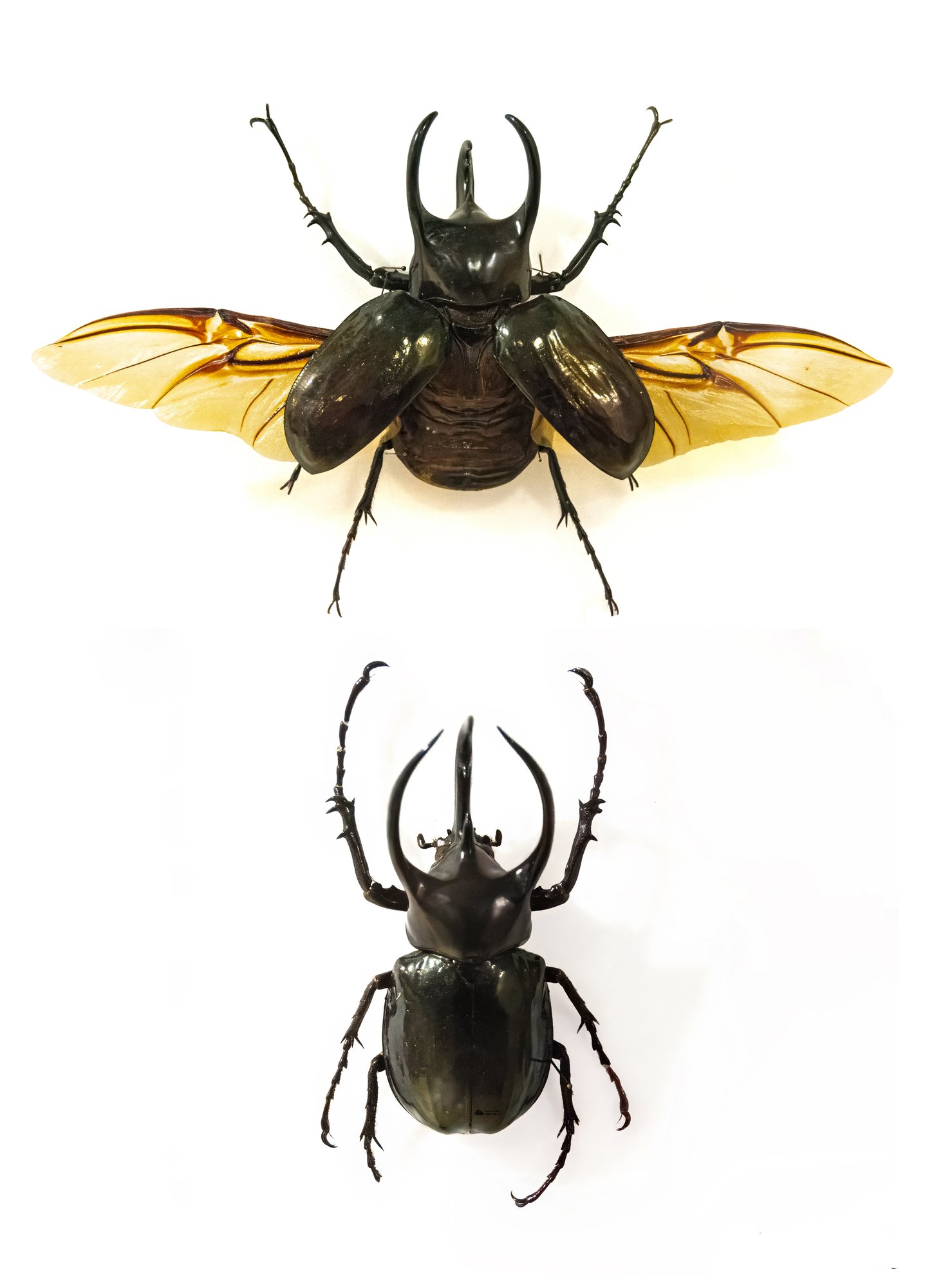
Invertebrates · Difficulty: Intermediate
Key facts and care guidance for Atlas beetle (Chalcosoma atlas) (origin: South-East Asia). Adult size around males 6–12 cm including horn, individual animals up to 13 cm; females hornless, 3–6 cm. Life expectancy larva 8–15 months, plus 1–2 months of pupal rest; the adult beetle lives 3–6 months. The values below are carefully researched guidance.
Short answers
Atlas beetle: How big does the enclosure need to be?
50×40×40 cm.
Atlas beetle: What temperature does it need?
Daytime 24–28 °C, basking spot No basking spot, at night 20–23 °C.
Atlas beetle: Does it need UVB lighting?
UVB: Not required.
Atlas beetle: How long do they live?
Life expectancy: larva 8–15 months, plus 1–2 months of pupal rest; the adult beetle lives 3–6 months.
Atlas beetle: Is it suitable for beginners?
Rather not – it is considered an intermediate species (difficulty: Intermediate).
Climate
- Daytime temperature
- 24–28 °C
- Night temperature
- 20–23 °C
- Basking spot
- No basking spot
- Humidity
- 70–85 %
- UVB
- Not required
Enclosure
- Minimum size
- 50×40×40 cm
- Substrate
- Larvae: leaf or white-rot mould 30–40 cm; adults: mould plus sturdy branches
Feeding
- Food
- Larvae: flake soil or leaf mould; beetles: beetle jelly, bananas
- Feeding interval
- Beetles daily to every other day fresh jelly or fruit, remove leftovers every morning; larvae feed continuously on substrate, change every 2–3 months.
Key facts
- Adult size
- males 6–12 cm including horn, individual animals up to 13 cm; females hornless, 3–6 cm
- Life expectancy
- larva 8–15 months, plus 1–2 months of pupal rest; the adult beetle lives 3–6 months
- Origin
- South-East Asia
- Protection status
- Not listed under CITES
- Brumation
- None
- Cohabitation
- Never males together (they fight). Larvae grow up individually in their own containers — in shared substrate they disturb each other while pupating and eat each other.
Notes
The male has three mighty horns. The larvae need very deep mulm and over a year to develop – the breeding is the real project. Keep the larvae strictly singly.
Do you keep this species?
Add your animal to Reptoria – Reptoria reminds you about feeding and shedding. Add your animal for free →
Look for Atlas beetle (Chalcosoma atlas) in the marketplace →
Related species
- Actaeon beetle (Megasoma actaeon) – Intermediate
- Elephant beetle (Megasoma elephas) – Intermediate
- European rhinoceros beetle (Oryctes nasicornis) – Intermediate
- Goliath beetle (Goliathus goliatus) – Expert
- Grall's flower beetle (Eudicella gralli) – Beginner
- Hercules beetle (Dynastes hercules) – Intermediate
- European stag beetle (Lucanus cervus) – Expert
- Japanese rhinoceros beetle (Trypoxylus dichotomus) – Beginner
What you need to start
To keep Atlas beetle (Chalcosoma atlas) you typically need: a suitable enclosure (50×40×40 cm), substrate (Larvae: leaf or white-rot mould 30–40 cm; adults: mould plus sturdy branches), a heat source with a thermostat, thermometer and hygrometer, a water dish and hides. You will find equipment in the Reptoria marketplace.
The complete, interactive care database is in the Reptoria app.
Last updated: 9 October 2026 · Editor: Reptoria editorial team · Sources include: Wikipedia DE, Wikipedia EN, entomologenportal.de, eu_annex.txt (lokal), interaquaristik.de
All values are non-binding guidance and do not replace expert advice. Research thoroughly from several sources before acquiring and keeping an animal, and observe the applicable law (species and animal protection in particular).