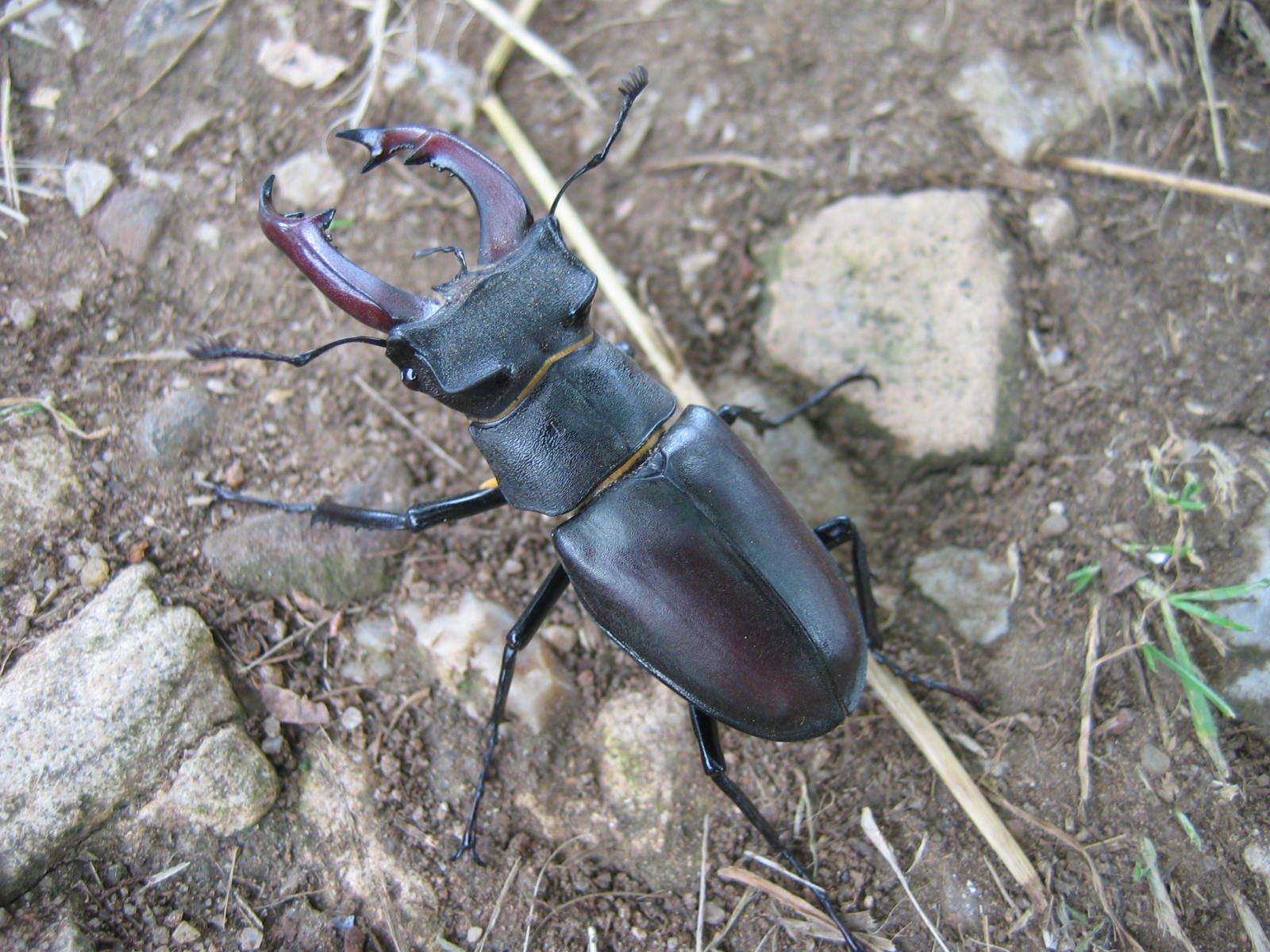
European stag beetle (Lucanus cervus)
Invertebrates · Difficulty: Expert
Key facts and care guidance for European stag beetle (Lucanus cervus) (origin: Europe, the Near East (oak woodland)). Adult size around males approx. 35–75 (up to 90) mm including the mandibles, females approx. 30–50 mm. Life expectancy the beetle lives only a few weeks to months; larval development takes 3–8 years. The values below are carefully researched guidance.
Short answers
European stag beetle: How big does the enclosure need to be?
Larvae in white-rotted oak wood or a container; beetles: approx. 40×30×30 cm (keeping them is heavily restricted in Germany).
European stag beetle: What temperature does it need?
Daytime 18–24 °C, at night 12–18 °C.
European stag beetle: Does it need UVB lighting?
UVB: No UVB needed.
European stag beetle: How long do they live?
Life expectancy: the beetle lives only a few weeks to months; larval development takes 3–8 years.
European stag beetle: Is it suitable for beginners?
No – better suited to experienced keepers (difficulty: Expert).
Climate
- Daytime temperature
- 18–24 °C
- Night temperature
- 12–18 °C
- Basking spot
- —
- Humidity
- 60–80 % (substrate and wood kept damp)
- UVB
- No UVB needed
Enclosure
- Minimum size
- larvae in white-rotted oak wood or a container; beetles: approx. 40×30×30 cm (keeping them is heavily restricted in Germany)
- Substrate
- Larvae: white-rotted deciduous or oak wood (almost 100 % wood), damp; they pupate in the surrounding soil
Feeding
- Food
- Beetles: tree or fermenting sap, fruit, sugar solution; the females need protein (a little yoghurt, for example) to develop their eggs; larvae: rotten oak wood
- Feeding interval
- beetles: sap or fruit as needed; the larvae feed continuously from the wood substrate
Key facts
- Adult size
- males approx. 35–75 (up to 90) mm including the mandibles, females approx. 30–50 mm
- Life expectancy
- the beetle lives only a few weeks to months; larval development takes 3–8 years
- Origin
- Europe, the Near East (oak woodland)
- Protection status
- HIGHLY relevant: Habitats Directive Annex II and SPECIALLY PROTECTED (German Species Protection Ordinance and §44 of the Federal Nature Conservation Act). Taking it from the wild and possessing it are prohibited – keeping it in Germany is practically NOT legal. Mark it in the app as protected and not keepable
- Brumation
- The larvae overwinter cool in rotten wood (development takes several years); there is no keeper-controlled brumation of the beetles
- Cohabitation
- Single keeping. Males fight with their mandibles over females and try to throw each other off the branch, so avoid several males together. Pairs (one male, one female) only briefly for mating. The larvae each live in their own wood and are not kept in groups. More important than social behaviour here is the protection status.
Notes
Legally: a protected native species, and keeping or collecting it is prohibited – the app should warn clearly. The larval requirements are extremely high (special oak white-rot wood), with very long development. Only theoretical or legally permitted keeping.
Do you keep this species?
Add your animal to Reptoria – Reptoria reminds you about feeding and shedding. Add your animal for free →
Look for European stag beetle (Lucanus cervus) in the marketplace →
Related species
- Actaeon beetle (Megasoma actaeon) – Intermediate
- Atlas beetle (Chalcosoma atlas) – Intermediate
- Elephant beetle (Megasoma elephas) – Intermediate
- European rhinoceros beetle (Oryctes nasicornis) – Intermediate
- Goliath beetle (Goliathus goliatus) – Expert
- Grall's flower beetle (Eudicella gralli) – Beginner
- Hercules beetle (Dynastes hercules) – Intermediate
- Japanese rhinoceros beetle (Trypoxylus dichotomus) – Beginner
What you need to start
To keep European stag beetle (Lucanus cervus) you typically need: a suitable enclosure (larvae in white-rotted oak wood or a container; beetles: approx. 40×30×30 cm (keeping them is heavily restricted in Germany)), substrate (Larvae: white-rotted deciduous or oak wood (almost 100 % wood), damp; they pupate in the surrounding soil), a heat source with a thermostat, UVB lighting, thermometer and hygrometer, a water dish and hides. You will find equipment in the Reptoria marketplace.
The complete, interactive care database is in the Reptoria app.
Last updated: 8 November 2026 · Editor: Reptoria editorial team · Sources include: Wikipedia Hirschkaefer - Eiablage in Totholz, Larvalzeit 3-8 Jahre, keine Ei-Tage-Angabe – https://de.wikipedia.org/wiki/Hirschk%C3%A4fer, Wikipedia Pachnoda marginata - Ei-Inkubation 21-28 Tage als Analogiewert Scarabaeoidea – https://de.wikipedia.org/wiki/Pachnoda_marginata, https://de.wikipedia.org/wiki/Hirschk%C3%A4fer, https://en.wikipedia.org/wiki/Lucanus_cervus, https://www.nabu.de/tiere-und-pflanzen/insekten-und-spinnen/kaefer/14287.html
All values are non-binding guidance and do not replace expert advice. Research thoroughly from several sources before acquiring and keeping an animal, and observe the applicable law (species and animal protection in particular).