European rhinoceros beetle (Oryctes nasicornis)
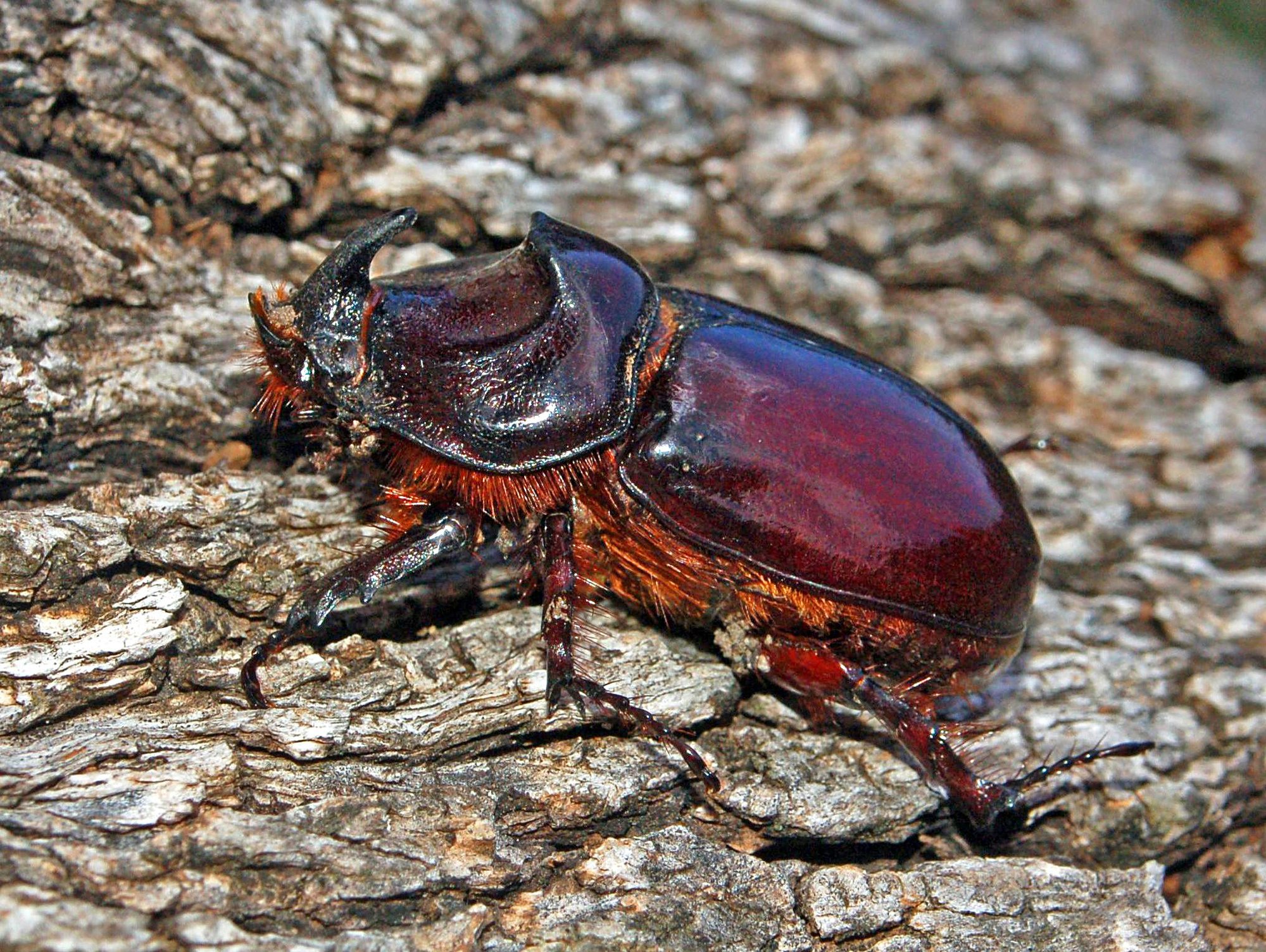
Invertebrates · Difficulty: Intermediate
Key facts and care guidance for European rhinoceros beetle (Oryctes nasicornis) (origin: Europe, North Africa, western and Central Asia). Adult size around approx. 2.5–4 cm (males up to ~4.7 cm with the horn). Life expectancy the beetle lives a few weeks to months; larval development takes 3–5 years. The values below are carefully researched guidance.
Short answers
European rhinoceros beetle: How big does the enclosure need to be?
Larvae: a container or tub with deep compost or mulch substrate; beetles: approx. 30×30×30 cm.
European rhinoceros beetle: What temperature does it need?
Daytime 20–26 °C, at night 16–20 °C.
European rhinoceros beetle: Does it need UVB lighting?
UVB: No UVB needed.
European rhinoceros beetle: How long do they live?
Life expectancy: the beetle lives a few weeks to months; larval development takes 3–5 years.
European rhinoceros beetle: Is it suitable for beginners?
Rather not – it is considered an intermediate species (difficulty: Intermediate).
Climate
- Daytime temperature
- 20–26 °C
- Night temperature
- 16–20 °C
- Basking spot
- —
- Humidity
- 60–80 % (substrate evenly damp)
- UVB
- No UVB needed
Enclosure
- Minimum size
- larvae: a container or tub with deep compost or mulch substrate; beetles: approx. 30×30×30 cm
- Substrate
- Larvae: mature leaf compost or white-rot wood, bark mulch and humus-rich soil (30 cm or more deep), evenly damp; do not disturb the self-built pupal cocoon
Feeding
- Food
- Larvae: decaying wood, compost or leaf litter; the beetles barely feed (a little fruit or juice if anything)
- Feeding interval
- the larvae feed continuously from the substrate; keep it damp and top it up
Key facts
- Adult size
- approx. 2.5–4 cm (males up to ~4.7 cm with the horn)
- Life expectancy
- the beetle lives a few weeks to months; larval development takes 3–5 years
- Origin
- Europe, North Africa, western and Central Asia
- Protection status
- SPECIALLY PROTECTED in Germany (Species Protection Ordinance Annex 1, §44 of the Federal Nature Conservation Act): taking it from the wild, buying, selling and possessing wild-taken animals are prohibited. Keeping it is possible only with documented captive-bred animals and proof of origin – ask the authority when in doubt
- Brumation
- The larvae naturally overwinter cool in compost (a univoltine or multi-year cycle); no keeper-controlled brumation of the beetles is needed
- Cohabitation
- The larvae in compost usually get on communally (with plenty of substrate and space); the beetles are short-lived, so pair them for breeding. Note the legal protection status when keeping them singly
Notes
The legal status is the most important point – legal captive-bred animals only. Dose the moisture carefully when watering, as the pupae go mouldy quickly. A common mistake: collecting from the wild (illegal).
Do you keep this species?
Add your animal to Reptoria – Reptoria reminds you about feeding and shedding. Add your animal for free →
Look for European rhinoceros beetle (Oryctes nasicornis) in the marketplace →
Related species
- Actaeon beetle (Megasoma actaeon) – Intermediate
- Atlas beetle (Chalcosoma atlas) – Intermediate
- Elephant beetle (Megasoma elephas) – Intermediate
- Goliath beetle (Goliathus goliatus) – Expert
- Grall's flower beetle (Eudicella gralli) – Beginner
- Hercules beetle (Dynastes hercules) – Intermediate
- European stag beetle (Lucanus cervus) – Expert
- Japanese rhinoceros beetle (Trypoxylus dichotomus) – Beginner
What you need to start
To keep European rhinoceros beetle (Oryctes nasicornis) you typically need: a suitable enclosure (larvae: a container or tub with deep compost or mulch substrate; beetles: approx. 30×30×30 cm), substrate (Larvae: mature leaf compost or white-rot wood, bark mulch and humus-rich soil (30 cm or more deep), evenly damp; do not disturb the self-built pupal cocoon), a heat source with a thermostat, UVB lighting, thermometer and hygrometer, a water dish and hides. You will find equipment in the Reptoria marketplace.
The complete, interactive care database is in the Reptoria app.
Last updated: 9 October 2026 · Editor: Reptoria editorial team · Sources include: https://en.wikipedia.org/wiki/Oryctes, https://en.wikipedia.org/wiki/Oryctes_nasicornis
All values are non-binding guidance and do not replace expert advice. Research thoroughly from several sources before acquiring and keeping an animal, and observe the applicable law (species and animal protection in particular).