Bark mantis (Popa spurca)
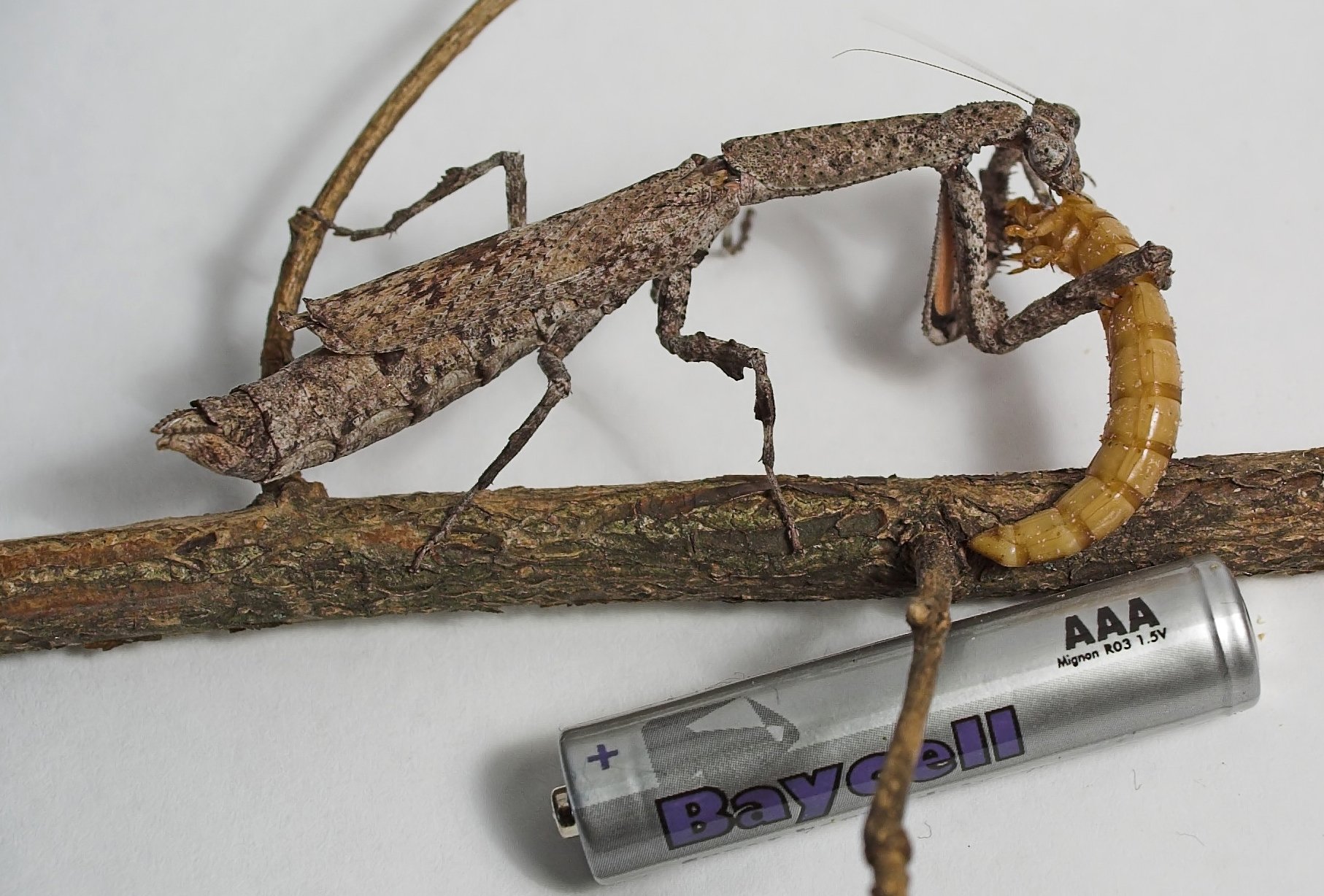
Invertebrates · Difficulty: Beginner
Key facts and care guidance for Bark mantis (Popa spurca) (origin: Africa (the savannahs of southern and eastern Africa)). Adult size around Females 7.5–8 cm, males 6.5–7 cm and slimmer. Life expectancy approx. 8–12 months (females considerably longer than males). The values below are carefully researched guidance.
Short answers
Bark mantis: How big does the enclosure need to be?
20×20×30 cm (height at least 3× the body length).
Bark mantis: What temperature does it need?
Daytime 24–30 °C, at night 18–22 °C.
Bark mantis: Does it need UVB lighting?
UVB: No UVB needed.
Bark mantis: How long do they live?
Life expectancy: approx. 8–12 months (females considerably longer than males).
Bark mantis: Is it suitable for beginners?
Yes – it is considered suitable for beginners (difficulty: Beginner).
Climate
- Daytime temperature
- 24–30 °C
- Night temperature
- 18–22 °C
- Basking spot
- —
- Humidity
- 40–60 %
- UVB
- No UVB needed
Enclosure
- Minimum size
- 20×20×30 cm (height at least 3× the body length)
- Substrate
- Coco humus or kitchen paper
Feeding
- Food
- Flies (fruit flies for juveniles), flies or small house crickets as adults
- Feeding interval
- adults 2–3×/week, juveniles daily to every other day
Key facts
- Adult size
- Females 7.5–8 cm, males 6.5–7 cm and slimmer
- Life expectancy
- approx. 8–12 months (females considerably longer than males)
- Origin
- Africa (the savannahs of southern and eastern Africa)
- Protection status
- No protected status (not listed under CITES or German nature conservation law)
- Brumation
- None
- Cohabitation
- Keep them singly. Territorial and cannibalistic, so never put males together; a pair only under supervision and briefly for breeding.
Notes
A quiet twig and stick mimic. Good double ventilation matters; neither too wet nor too dry (otherwise shedding problems). It climbs upside down – line the lid with gauze.
Do you keep this species?
Add your animal to Reptoria – Reptoria reminds you about feeding and shedding. Add your animal for free →
Related species
- Spiny flower mantis (Pseudocreobotra wahlbergii) – Beginner to intermediate
- African giant mantis (Sphodromantis lineola) – Beginner
- African giant mantis (Sphodromantis viridis) – Beginner
- Egyptian dwarf mantis (Miomantis paykullii) – Beginner
- Asian ant mantis (Odontomantis planiceps) – Beginner
- Giant Asian mantis (Hierodula patellifera) – Beginner
- Banded flower mantis (Theopropus elegans) – Intermediate
- Boxer mantis (Ephestiasula pictipes) – Intermediate
What you need to start
To keep Bark mantis (Popa spurca) you typically need: a suitable enclosure (20×20×30 cm (height at least 3× the body length)), substrate (Coco humus or kitchen paper), a heat source with a thermostat, UVB lighting, thermometer and hygrometer, a water dish and hides. You will find equipment in the Reptoria marketplace.
The complete, interactive care database is in the Reptoria app.
Last updated: 30 October 2026 · Editor: Reptoria editorial team · Sources include: https://de.wikipedia.org/wiki/Kleine_Astmantis, https://en.wikipedia.org/wiki/Popa_spurca
All values are non-binding guidance and do not replace expert advice. Research thoroughly from several sources before acquiring and keeping an animal, and observe the applicable law (species and animal protection in particular).