Blotched blue-tongued skink (Tiliqua nigrolutea)
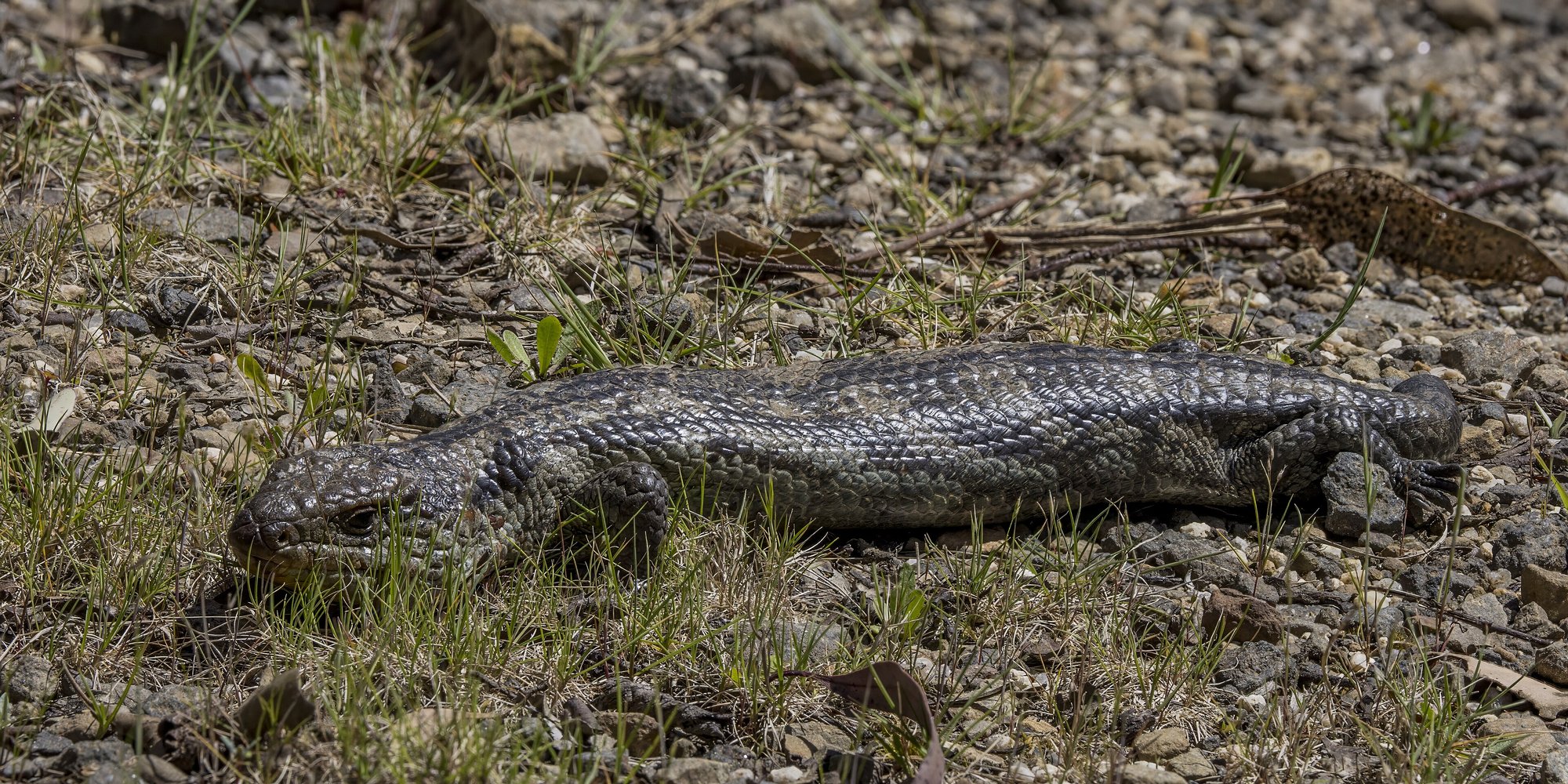
Skinks · Difficulty: Intermediate
Key facts and care guidance for Blotched blue-tongued skink (Tiliqua nigrolutea) (origin: South-eastern Australia: Tasmania, Victoria, NSW, south-eastern South Australia, the Bass Strait islands; cool temperate. A highland (alpine) and a lowland form (the highland form is darker and more heat-sensitive)). Adult size around 30–45 cm total length, large animals up to 50–55 cm; heavy-bodied, over 1 kg is possible. Life expectancy 20+ years (average ~11–12 years). The values below are carefully researched guidance.
Short answers
Blotched blue-tongued skink: How big does the enclosure need to be?
120×60×50 cm for one animal (minimum), better 150×60 cm of floor area; a pure ground-dweller.
Blotched blue-tongued skink: What temperature does it need?
Daytime 22–26 °C ambient (cooler side 20–24 °C); copes badly with sustained heat, basking spot 30–35 °C (local basking point, cooler than tropical blue-tongues), at night 12–18 °C.
Blotched blue-tongued skink: Does it need UVB lighting?
UVB: UVB needed (Ferguson zone 2–3, UV index 2–4; a 10–12 % T5 over about two thirds of the length).
Blotched blue-tongued skink: How long do they live?
Life expectancy: 20+ years (average ~11–12 years).
Blotched blue-tongued skink: Is it suitable for beginners?
Rather not – it is considered an intermediate species (difficulty: Intermediate).
Climate
- Daytime temperature
- 22–26 °C ambient (cooler side 20–24 °C); copes badly with sustained heat
- Night temperature
- 12–18 °C
- Basking spot
- 30–35 °C (local basking point, cooler than tropical blue-tongues)
- Humidity
- 40–60 %
- UVB
- UVB needed (Ferguson zone 2–3, UV index 2–4; a 10–12 % T5 over about two thirds of the length)
Enclosure
- Minimum size
- 120×60×50 cm for one animal (minimum), better 150×60 cm of floor area; a pure ground-dweller
- Substrate
- A soil and sand mix they can dig in (10–15 cm) with leaf litter, pieces of bark and hides; a generous water dish
Feeding
- Food
- Omnivorous (~60 % plant / 40 % animal): snails, beetles, caterpillars, earthworms, insects; herbs and greens, berries; occasionally a pinkie
- Feeding interval
- adults 1–2×/week; juveniles every 1–2 days
Key facts
- Adult size
- 30–45 cm total length, large animals up to 50–55 cm; heavy-bodied, over 1 kg is possible
- Life expectancy
- 20+ years (average ~11–12 years)
- Origin
- South-eastern Australia: Tasmania, Victoria, NSW, south-eastern South Australia, the Bass Strait islands; cool temperate. A highland (alpine) and a lowland form (the highland form is darker and more heat-sensitive)
- Protection status
- CITES Anhang III (Australien, seit 22.06.2022) → EU-Anhang C. AU-Export verboten → EU-Tiere = Nachzuchten; Herkunfts-/Nachzuchtnachweis empfohlen (Import: Pflicht). Anhang C i.d.R. Keine BNatSchG-Meldepflicht; im Zweifel WISIA/Behörde prüfen
- Brumation
- YES, compulsory: a winter rest or brumation of ~2–3 months at ~10–15 °C (12–16 °C by day), with the photoperiod cut to ~8 h and feeding stopped; especially essential for the highland form and for breeding
- Cohabitation
- Keep them singly. Territorial and solitary; keep them as a pair only temporarily and under supervision for breeding. NEVER keep males together (a risk of serious bite injuries)
Notes
A cool-climate specialist; the commonest mistake = overheating, too warm a terrarium, and no winter rest. Live-bearing (about 3–6 young, and the females often only every second year). Obesity when overfed. Otherwise tame and long-lived – "advanced" mainly because of the climate and brumation.
Do you keep this species?
Add your animal to Reptoria – Reptoria reminds you about feeding and shedding. Add your animal for free →
Look for Blotched blue-tongued skink (Tiliqua nigrolutea) in the marketplace →
Related species
- Centralian blue-tongued skink (Tiliqua multifasciata) – Intermediate
- Common blue-tongued skink (Tiliqua scincoides) – Beginner
- Halmahera blue-tongued skink (Tiliqua gigas gigas) – Intermediate
- Indonesian blue-tongued skink (Tiliqua gigas) – Beginner to intermediate
- Irian Jaya blue-tongued skink (Tiliqua sp. „Irian Jaya") – Intermediate
- Kei Island blue-tongued skink (Tiliqua gigas keyensis) – Intermediate
- Shingleback skink (Tiliqua rugosa) – Intermediate
- Merauke blue-tongued skink (Tiliqua gigas evanescens) – Intermediate
What you need to start
To keep Blotched blue-tongued skink (Tiliqua nigrolutea) you typically need: a suitable enclosure (120×60×50 cm for one animal (minimum), better 150×60 cm of floor area; a pure ground-dweller), substrate (A soil and sand mix they can dig in (10–15 cm) with leaf litter, pieces of bark and hides; a generous water dish), a heat source with a thermostat, UVB lighting, thermometer and hygrometer, a water dish and hides. You will find equipment in the Reptoria marketplace.
The complete, interactive care database is in the Reptoria app.
Last updated: 9 October 2026 · Editor: Reptoria editorial team · Sources include: https://en.wikipedia.org/wiki/Blotched_blue-tongued_lizard, https://reptile-database.reptarium.cz/species?genus=Tiliqua&species=nigrolutea
All values are non-binding guidance and do not replace expert advice. Research thoroughly from several sources before acquiring and keeping an animal, and observe the applicable law (species and animal protection in particular).