Colombian rainbow boa (Epicrates alvarezi)
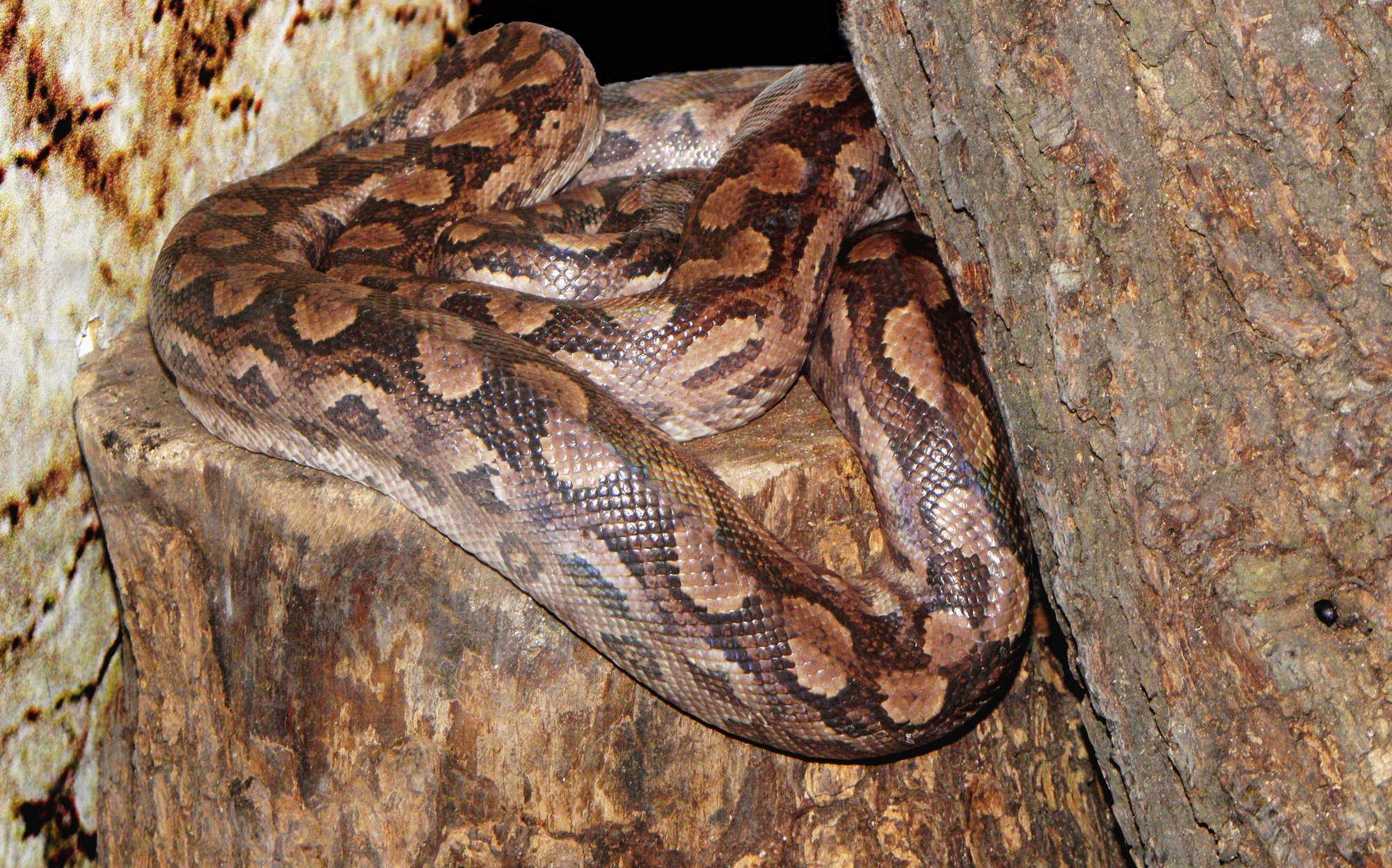
Snakes · Difficulty: Intermediate
Key facts and care guidance for Colombian rainbow boa (Epicrates alvarezi) (origin: The Gran Chaco – northern Argentina, Paraguay, Bolivia). Adult size around 110–150 cm (females larger). Life expectancy 15–20 years (up to 25). The values below are carefully researched guidance.
Short answers
Colombian rainbow boa: How big does the enclosure need to be?
From 120×75×115 cm (minimum size per the 1997 expert report, E. angulifer over 1.5 m).
Colombian rainbow boa: What temperature does it need?
Daytime 26–30 °C, basking spot 30–33 °C (local hot spot; sustained temperatures above 32 °C are poorly tolerated), at night 22–25 °C.
Colombian rainbow boa: Does it need UVB lighting?
UVB: UVB not essential (nocturnal), low UVB (Ferguson zone 1) optional.
Colombian rainbow boa: How long do they live?
Life expectancy: 15–20 years (up to 25).
Colombian rainbow boa: Is it suitable for beginners?
Rather not – it is considered an intermediate species (difficulty: Intermediate).
Climate
- Daytime temperature
- 26–30 °C
- Night temperature
- 22–25 °C
- Basking spot
- 30–33 °C (local hot spot; sustained temperatures above 32 °C are poorly tolerated)
- Humidity
- 70–90 % (up to 100 % at night)
- UVB
- UVB not essential (nocturnal), low UVB (Ferguson zone 1) optional
Enclosure
- Minimum size
- from 120×75×115 cm (minimum size per the 1997 expert report, E. angulifer over 1.5 m)
- Substrate
- Forest floor or a coco humus and soil mix they can dig in, damp, at least 5 cm, with leaf litter and moss
Feeding
- Food
- Mice and rats (frozen-thawed), occasionally chicks or birds
- Feeding interval
- adults every 10–14 days, juveniles every 5–7 days
Key facts
- Adult size
- 110–150 cm (females larger)
- Life expectancy
- 15–20 years (up to 25)
- Origin
- The Gran Chaco – northern Argentina, Paraguay, Bolivia
- Protection status
- CITES Appendix II / EU Regulation Annex B; registration required in Germany (proof of origin or CITES paperwork needed)
- Brumation
- No real winter rest; a slight winter drop in temperature only to stimulate breeding
- Cohabitation
- Keep them singly – boas are solitary; put them together only briefly and under supervision for breeding (a risk of stress and injury)
Notes
The Chaco form is a little drier and cooler than E. c. cenchria. The main mistakes: conditions that are too dry OR too wet → shedding problems and respiratory infections; a large water basin matters. Some subspecies-specific figures are derived from the E. cenchria complex.
Do you keep this species?
Add your animal to Reptoria – Reptoria reminds you about feeding and shedding. Add your animal for free →
Look for Colombian rainbow boa (Epicrates alvarezi) in the marketplace →
Related species
- Caatinga rainbow boa (Epicrates assisi) – Intermediate
- Cerrado rainbow boa (Epicrates crassus) – Intermediate
- Colombian rainbow boa (Epicrates cenchria cenchria) – Intermediate
- Colombian rainbow boa (Epicrates maurus) – Intermediate
- Egyptian sand boa (Eryx colubrinus colubrinus) – Beginner
- Arabian sand boa (Eryx jayakari) – Beginner to intermediate
- Red sand boa (Eryx johnii) – Intermediate
- Kenyan sand boa (Eryx colubrinus loveridgei) – Beginner
What you need to start
To keep Colombian rainbow boa (Epicrates alvarezi) you typically need: a suitable enclosure (from 120×75×115 cm (minimum size per the 1997 expert report, E. angulifer over 1.5 m)), substrate (Forest floor or a coco humus and soil mix they can dig in, damp, at least 5 cm, with leaf litter and moss), a heat source with a thermostat, UVB lighting, thermometer and hygrometer, a water dish and hides. You will find equipment in the Reptoria marketplace.
The complete, interactive care database is in the Reptoria app.
Last updated: 9 October 2026 · Editor: Reptoria editorial team · Sources include: https://en.wikipedia.org/wiki/Epicrates_alvarezi, https://reptifiles.com/brazilian-rainbow-boa-care-sheet/, https://reptile-database.reptarium.cz/species?genus=Epicrates&species=alvarezi
All values are non-binding guidance and do not replace expert advice. Research thoroughly from several sources before acquiring and keeping an animal, and observe the applicable law (species and animal protection in particular).