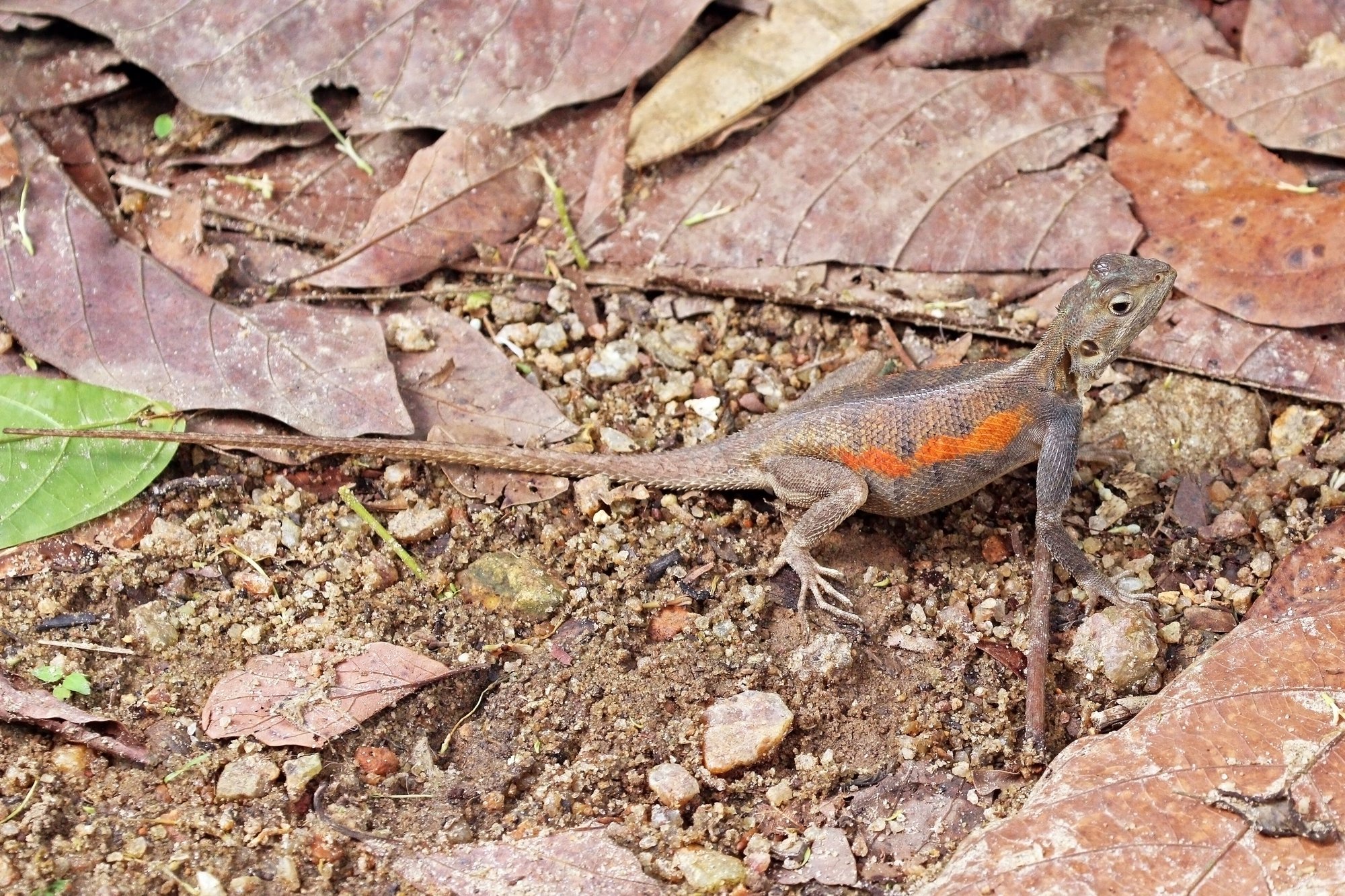
Common agama – red-headed (Agama agama)
Agamas · Difficulty: Intermediate
Key facts and care guidance for Common agama – red-headed (Agama agama) (origin: Sub-Saharan Africa (savannah and rock, often near settlements → the "settler agama")). Adult size around approx. 25–40 cm total length (males larger). Life expectancy approx. 6–10 years. The values below are carefully researched guidance.
Short answers
Common agama – red-headed: How big does the enclosure need to be?
Single animal from 120 × 60 × 60 cm, 200 × 100 × 150 cm recommended; at least 180 × 90 × 180 cm for a pair or harem group — climbing walls and height matter.
Common agama – red-headed: What temperature does it need?
Daytime 28–32 °C, basking spot 40–50 °C, at night 22–24 °C.
Common agama – red-headed: Does it need UVB lighting?
UVB: UVB is essential (Ferguson zone 3–4, UV index 4–6; the lamp no more than 30 cm above the basking spot).
Common agama – red-headed: How long do they live?
Life expectancy: approx. 6–10 years.
Common agama – red-headed: Is it suitable for beginners?
Rather not – it is considered an intermediate species (difficulty: Intermediate).
Climate
- Daytime temperature
- 28–32 °C
- Night temperature
- 22–24 °C
- Basking spot
- 40–50 °C
- Humidity
- 40–60 %
- UVB
- UVB is essential (Ferguson zone 3–4, UV index 4–6; the lamp no more than 30 cm above the basking spot)
Enclosure
- Minimum size
- single animal from 120 × 60 × 60 cm, 200 × 100 × 150 cm recommended; at least 180 × 90 × 180 cm for a pair or harem group — climbing walls and height matter
- Substrate
- A sand-loam mix, flat stone slabs as a basking spot, several hides in different temperature zones
Feeding
- Food
- Insects (house crickets, crickets, roaches, locusts); occasionally a little greenery; calcium and vitamins
- Feeding interval
- adults 3–4×/week, juveniles daily
Key facts
- Adult size
- approx. 25–40 cm total length (males larger)
- Life expectancy
- approx. 6–10 years
- Origin
- Sub-Saharan Africa (savannah and rock, often near settlements → the "settler agama")
- Protection status
- Not listed under CITES; mostly wild-caught – quarantine and a faecal examination
- Brumation
- No winter rest (tropical); possibly a slight dry-season drop
- Cohabitation
- A harem is possible: one dominant male plus several females in a large enclosure. The males are extremely territorial and are NEVER kept together (severe fights).
Notes
The "red head agama" of the trade is often Agama picticauda (Peter's rock agama) – check the taxonomy and identification. Usually wild-caught (parasites, settling-in stress). It needs a strong basking gradient and plenty of visual barriers and hides; shy, and its colour intensifies when it feels well.
Do you keep this species?
Add your animal to Reptoria – Reptoria reminds you about feeding and shedding. Add your animal for free →
Look for Common agama – red-headed (Agama agama) in the marketplace →
Related species
- Kirk's rock agama (Agama kirkii) – Intermediate
- Namibian rock agama (Agama planiceps) – Intermediate
- Red-headed rock agama (Agama agama lionotus) – Intermediate
- Mwanza flat-headed rock agama (Agama mwanzae) – Intermediate
- Southern rock agama (Agama atra) – Intermediate
- West African rainbow agama (Agama picticauda) – Intermediate
- Bibron's agama (Agama impalearis) – Intermediate
- Blue-headed tree agama (Acanthocercus atricollis) – Intermediate
What you need to start
To keep Common agama – red-headed (Agama agama) you typically need: a suitable enclosure (single animal from 120 × 60 × 60 cm, 200 × 100 × 150 cm recommended; at least 180 × 90 × 180 cm for a pair or harem group — climbing walls and height matter), substrate (A sand-loam mix, flat stone slabs as a basking spot, several hides in different temperature zones), a heat source with a thermostat, UVB lighting, thermometer and hygrometer, a water dish and hides. You will find equipment in the Reptoria marketplace.
The complete, interactive care database is in the Reptoria app.
Last updated: 2 November 2026 · Editor: Reptoria editorial team · Sources include: Wikipedia EN, bmleh.de, einrichtungsbeispiele.de, eur-lex.europa.eu, interaquaristik.de
All values are non-binding guidance and do not replace expert advice. Research thoroughly from several sources before acquiring and keeping an animal, and observe the applicable law (species and animal protection in particular).