Common butterfly lizard (Leiolepis belliana)
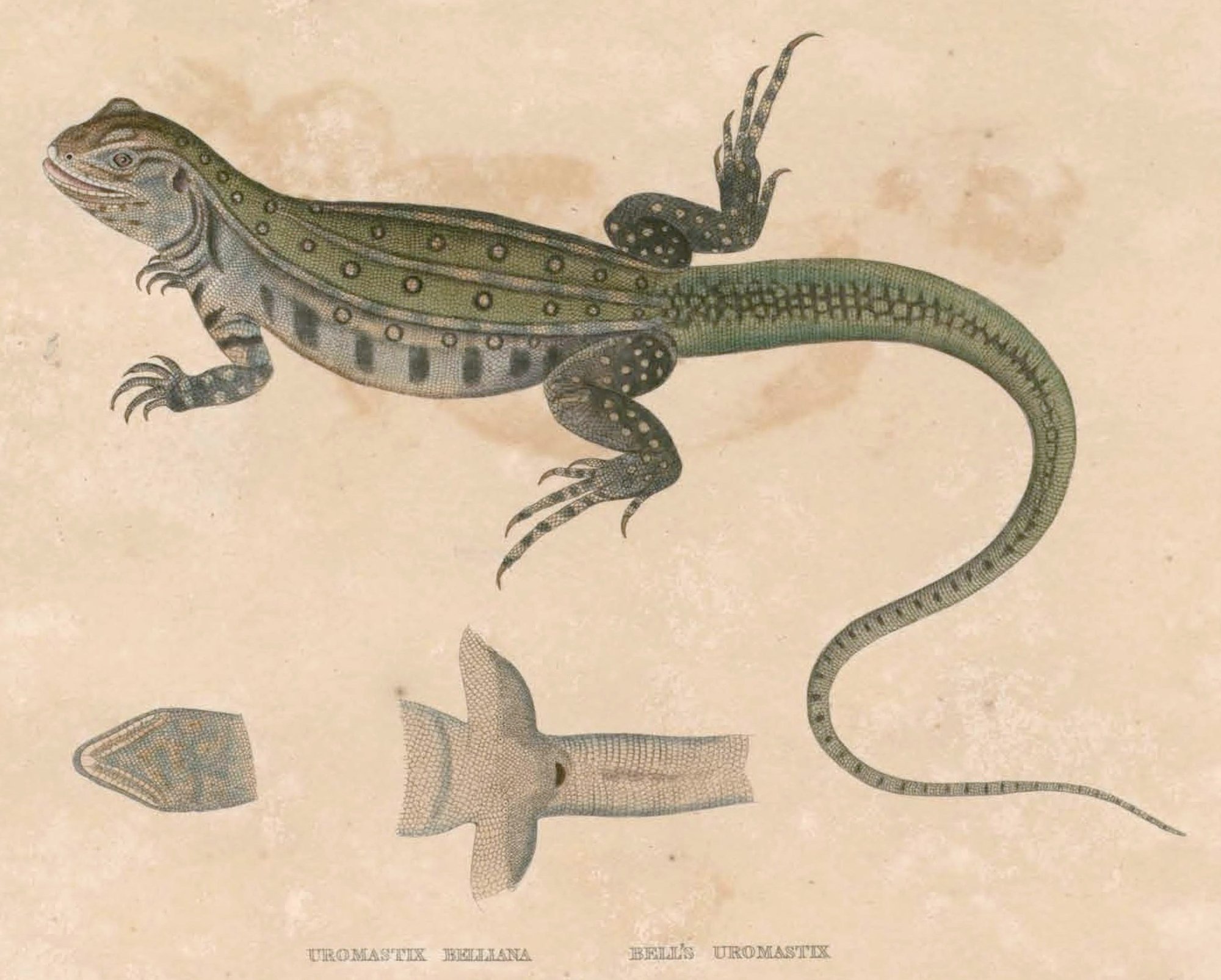
Agamas · Difficulty: Intermediate
Key facts and care guidance for Common butterfly lizard (Leiolepis belliana) (origin: Southeast Asia: Myanmar, Thailand, Cambodia, Vietnam, Malaysia and Indonesia (Sumatra, Bangka); open sandy ground, dunes and coastal strips. Introduced to Florida. Not found in Laos.). Adult size around approx. 30–45 cm total length (males larger); of which 12–15 cm is snout–vent length, the rest is tail. Life expectancy approx. 8–12 years (in captivity). The values below are carefully researched guidance.
Short answers
Common butterfly lizard: How big does the enclosure need to be?
120×60×60 cm for 1 animal, from 150×80×60 cm for a pair; what matters is running space and at least 20 cm of diggable substrate.
Common butterfly lizard: What temperature does it need?
Daytime 28–32 °C, basking spot 38–40 °C, at night 22–24 °C.
Common butterfly lizard: Does it need UVB lighting?
UVB: UVB needed (Ferguson zone 3–4, UV index 4–6).
Common butterfly lizard: How long do they live?
Life expectancy: approx. 8–12 years (in captivity).
Common butterfly lizard: Is it suitable for beginners?
Rather not – it is considered an intermediate species (difficulty: Intermediate).
Climate
- Daytime temperature
- 28–32 °C
- Night temperature
- 22–24 °C
- Basking spot
- 38–40 °C
- Humidity
- 50–70 %
- UVB
- UVB needed (Ferguson zone 3–4, UV index 4–6)
Enclosure
- Minimum size
- 120×60×60 cm for 1 animal, from 150×80×60 cm for a pair; what matters is running space and at least 20 cm of diggable substrate
- Substrate
- A deep (at least 20 cm) soil and sand mix for self-dug burrows; flat basking spots
Feeding
- Food
- Mostly insects (crickets, locusts) plus a little fruit and greens; calcium daily, vitamins once a week
- Feeding interval
- adults 3–4×/week, juveniles daily
Key facts
- Adult size
- approx. 30–45 cm total length (males larger); of which 12–15 cm is snout–vent length, the rest is tail
- Life expectancy
- approx. 8–12 years (in captivity)
- Origin
- Southeast Asia: Myanmar, Thailand, Cambodia, Vietnam, Malaysia and Indonesia (Sumatra, Bangka); open sandy ground, dunes and coastal strips. Introduced to Florida. Not found in Laos.
- Protection status
- Not listed under CITES; mostly wild-caught – mind quarantine and parasites
- Brumation
- No real winter rest (tropical)
- Cohabitation
- Pairs (1.1) are the least stressful: the species is largely monogamous and pairs share one burrow; keeping a single animal also works. A group of 1 male + several females only in a large enclosure with several burrowing spots – downside: squabbles over burrows and food. Males are territorial, NEVER together; keep juveniles separate from adults (risk of injury).
Notes
A ground-dwelling burrowing agama – a deep substrate build-up and plenty of floor area matter more than height. Named for its colourful flank folds ("butterfly wings"). Usually wild-caught → faecal checks. Fast and shy, a flight animal.
Do you keep this species?
Add your animal to Reptoria – Reptoria reminds you about feeding and shedding. Add your animal for free →
Look for Common butterfly lizard (Leiolepis belliana) in the marketplace →
Related species
- Spotted butterfly lizard (Leiolepis guttata) – Intermediate
- Red-banded butterfly lizard (Leiolepis rubritaeniata) – Intermediate
- Reeves' butterfly lizard (Leiolepis reevesii) – Intermediate
- Blue-headed tree agama (Acanthocercus atricollis) – Intermediate
- Common agama – red-headed (Agama agama) – Intermediate
- Variegated toad-headed agama (Phrynocephalus versicolor) – Expert
- Large-eared rock agama (Paralaudakia nupta) – Intermediate
- Roughtail rock agama (Stellagama stellio) – Intermediate
What you need to start
To keep Common butterfly lizard (Leiolepis belliana) you typically need: a suitable enclosure (120×60×60 cm for 1 animal, from 150×80×60 cm for a pair; what matters is running space and at least 20 cm of diggable substrate), substrate (A deep (at least 20 cm) soil and sand mix for self-dug burrows; flat basking spots), a heat source with a thermostat, UVB lighting, thermometer and hygrometer, a water dish and hides. You will find equipment in the Reptoria marketplace.
The complete, interactive care database is in the Reptoria app.
Last updated: 9 October 2026 · Editor: Reptoria editorial team · Sources include: reptile-database.reptarium.cz, en.wikipedia.org, de.wikipedia.org, einrichtungsbeispiele.de, eur-lex.europa.eu
All values are non-binding guidance and do not replace expert advice. Research thoroughly from several sources before acquiring and keeping an animal, and observe the applicable law (species and animal protection in particular).