Variegated toad-headed agama (Phrynocephalus versicolor)
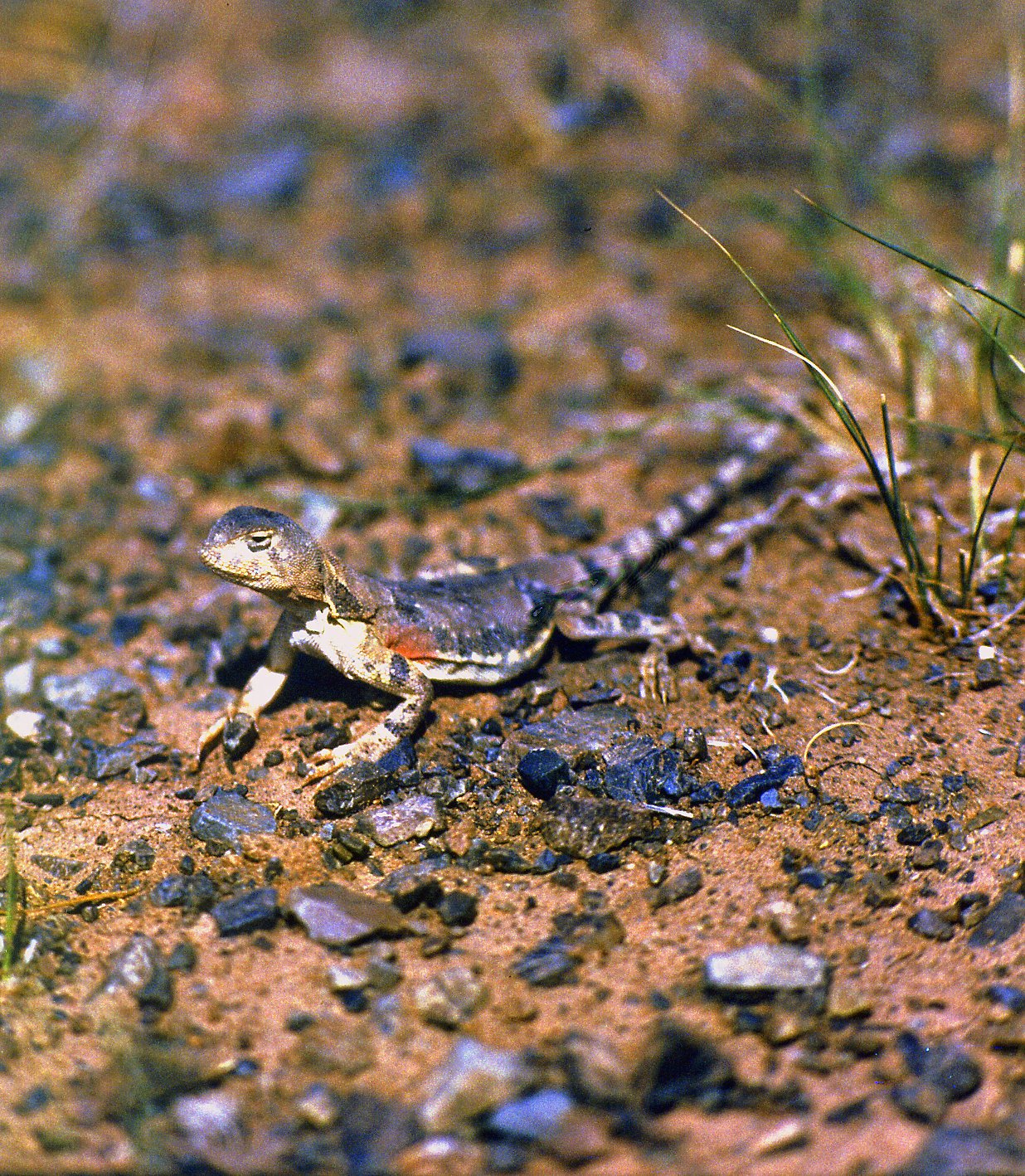
Agamas · Difficulty: Expert
Key facts and care guidance for Variegated toad-headed agama (Phrynocephalus versicolor) (origin: Mongolia, north-western China – the Gobi). Adult size around 10–14 cm total length. Life expectancy 5–8 years. The values below are carefully researched guidance.
Short answers
Variegated toad-headed agama: How big does the enclosure need to be?
80×40×50 cm for a pair (with 15–20 cm of sand, otherwise there's no headroom left for a basking spot and temperature gradient).
Variegated toad-headed agama: What temperature does it need?
Daytime 30–36 °C, basking spot 48 °C, at night 14–19 °C.
Variegated toad-headed agama: Does it need UVB lighting?
UVB: Essential (UVB 10.0–12 %).
Variegated toad-headed agama: How long do they live?
Life expectancy: 5–8 years.
Variegated toad-headed agama: Is it suitable for beginners?
No – better suited to experienced keepers (difficulty: Expert).
Climate
- Daytime temperature
- 30–36 °C
- Night temperature
- 14–19 °C
- Basking spot
- 48 °C
- Humidity
- 20–35 %
- UVB
- Essential (UVB 10.0–12 %)
Enclosure
- Minimum size
- 80×40×50 cm for a pair (with 15–20 cm of sand, otherwise there's no headroom left for a basking spot and temperature gradient)
- Substrate
- Fine sand with a gravel content (15–20 cm), flat stones
Feeding
- Food
- House crickets, crickets, ants
- Feeding interval
- 3–4×/week
Key facts
- Adult size
- 10–14 cm total length
- Life expectancy
- 5–8 years
- Origin
- Mongolia, north-western China – the Gobi
- Protection status
- Not listed under CITES
- Brumation
- A winter rest of 12–16 weeks at 3–8 °C
- Cohabitation
- Pair. Two males do not go together — they fight over territory and basking spot until one is seriously injured or sits permanently in a corner. One male with several females is possible, but females also defend their burrows against each other; this only works with plenty of space and a burrow for each animal. Several basking and hiding spots are important so that lower-ranking animals can get out of the way, and feed separately as soon as the animals differ in size.
Notes
A small desert agama that communicates with a rolling tail signal. An extreme day-night range and a cold, long winter rest are essential – without them, keeping it does not succeed long term.
Do you keep this species?
Add your animal to Reptoria – Reptoria reminds you about feeding and shedding. Add your animal for free →
Look for Variegated toad-headed agama (Phrynocephalus versicolor) in the marketplace →
Related species
- Secret toad-headed agama (Phrynocephalus mystaceus) – Expert
- Sunwatcher toad-headed agama (Phrynocephalus helioscopus) – Intermediate
- Persian toad-headed agama (Phrynocephalus persicus) – Intermediate
- Spotted toad-headed agama (Phrynocephalus guttatus) – Intermediate
- Blue-headed tree agama (Acanthocercus atricollis) – Intermediate
- Common agama – red-headed (Agama agama) – Intermediate
- Common butterfly lizard (Leiolepis belliana) – Intermediate
- Large-eared rock agama (Paralaudakia nupta) – Intermediate
What you need to start
To keep Variegated toad-headed agama (Phrynocephalus versicolor) you typically need: a suitable enclosure (80×40×50 cm for a pair (with 15–20 cm of sand, otherwise there's no headroom left for a basking spot and temperature gradient)), substrate (Fine sand with a gravel content (15–20 cm), flat stones), a heat source with a thermostat, UVB lighting, thermometer and hygrometer, a water dish and hides. You will find equipment in the Reptoria marketplace.
The complete, interactive care database is in the Reptoria app.
Last updated: 9 October 2026 · Editor: Reptoria editorial team · Sources include: de.wikipedia.org, einrichtungsbeispiele.de, en.wikipedia.org, eur-lex.europa.eu, pmc.ncbi.nlm.nih.gov
All values are non-binding guidance and do not replace expert advice. Research thoroughly from several sources before acquiring and keeping an animal, and observe the applicable law (species and animal protection in particular).