Dead leaf mantis (Deroplatys desiccata)
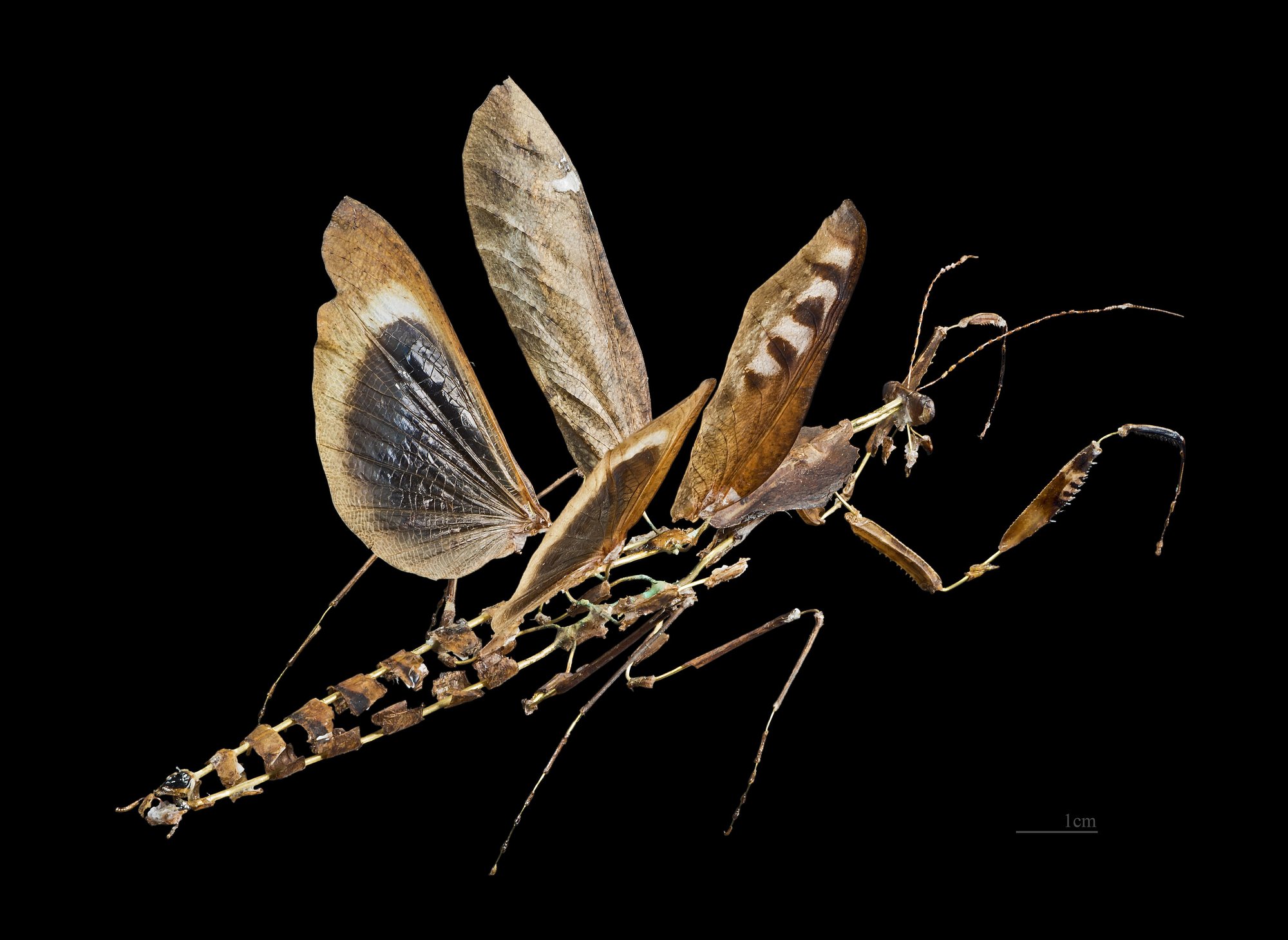
Invertebrates · Difficulty: Intermediate
Key facts and care guidance for Dead leaf mantis (Deroplatys desiccata) (origin: South-East Asia (Malaysia, Indonesia; rainforest)). Adult size around females 7.5–9 cm, males 6.5–7.5 cm. Life expectancy males approx. 8–10 months, females approx. 12–14 months (of which around 7 months to the adult moult). The values below are carefully researched guidance.
Short answers
Dead leaf mantis: How big does the enclosure need to be?
30×20×30 cm (height at least 3× the body length).
Dead leaf mantis: What temperature does it need?
Daytime 24–30 °C, at night 18–22 °C.
Dead leaf mantis: Does it need UVB lighting?
UVB: No UVB needed.
Dead leaf mantis: How long do they live?
Life expectancy: males approx. 8–10 months, females approx. 12–14 months (of which around 7 months to the adult moult).
Dead leaf mantis: Is it suitable for beginners?
Rather not – it is considered an intermediate species (difficulty: Intermediate).
Climate
- Daytime temperature
- 24–30 °C
- Night temperature
- 18–22 °C
- Basking spot
- —
- Humidity
- 60–80 % (mist in the evening, let it dry out during the day, good ventilation)
- UVB
- No UVB needed
Enclosure
- Minimum size
- 30×20×30 cm (height at least 3× the body length)
- Substrate
- Coco humus or peat (moisture-retaining)
Feeding
- Food
- Fruit flies (juveniles) → flies, house crickets and roaches as adults
- Feeding interval
- adults 2–3×/week, juveniles daily
Key facts
- Adult size
- females 7.5–9 cm, males 6.5–7.5 cm
- Life expectancy
- males approx. 8–10 months, females approx. 12–14 months (of which around 7 months to the adult moult)
- Origin
- South-East Asia (Malaysia, Indonesia; rainforest)
- Protection status
- No protected status
- Brumation
- None
- Cohabitation
- Single housing from around the fourth moult. Very young nymphs can still be kept together at first as long as there is always food available; after that each animal preys on its conspecific, and females frequently eat the male during or after mating. The animals are not especially aggressive towards each other — it is simply predation.
Notes
Perfect dead-leaf mimicry, a calm sit-and-wait hunter. Balance high humidity AND good ventilation (a risk of mould); mist 2–3 times a week. Not for complete beginners. (The spelling "dessicata" follows the source; scientifically it is usually Deroplatys desiccata.)
Do you keep this species?
Add your animal to Reptoria – Reptoria reminds you about feeding and shedding. Add your animal for free →
Look for Dead leaf mantis (Deroplatys desiccata) in the marketplace →
Related species
- Dead leaf mantis (Deroplatys lobata) – Intermediate
- Spiny flower mantis (Pseudocreobotra wahlbergii) – Beginner to intermediate
- African giant mantis (Sphodromantis lineola) – Beginner
- African giant mantis (Sphodromantis viridis) – Beginner
- Egyptian dwarf mantis (Miomantis paykullii) – Beginner
- Asian ant mantis (Odontomantis planiceps) – Beginner
- Giant Asian mantis (Hierodula patellifera) – Beginner
- Banded flower mantis (Theopropus elegans) – Intermediate
What you need to start
To keep Dead leaf mantis (Deroplatys desiccata) you typically need: a suitable enclosure (30×20×30 cm (height at least 3× the body length)), substrate (Coco humus or peat (moisture-retaining)), a heat source with a thermostat, UVB lighting, thermometer and hygrometer, a water dish and hides. You will find equipment in the Reptoria marketplace.
The complete, interactive care database is in the Reptoria app.
Last updated: 9 October 2026 · Editor: Reptoria editorial team · Sources include: Wikipedia EN, bugpets.co.uk, einrichtungsbeispiele.de, keepinginsects.com, legs-and-lenses.de
All values are non-binding guidance and do not replace expert advice. Research thoroughly from several sources before acquiring and keeping an animal, and observe the applicable law (species and animal protection in particular).