Dwarf sand boa (Eryx miliaris)
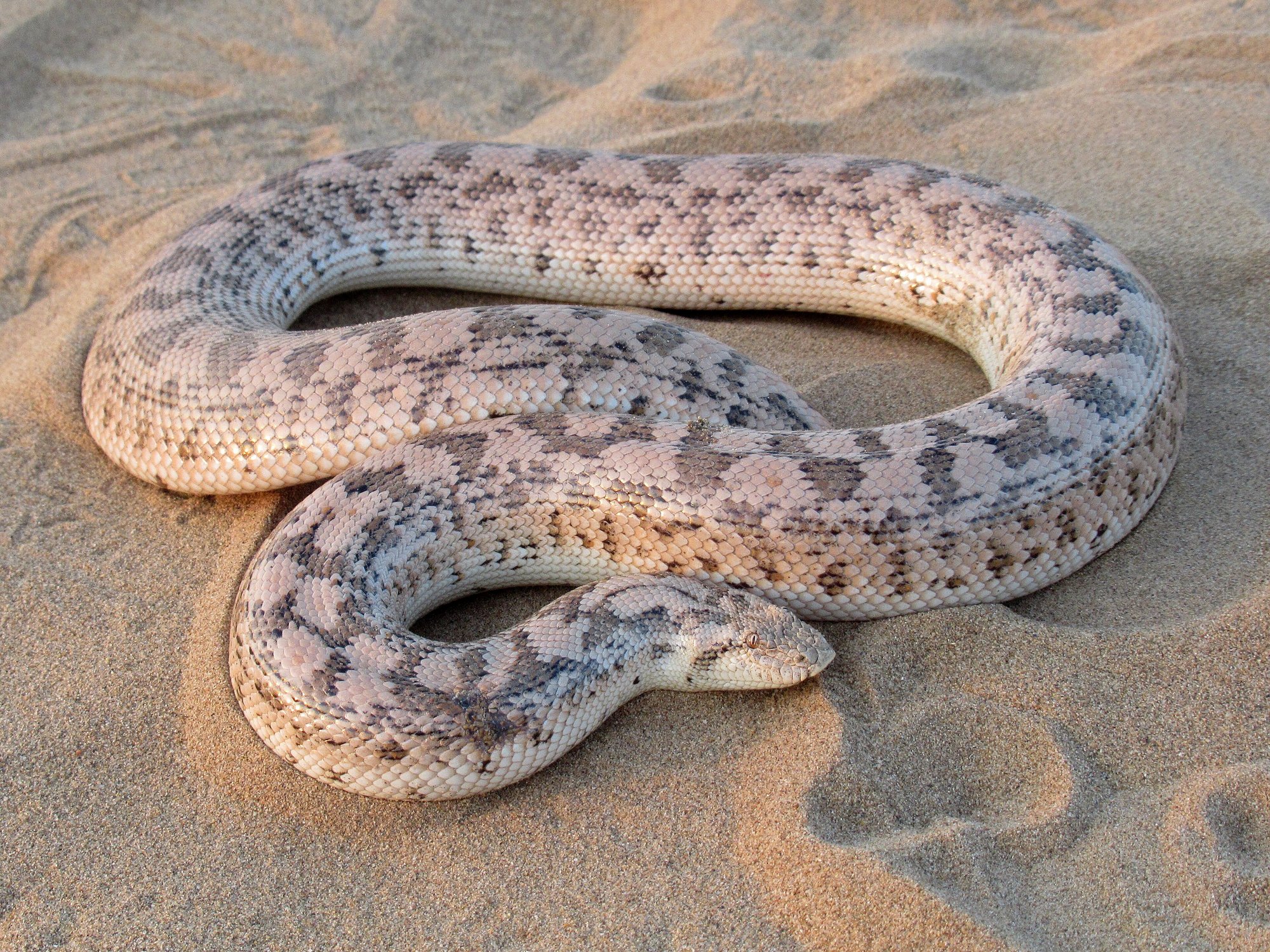
Snakes · Difficulty: Beginner
Key facts and care guidance for Dwarf sand boa (Eryx miliaris) (origin: The steppes and deserts of Central Asia – Russia, Kazakhstan, Iran, Mongolia, China). Adult size around females 50–80 cm, males 30–45 cm (a strong sexual dimorphism). Life expectancy up to ~20 years. The values below are carefully researched guidance.
Short answers
Dwarf sand boa: How big does the enclosure need to be?
From 80×40×60 cm (minimum size according to the 1997 expert report, sand boas, burrowing snakes). A burrowing animal: floor area matters more than height.
Dwarf sand boa: What temperature does it need?
Daytime 25–30 °C, basking spot 32–35 °C (hot spot above the substrate), at night 18–22 °C.
Dwarf sand boa: Does it need UVB lighting?
UVB: UVB not essential (burrowing/crepuscular), low UVB optional.
Dwarf sand boa: How long do they live?
Life expectancy: up to ~20 years.
Dwarf sand boa: Is it suitable for beginners?
Yes – it is considered suitable for beginners (difficulty: Beginner).
Climate
- Daytime temperature
- 25–30 °C
- Night temperature
- 18–22 °C
- Basking spot
- 32–35 °C (hot spot above the substrate)
- Humidity
- 30–50 % (dry)
- UVB
- UVB not essential (burrowing/crepuscular), low UVB optional
Enclosure
- Minimum size
- from 80×40×60 cm (minimum size according to the 1997 expert report, sand boas, burrowing snakes). A burrowing animal: floor area matters more than height
- Substrate
- Fine sand or a sand-loam mix they can dig in, at least 8–10 cm deep
Feeding
- Food
- Mice (frozen-thawed), occasionally small rats; pinkies for juveniles
- Feeding interval
- adults every 7–14 days, juveniles every 5–7 days
Key facts
- Adult size
- females 50–80 cm, males 30–45 cm (a strong sexual dimorphism)
- Life expectancy
- up to ~20 years
- Origin
- The steppes and deserts of Central Asia – Russia, Kazakhstan, Iran, Mongolia, China
- Protection status
- CITES Appendix II / EU Regulation Annex B (Boidae); registration required in Germany
- Brumation
- A cooler overwintering of 8–12 weeks at ~10–15 °C, mainly to stimulate breeding
- Cohabitation
- Keeping them singly is recommended – put them together only for supervised breeding; feed them strictly separately (a risk of mistaking each other for prey and of cannibalism)
Notes
A small, very robust sand boa; it lives almost entirely buried and surfaces only to hunt. Conditions that are too damp lead to skin and scale problems. The "Russian" and the "eastern / dwarf sand boa" refer to the same species.
Do you keep this species?
Add your animal to Reptoria – Reptoria reminds you about feeding and shedding. Add your animal for free →
Look for Dwarf sand boa (Eryx miliaris) in the marketplace →
Related species
- Egyptian sand boa (Eryx colubrinus colubrinus) – Beginner
- Arabian sand boa (Eryx jayakari) – Beginner to intermediate
- Red sand boa (Eryx johnii) – Intermediate
- Kenyan sand boa (Eryx colubrinus loveridgei) – Beginner
- Saharan sand boa (Eryx muelleri) – Beginner
- Tatar sand boa (Eryx tataricus) – Beginner
- Javelin sand boa (Eryx jaculus) – Beginner
- Caatinga rainbow boa (Epicrates assisi) – Intermediate
What you need to start
To keep Dwarf sand boa (Eryx miliaris) you typically need: a suitable enclosure (from 80×40×60 cm (minimum size according to the 1997 expert report, sand boas, burrowing snakes). A burrowing animal: floor area matters more than height), substrate (Fine sand or a sand-loam mix they can dig in, at least 8–10 cm deep), a heat source with a thermostat, UVB lighting, thermometer and hygrometer, a water dish and hides. You will find equipment in the Reptoria marketplace.
The complete, interactive care database is in the Reptoria app.
Last updated: 5 November 2026 · Editor: Reptoria editorial team · Sources include: https://de.wikipedia.org/wiki/%C3%96stliche_Sandboa, https://en.wikipedia.org/wiki/Eryx_miliaris, IUCN Red List Eryx miliaris (im Frühjahr häufig an der Oberfläche, in der heißen Jahreszeit nachtaktiv), zitiert in en.wikipedia „Eryx miliaris“; WCH Clinical Toxinology Resources, University of Adelaide („terrestrial and mainly diurnal … nocturnal tendencies in hottest months“)
All values are non-binding guidance and do not replace expert advice. Research thoroughly from several sources before acquiring and keeping an animal, and observe the applicable law (species and animal protection in particular).