Javelin sand boa (Eryx jaculus)
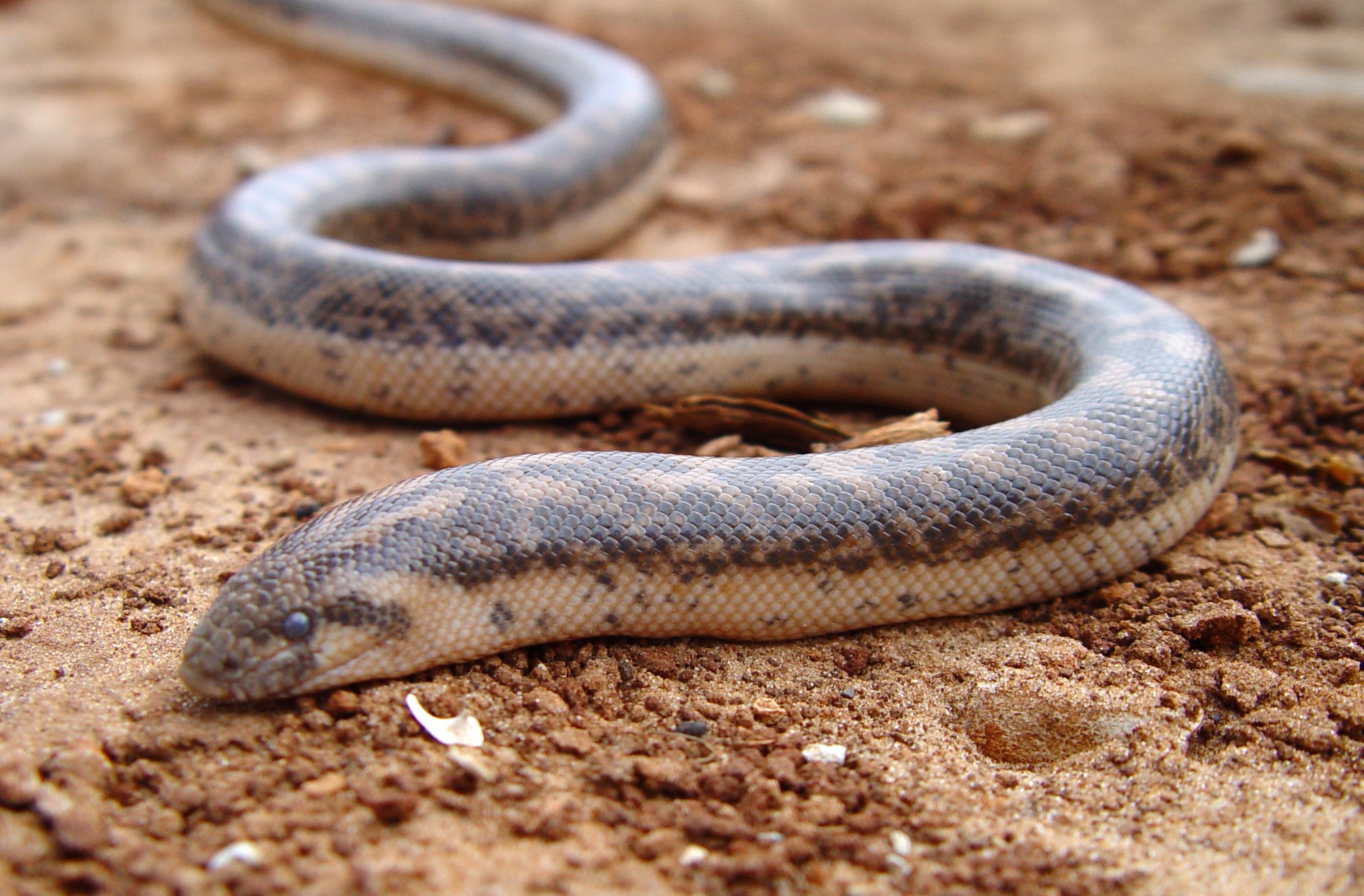
Snakes · Difficulty: Beginner
Key facts and care guidance for Javelin sand boa (Eryx jaculus) (origin: South-eastern Europe (the Balkans, Greece), the Caucasus, the Near East, North Africa, Turkey). Adult size around up to ~80 cm (females 46–71 cm, males 30–46 cm; maximum ~84 cm). Life expectancy ~10–20 years. The values below are carefully researched guidance.
Short answers
Javelin sand boa: How big does the enclosure need to be?
From 80×45×65 cm (minimum size according to the 1997 expert report, sand boas, burrowing snakes); a burrowing animal: floor area matters more than height.
Javelin sand boa: What temperature does it need?
Daytime 25–30 °C, basking spot 32–35 °C (hot spot above the substrate), at night 18–22 °C.
Javelin sand boa: Does it need UVB lighting?
UVB: UVB not essential, low UVB optional.
Javelin sand boa: How long do they live?
Life expectancy: ~10–20 years.
Javelin sand boa: Is it suitable for beginners?
Yes – it is considered suitable for beginners (difficulty: Beginner).
Climate
- Daytime temperature
- 25–30 °C
- Night temperature
- 18–22 °C
- Basking spot
- 32–35 °C (hot spot above the substrate)
- Humidity
- 30–50 % (dry)
- UVB
- UVB not essential, low UVB optional
Enclosure
- Minimum size
- from 80×45×65 cm (minimum size according to the 1997 expert report, sand boas, burrowing snakes); a burrowing animal: floor area matters more than height
- Substrate
- Fine sand or a sand-loam mix they can dig in, at least 8–10 cm deep
Feeding
- Food
- Mice (frozen-thawed), small rodents; in the wild also lizards; pinkies or small lizards for juveniles
- Feeding interval
- adults every 7–14 days, juveniles every 5–7 days
Key facts
- Adult size
- up to ~80 cm (females 46–71 cm, males 30–46 cm; maximum ~84 cm)
- Life expectancy
- ~10–20 years
- Origin
- South-eastern Europe (the Balkans, Greece), the Caucasus, the Near East, North Africa, Turkey
- Protection status
- CITES Appendix II / EU Regulation Annex B (Boidae), registration required; wild populations in the EU are protected (Bern Convention) – only legal captive-bred animals with proof of origin
- Brumation
- A winter rest of 8–12 weeks at ~8–15 °C (November to March in its habitat); important for health and breeding
- Cohabitation
- Keeping them singly is recommended – put them together only for supervised breeding; feed them separately (they mistake each other for prey)
Notes
A small burrowing boa from more temperate regions with a need for a winter rest. Some of the husbandry figures are derived from the genus Eryx. An ambush hunter that emerges from the sand only to hunt.
Do you keep this species?
Add your animal to Reptoria – Reptoria reminds you about feeding and shedding. Add your animal for free →
Look for Javelin sand boa (Eryx jaculus) in the marketplace →
Related species
- Egyptian sand boa (Eryx colubrinus colubrinus) – Beginner
- Arabian sand boa (Eryx jayakari) – Beginner to intermediate
- Red sand boa (Eryx johnii) – Intermediate
- Kenyan sand boa (Eryx colubrinus loveridgei) – Beginner
- Saharan sand boa (Eryx muelleri) – Beginner
- Dwarf sand boa (Eryx miliaris) – Beginner
- Tatar sand boa (Eryx tataricus) – Beginner
- Caatinga rainbow boa (Epicrates assisi) – Intermediate
What you need to start
To keep Javelin sand boa (Eryx jaculus) you typically need: a suitable enclosure (from 80×45×65 cm (minimum size according to the 1997 expert report, sand boas, burrowing snakes); a burrowing animal: floor area matters more than height), substrate (Fine sand or a sand-loam mix they can dig in, at least 8–10 cm deep), a heat source with a thermostat, UVB lighting, thermometer and hygrometer, a water dish and hides. You will find equipment in the Reptoria marketplace.
The complete, interactive care database is in the Reptoria app.
Last updated: 5 November 2026 · Editor: Reptoria editorial team · Sources include: https://de.wikipedia.org/wiki/Westliche_Sandboa, https://en.wikipedia.org/wiki/Eryx_jaculus, Faraone et al., Acta Herpetologica (oaj.fupress.net) / Naturalista Siciliano, Eryx jaculus auf Sizilien („nocturnal and fossorial habits“, nächtliche Suchen); Herpetozoa 33: 165–169 (E. jaculus unter den nachtaktiven europäischen Arten); furrycritter.com (primarily nocturnal and crepuscular)
All values are non-binding guidance and do not replace expert advice. Research thoroughly from several sources before acquiring and keeping an animal, and observe the applicable law (species and animal protection in particular).