Halmahera leaf insect (Phyllium tobeloense)
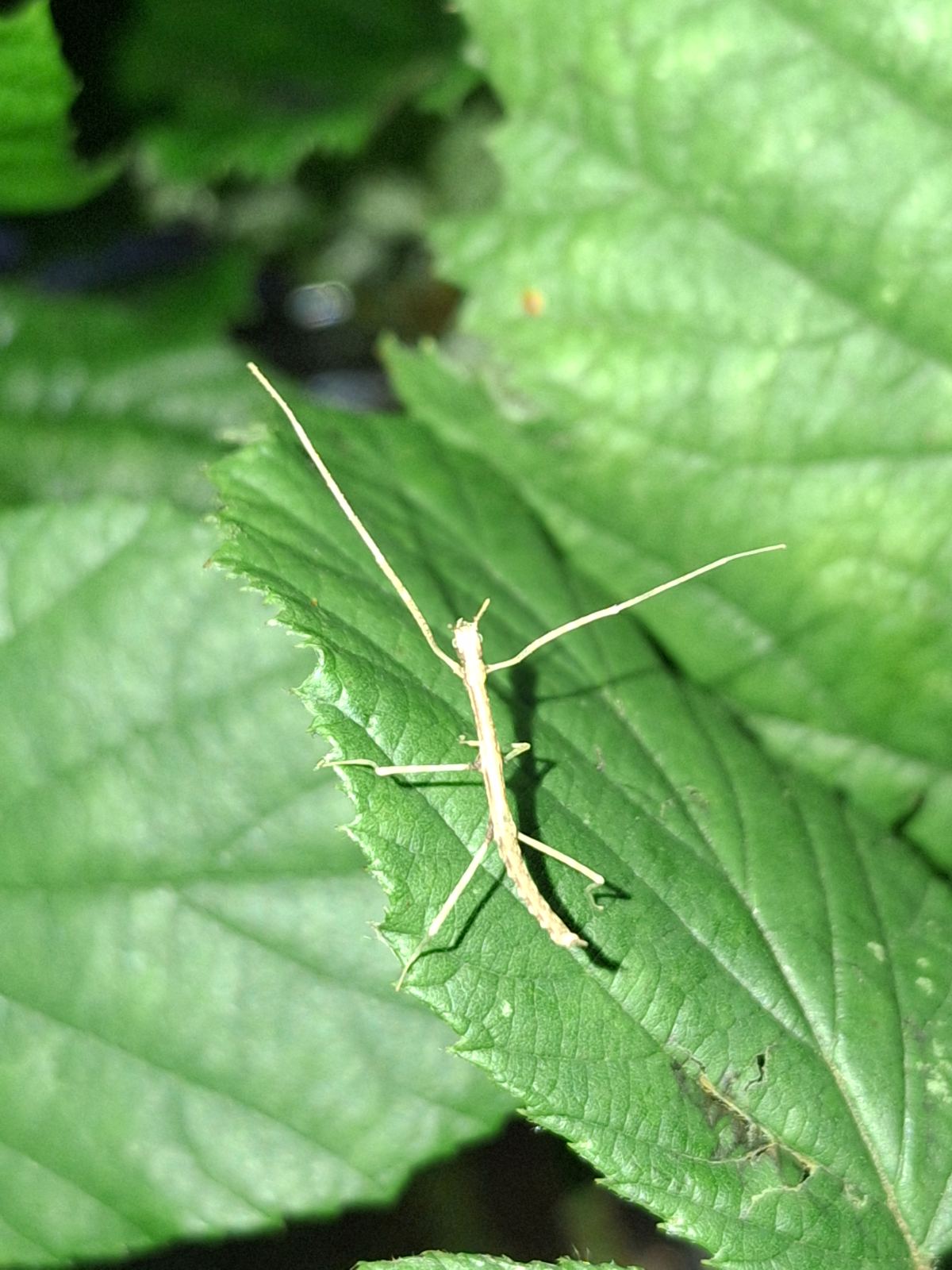
Invertebrates · Difficulty: Intermediate
Key facts and care guidance for Halmahera leaf insect (Phyllium tobeloense) (origin: Halmahera and Tobelo (the northern Moluccas, Indonesia)). Adult size around females ~9–10 cm, males ~6–7 cm. Life expectancy approx. 9–12 months. The values below are carefully researched guidance.
Short answers
Halmahera leaf insect: How big does the enclosure need to be?
30×30×50 cm for a pair (height at least 3× the body length so shedding works).
Halmahera leaf insect: What temperature does it need?
Daytime 24–28 °C, basking spot no warm spot needed, at night 20–22 °C.
Halmahera leaf insect: Does it need UVB lighting?
UVB: No UVB needed.
Halmahera leaf insect: How long do they live?
Life expectancy: approx. 9–12 months.
Halmahera leaf insect: Is it suitable for beginners?
Rather not – it is considered an intermediate species (difficulty: Intermediate).
Climate
- Daytime temperature
- 24–28 °C
- Night temperature
- 20–22 °C
- Basking spot
- no warm spot needed
- Humidity
- 70–85 %
- UVB
- No UVB needed
Enclosure
- Minimum size
- 30×30×50 cm for a pair (height at least 3× the body length so shedding works)
- Substrate
- Coco humus, kept damp; mist daily
Feeding
- Food
- Bramble (all year), oak, guava, rose, raspberry, salal
- Feeding interval
- fresh leaves at all times in water bottles; mist once or twice a day
Key facts
- Adult size
- females ~9–10 cm, males ~6–7 cm
- Life expectancy
- approx. 9–12 months
- Origin
- Halmahera and Tobelo (the northern Moluccas, Indonesia)
- Protection status
- Not protected (not listed under CITES or German nature conservation law); widely available captive-bred in the hobby
- Brumation
- None
- Cohabitation
- Group: generally suitable for group housing, but more prone to cannibalism than other Phyllium species when food or space runs short - tankmates' leaf-shaped body edges get nibbled. Plenty of fresh leaves and enough space prevent this.
Notes
A little warmer and more humid than P. philippinicum. Sexual reproduction, and genuine males occur regularly. Moulting problems are the commonest cause of losses: too little height or air that is too dry.
Do you keep this species?
Add your animal to Reptoria – Reptoria reminds you about feeding and shedding. Add your animal for free →
Look for Halmahera leaf insect (Phyllium tobeloense) in the marketplace →
Related species
- Ceylon leaf insect (Phyllium bioculatum) – Intermediate
- Common leaf insect (Phyllium siccifolium) – Intermediate
- Giant leaf insect (Phyllium giganteum) – Intermediate
- Philippine leaf insect (Phyllium philippinicum) – Intermediate
- Annam stick insect (Ramulus artemis) – Beginner
- Giant prickly stick insect (Extatosoma tiaratum) – Beginner
- Brueckner's stick insect (Trachyaretaon brueckneri) – Beginner
- Chan's megastick (Phobaeticus chani) – Expert
What you need to start
To keep Halmahera leaf insect (Phyllium tobeloense) you typically need: a suitable enclosure (30×30×50 cm for a pair (height at least 3× the body length so shedding works)), substrate (Coco humus, kept damp; mist daily), a heat source with a thermostat, UVB lighting, thermometer and hygrometer, a water dish and hides. You will find equipment in the Reptoria marketplace.
The complete, interactive care database is in the Reptoria app.
Last updated: 25 September 2026 · Editor: Reptoria editorial team · Sources include: https://phasmatodea.com/phyllium-tobeloense-tobeloense-galela, https://xoticbugs.com/pages/phyllium-tobeloense-galela-care-guide
All values are non-binding guidance and do not replace expert advice. Research thoroughly from several sources before acquiring and keeping an animal, and observe the applicable law (species and animal protection in particular).