Philippine leaf insect (Phyllium philippinicum)
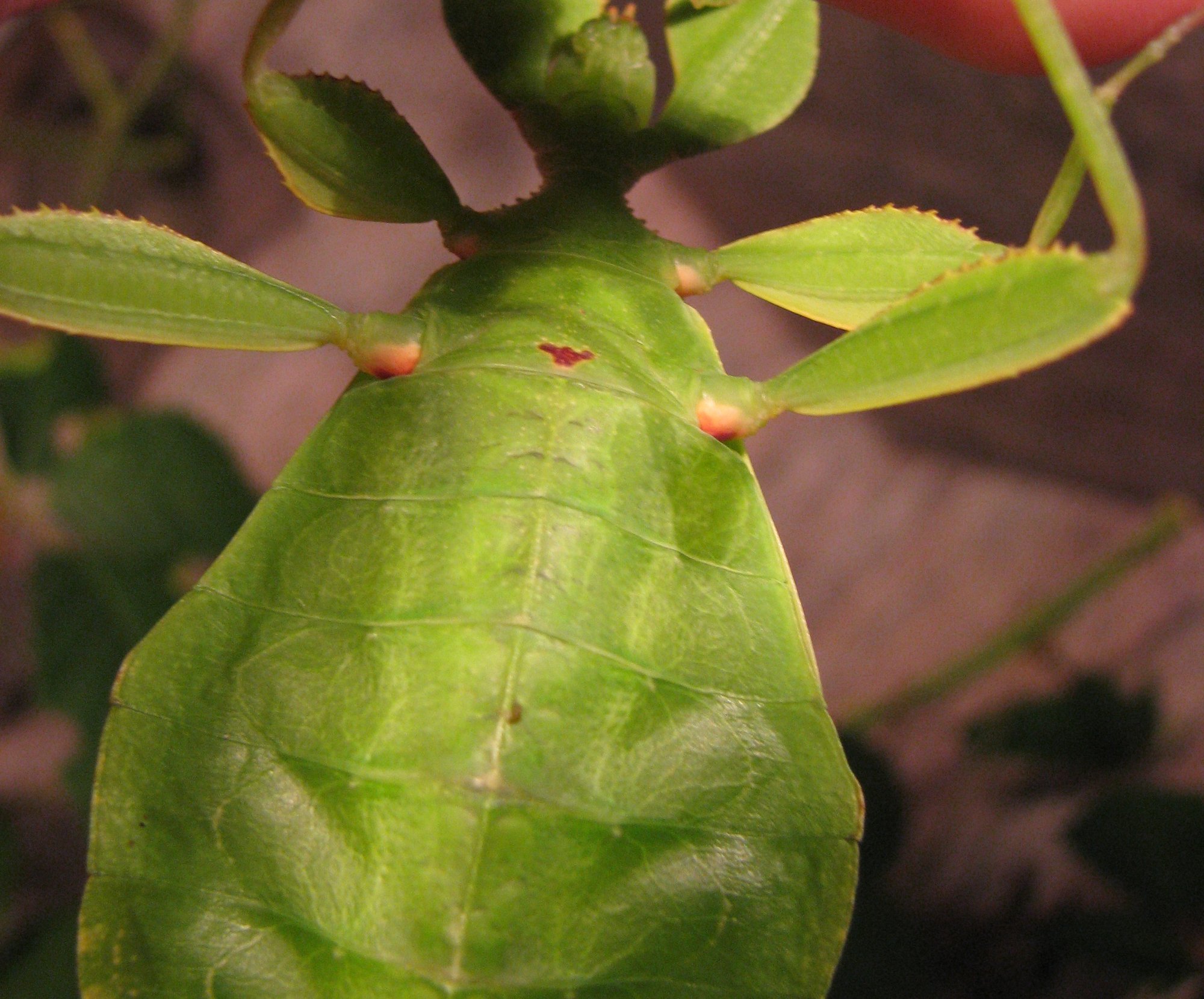
Invertebrates · Difficulty: Intermediate
Key facts and care guidance for Philippine leaf insect (Phyllium philippinicum) (origin: The Philippines). Adult size around females ~8–9.5 cm, males ~6 cm. Life expectancy approx. 9–12 months. The values below are carefully researched guidance.
Short answers
Philippine leaf insect: How big does the enclosure need to be?
25×25×40 cm for a pair (height at least 30 cm, well ventilated).
Philippine leaf insect: What temperature does it need?
Daytime 22–26 °C, at night ~20 °C.
Philippine leaf insect: Does it need UVB lighting?
UVB: No UVB needed.
Philippine leaf insect: How long do they live?
Life expectancy: approx. 9–12 months.
Philippine leaf insect: Is it suitable for beginners?
Rather not – it is considered an intermediate species (difficulty: Intermediate).
Climate
- Daytime temperature
- 22–26 °C
- Night temperature
- ~20 °C
- Basking spot
- —
- Humidity
- 70–80 %
- UVB
- No UVB needed
Enclosure
- Minimum size
- 25×25×40 cm for a pair (height at least 30 cm, well ventilated)
- Substrate
- Damp, moisture-retaining substrate (coco humus); mist regularly
Feeding
- Food
- Bramble (the most important winter food), oak, rose, raspberry, hawthorn, guava
- Feeding interval
- fresh leaves at all times; mist regularly (for shedding)
Key facts
- Adult size
- females ~8–9.5 cm, males ~6 cm
- Life expectancy
- approx. 9–12 months
- Origin
- The Philippines
- Protection status
- Not protected (not listed under CITES or German nature conservation law); commonly available captive-bred
- Brumation
- None
- Cohabitation
- Group: a peaceful species, several animals get along in a sufficiently large group. Reproduction works both sexually and parthenogenetically - unfertilised females continue laying viable eggs, so a male is not strictly required. Under food shortage or crowding the leaf-shaped body edges of tankmates may be nibbled, so always provide plenty of food and space.
Notes
The most beginner-friendly walking leaf (PSG 278), yet listed as "advanced" because of its humidity, moulting and food requirements. Stand the twigs in water like cut flowers and cover the opening (a drowning risk for the nymphs). Perfect leaf camouflage.
Do you keep this species?
Add your animal to Reptoria – Reptoria reminds you about feeding and shedding. Add your animal for free →
Look for Philippine leaf insect (Phyllium philippinicum) in the marketplace →
Related species
- Ceylon leaf insect (Phyllium bioculatum) – Intermediate
- Common leaf insect (Phyllium siccifolium) – Intermediate
- Halmahera leaf insect (Phyllium tobeloense) – Intermediate
- Giant leaf insect (Phyllium giganteum) – Intermediate
- Annam stick insect (Ramulus artemis) – Beginner
- Giant prickly stick insect (Extatosoma tiaratum) – Beginner
- Brueckner's stick insect (Trachyaretaon brueckneri) – Beginner
- Chan's megastick (Phobaeticus chani) – Expert
What you need to start
To keep Philippine leaf insect (Phyllium philippinicum) you typically need: a suitable enclosure (25×25×40 cm for a pair (height at least 30 cm, well ventilated)), substrate (Damp, moisture-retaining substrate (coco humus); mist regularly), a heat source with a thermostat, UVB lighting, thermometer and hygrometer, a water dish and hides. You will find equipment in the Reptoria marketplace.
The complete, interactive care database is in the Reptoria app.
Last updated: 9 October 2026 · Editor: Reptoria editorial team · Sources include: https://de.wikipedia.org/wiki/Phyllium_philippinicum, https://en.wikipedia.org/wiki/Phyllium_philippinicum, https://xoticbugs.com/pages/phyllium-philippinicum-care-guide
All values are non-binding guidance and do not replace expert advice. Research thoroughly from several sources before acquiring and keeping an animal, and observe the applicable law (species and animal protection in particular).