Hermann's tortoise – western (Testudo hermanni hermanni)
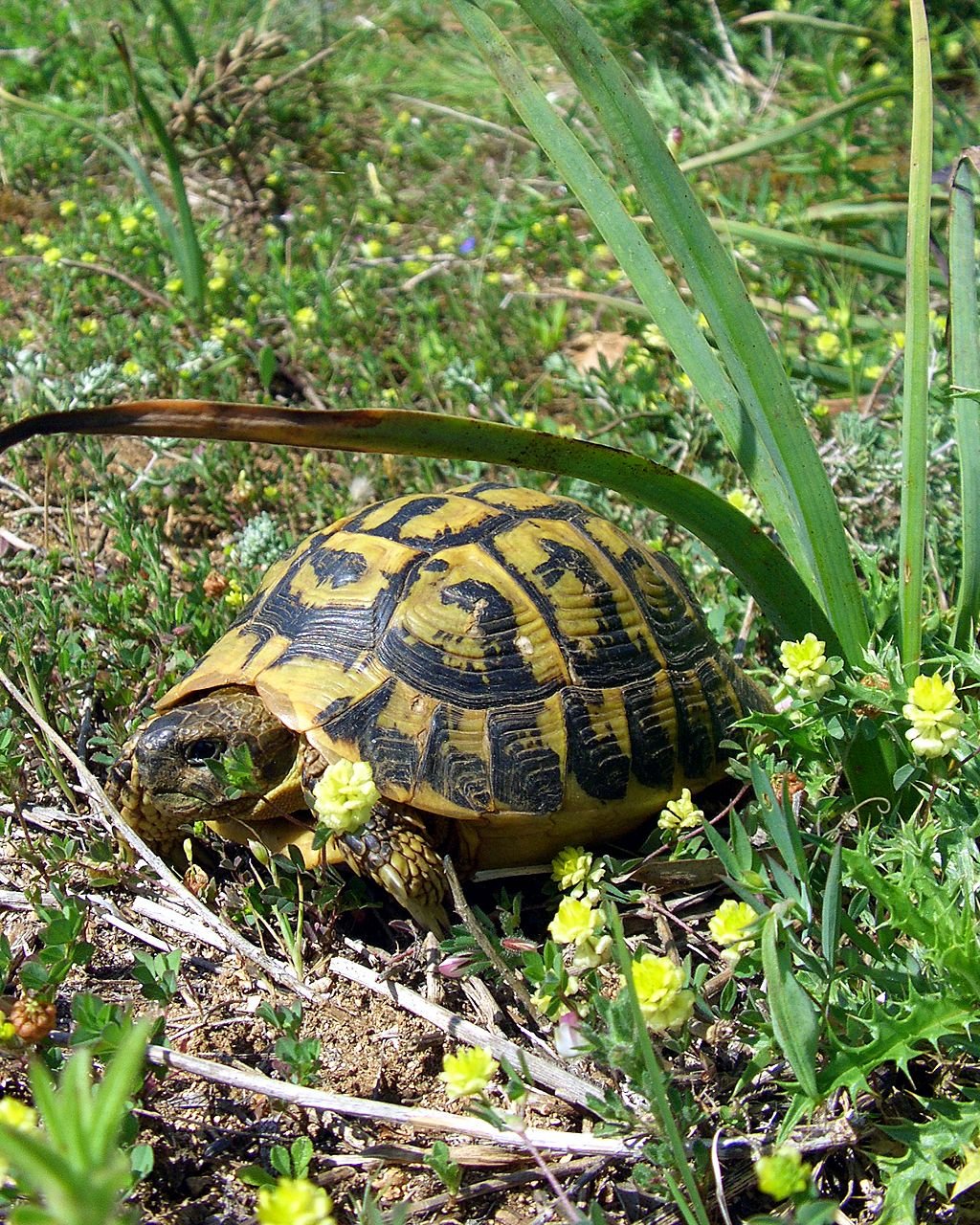
Turtles & tortoises · Difficulty: Beginner to intermediate
Key facts and care guidance for Hermann's tortoise – western (Testudo hermanni hermanni) (origin: The western Mediterranean (Spain, southern France, Italy)). Adult size around females up to ~18–20 cm, males ~15 cm (the smaller subspecies). Life expectancy 50–80+ years. The values below are carefully researched guidance.
Short answers
Hermann's tortoise – western: How big does the enclosure need to be?
An outdoor enclosure, at least ~8–10 m² for adults with a heated cold frame.
Hermann's tortoise – western: What temperature does it need?
Daytime outdoors; cold frame 25–30 °C, basking spot Basking spot / cold frame 35–40 °C, at night night-time drop to ~15–18 °C.
Hermann's tortoise – western: Does it need UVB lighting?
UVB: Essential (natural sunlight; UVB when kept indoors).
Hermann's tortoise – western: How long do they live?
Life expectancy: 50–80+ years.
Hermann's tortoise – western: Is it suitable for beginners?
Partly – manageable with some prior knowledge (difficulty: Beginner to intermediate).
Climate
- Daytime temperature
- outdoors; cold frame 25–30 °C
- Night temperature
- night-time drop to ~15–18 °C
- Basking spot
- Basking spot / cold frame 35–40 °C
- Humidity
- Moderate, Mediterranean (dry plus humid zones)
- UVB
- Essential (natural sunlight; UVB when kept indoors)
Enclosure
- Minimum size
- an outdoor enclosure, at least ~8–10 m² for adults with a heated cold frame
- Substrate
- Soil and sand with wild herbs growing, retreat zones
Feeding
- Food
- Fibre-rich wild herbs (no fruit and no animal food)
- Feeding interval
- A daily selection of plant food
Key facts
- Adult size
- females up to ~18–20 cm, males ~15 cm (the smaller subspecies)
- Life expectancy
- 50–80+ years
- Origin
- The western Mediterranean (Spain, southern France, Italy)
- Protection status
- EU A (CITES II), strictly protected, registration plus an EU certificate (yellow) required
- Brumation
- Brumation (compulsory), ~8–14 weeks at 4–8 °C
- Cohabitation
- Group with a surplus of females, not permanently in pairs; males harass females. Two males harass each other and the females; under constant courtship a female visibly loses weight. One male to several females, and plan for a way to separate them.
Notes
Kept properly only in a near-natural garden enclosure with a cold frame and an annual winter dormancy. Do not feed fruit or protein.
Do you keep this species?
Add your animal to Reptoria – Reptoria reminds you about feeding and shedding. Add your animal for free →
Hermann's tortoise – western (Testudo hermanni hermanni) currently offered
- Griechische Landschildkröten Babys mit Papieren aus liebevoller Hobbyzucht – Merzig · 60 €
- Griechische Landschildkröten abzugeben – Denkendorf
Related species
- Egyptian tortoise (Testudo kleinmanni) – Intermediate to expert
- Marginated tortoise (Testudo marginata) – Beginner to intermediate
- Hermann's tortoise – Dalmatian (Testudo hermanni hercegovinensis) – Beginner
- Hermann's tortoise – eastern (Testudo hermanni boettgeri) – Beginner
- Hermann's tortoise (Testudo hermanni) – Beginner
- Spur-thighed tortoise – Armenian (Testudo graeca armeniaca) – Intermediate
- Spur-thighed tortoise – Golan (Testudo graeca terrestris) – Intermediate
- Spur-thighed tortoise – Iberian (Testudo graeca graeca) – Intermediate
What you need to start
To keep Hermann's tortoise – western (Testudo hermanni hermanni) you typically need: a suitable enclosure (an outdoor enclosure, at least ~8–10 m² for adults with a heated cold frame), substrate (Soil and sand with wild herbs growing, retreat zones), a heat source with a thermostat, UVB lighting, thermometer and hygrometer, a water dish and hides. You will find equipment in the Reptoria marketplace.
The complete, interactive care database is in the Reptoria app.
Last updated: 9 October 2026 · Editor: Reptoria editorial team · Sources include: EXOPET-Studie Uni Leipzig, IVH/BNA-Merkblatt, Wikipedia DE, EU-VO 338/97, Vermarktungsgenehmigung Berlin
All values are non-binding guidance and do not replace expert advice. Research thoroughly from several sources before acquiring and keeping an animal, and observe the applicable law (species and animal protection in particular).