Spur-thighed tortoise – Golan (Testudo graeca terrestris)
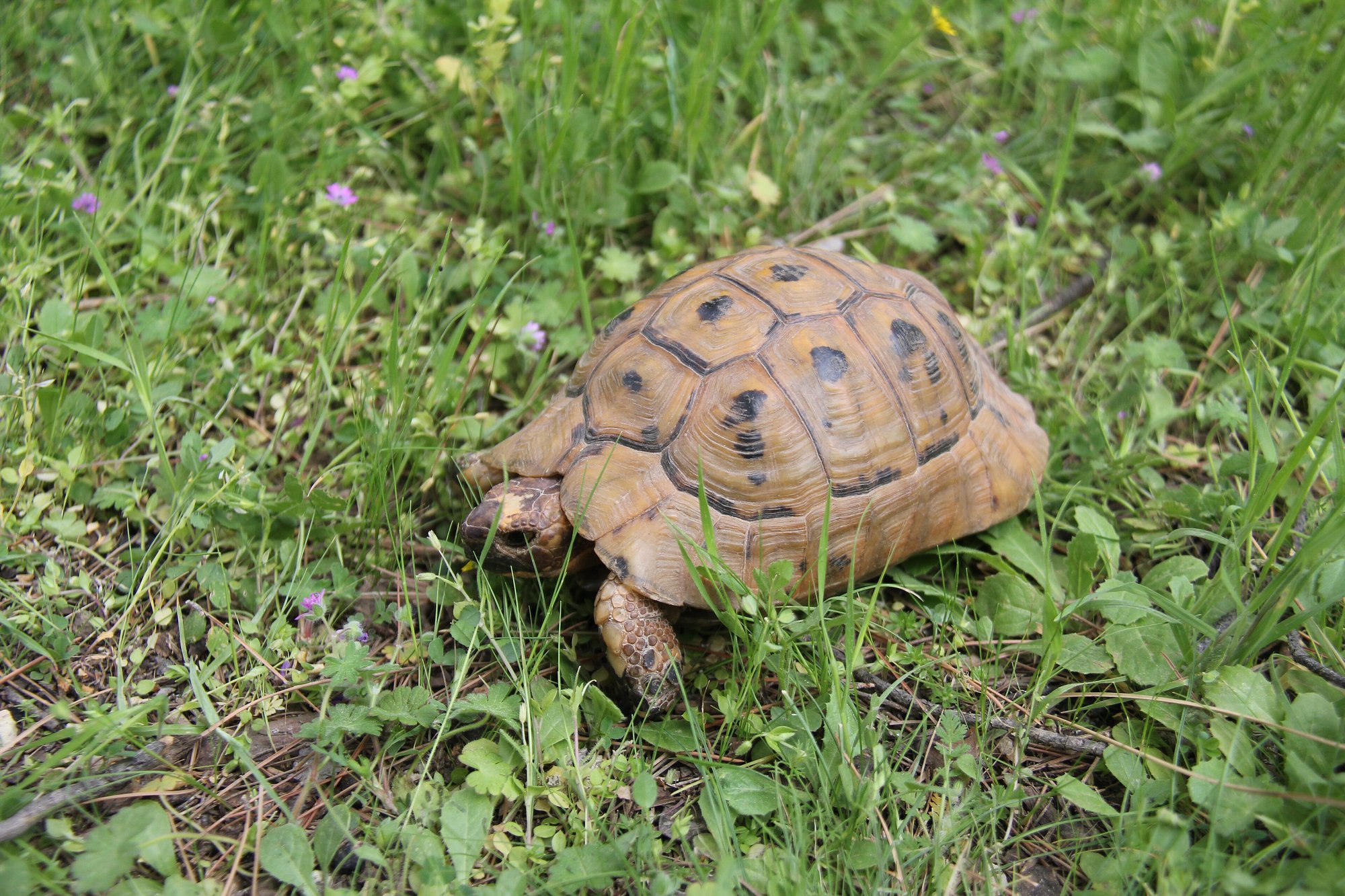
Turtles & tortoises · Difficulty: Intermediate
Key facts and care guidance for Spur-thighed tortoise – Golan (Testudo graeca terrestris) (origin: The Levant (Israel, Lebanon, Syria, southern Turkey)). Adult size around 15–22 cm. Life expectancy 60–100 years. The values below are carefully researched guidance.
Short answers
Spur-thighed tortoise – Golan: How big does the enclosure need to be?
An outdoor enclosure from 10 m² plus a cold frame.
Spur-thighed tortoise – Golan: What temperature does it need?
Daytime 25–32 °C, basking spot 40 °C, at night 14–19 °C.
Spur-thighed tortoise – Golan: Does it need UVB lighting?
UVB: Essential (UVB 10.0–12 %).
Spur-thighed tortoise – Golan: How long do they live?
Life expectancy: 60–100 years.
Spur-thighed tortoise – Golan: Is it suitable for beginners?
Rather not – it is considered an intermediate species (difficulty: Intermediate).
Climate
- Daytime temperature
- 25–32 °C
- Night temperature
- 14–19 °C
- Basking spot
- 40 °C
- Humidity
- 40–55 %
- UVB
- Essential (UVB 10.0–12 %)
Enclosure
- Minimum size
- an outdoor enclosure from 10 m² plus a cold frame
- Substrate
- Sand-loam they can dig in, wild herbs growing, stone slabs
Feeding
- Food
- Wild herbs, grasses, hay – purely plant-based and rich in calcium
- Feeding interval
- plant food daily
Key facts
- Adult size
- 15–22 cm
- Life expectancy
- 60–100 years
- Origin
- The Levant (Israel, Lebanon, Syria, southern Turkey)
- Protection status
- CITES II / EU Annex A – sale only with a valid EU commercial-use certificate plus photo documentation
- Brumation
- A winter rest of 10–14 weeks at 4–8 °C
- Cohabitation
- Keeping it singly is the least stressful option – tortoises do not need company. A harem of one male with at least two, preferably three females is possible in a large outdoor enclosure divided up with visual barriers; the drawback: males ram and bite, and under constant courtship females visibly lose weight, so plan a way to separate the male temporarily. Never keep two males together.
Notes
A small, often yellowish subspecies from the Near East. Like all Testudo in EU Annex A: sale only with yellow papers. Outdoor keeping in summer is the way that suits it best.
Do you keep this species?
Add your animal to Reptoria – Reptoria reminds you about feeding and shedding. Add your animal for free →
Look for Spur-thighed tortoise – Golan (Testudo graeca terrestris) in the marketplace →
Related species
- Egyptian tortoise (Testudo kleinmanni) – Intermediate to expert
- Marginated tortoise (Testudo marginata) – Beginner to intermediate
- Hermann's tortoise – Dalmatian (Testudo hermanni hercegovinensis) – Beginner
- Hermann's tortoise – eastern (Testudo hermanni boettgeri) – Beginner
- Hermann's tortoise – western (Testudo hermanni hermanni) – Beginner to intermediate
- Hermann's tortoise (Testudo hermanni) – Beginner
- Spur-thighed tortoise – Armenian (Testudo graeca armeniaca) – Intermediate
- Spur-thighed tortoise – Iberian (Testudo graeca graeca) – Intermediate
What you need to start
To keep Spur-thighed tortoise – Golan (Testudo graeca terrestris) you typically need: a suitable enclosure (an outdoor enclosure from 10 m² plus a cold frame), substrate (Sand-loam they can dig in, wild herbs growing, stone slabs), a heat source with a thermostat, UVB lighting, thermometer and hygrometer, a water dish and hides. You will find equipment in the Reptoria marketplace.
The complete, interactive care database is in the Reptoria app.
Last updated: 9 October 2026 · Editor: Reptoria editorial team · Sources include: https://de.wikipedia.org/wiki/Maurische_Landschildkröte, https://en.wikipedia.org/wiki/Greek_tortoise, https://reptile-database.reptarium.cz/species?genus=Testudo&species=graeca, https://reptiliendoktor.com/haltungsempfehlungen/landschildkroeten/, https://www.sigs.ch/schildkroetenhaltung/graeca
All values are non-binding guidance and do not replace expert advice. Research thoroughly from several sources before acquiring and keeping an animal, and observe the applicable law (species and animal protection in particular).