Iranian leopard gecko (Eublepharis angramainyu)
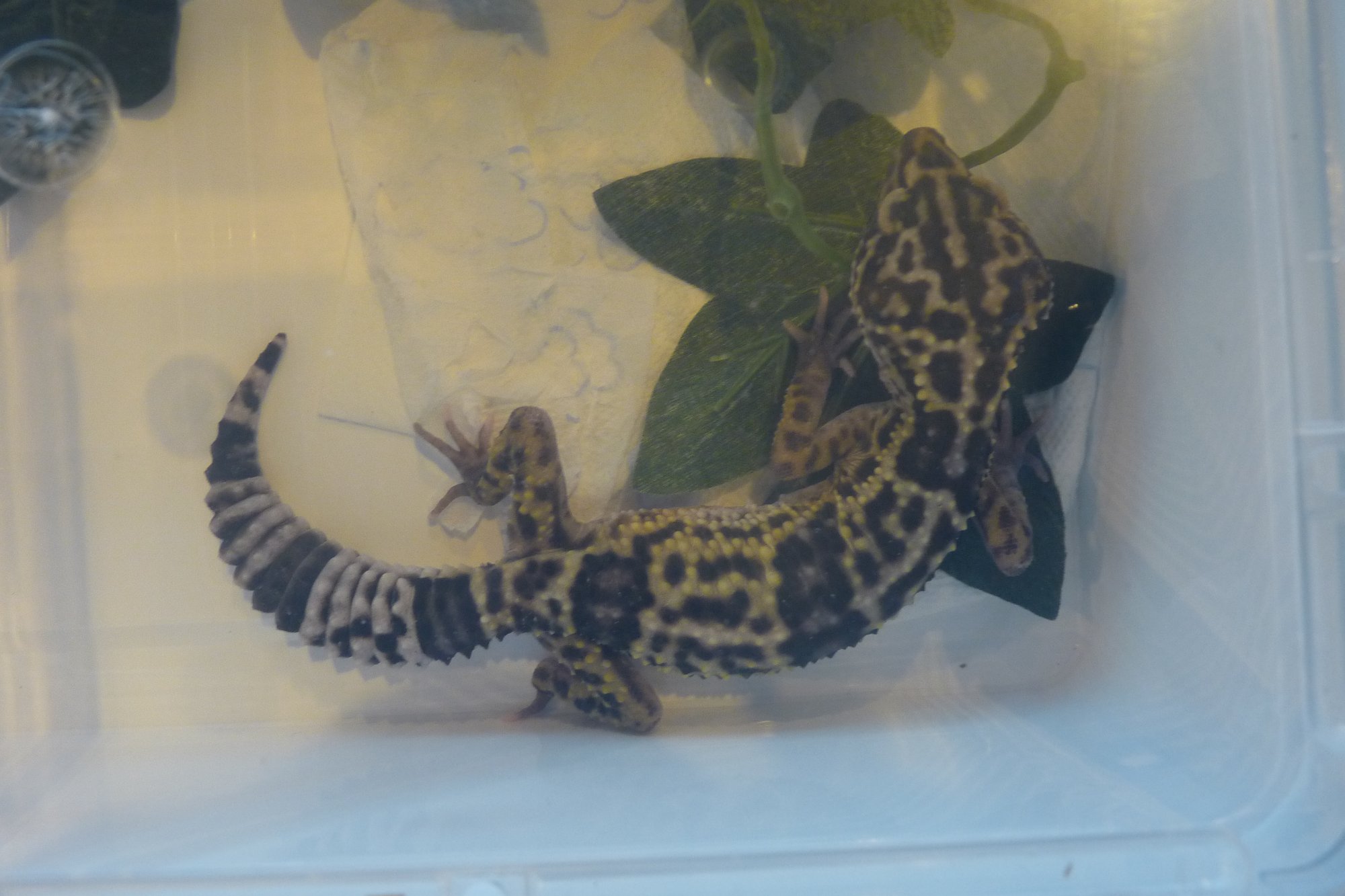
Geckos · Difficulty: Intermediate
Key facts and care guidance for Iranian leopard gecko (Eublepharis angramainyu) (origin: Iran, Iraq, Syria, Turkey). Adult size around 25–30 cm (the largest leopard gecko). Life expectancy 15–20 years. The values below are carefully researched guidance.
Short answers
Iranian leopard gecko: How big does the enclosure need to be?
120×50×50 cm.
Iranian leopard gecko: What temperature does it need?
Daytime 26–32 °C, basking spot 34 °C, at night 18–22 °C.
Iranian leopard gecko: Does it need UVB lighting?
UVB: Not essential.
Iranian leopard gecko: How long do they live?
Life expectancy: 15–20 years.
Iranian leopard gecko: Is it suitable for beginners?
Rather not – it is considered an intermediate species (difficulty: Intermediate).
Climate
- Daytime temperature
- 26–32 °C
- Night temperature
- 18–22 °C
- Basking spot
- 34 °C
- Humidity
- 40–55 %, a humid hide
- UVB
- Not essential
Enclosure
- Minimum size
- 120×50×50 cm
- Substrate
- Sand-loam with stone slabs and caves
Feeding
- Food
- Insects
- Feeding interval
- adults 3×/week
Key facts
- Adult size
- 25–30 cm (the largest leopard gecko)
- Life expectancy
- 15–20 years
- Origin
- Iran, Iraq, Syria, Turkey
- Protection status
- Not listed under CITES
- Brumation
- A cooler rest of 8–10 weeks at 14–18 °C
- Cohabitation
- Keeping them singly is the least stressful option — leopard geckos are solitary, and a second animal means competition for the basking spot, food and hides. Two females of similar size can live together in a correspondingly larger enclosure with a warm, cool and humid hide each; drawback: the dominant animal often quietly pushes the other away from heat and food, and an arrangement that looks peaceful at first can break down weeks later — monitor weights and separate immediately if they bite. Introduce a male only for mating; kept permanently, he strains the females with constant courtship and clutches. Never keep two males together.
Notes
Markedly larger and longer-legged than the ordinary leopard gecko. It needs correspondingly more floor area.
Do you keep this species?
Add your animal to Reptoria – Reptoria reminds you about feeding and shedding. Add your animal for free →
Look for Iranian leopard gecko (Eublepharis angramainyu) in the marketplace →
Related species
- Leopard gecko (Eublepharis macularius) – Beginner
- East Indian leopard gecko (Eublepharis hardwickii) – Intermediate
- Satpura leopard gecko (Eublepharis satpuraensis) – Intermediate
- Turkmenian leopard gecko (Eublepharis turcmenicus) – Intermediate
- West Indian leopard gecko (Eublepharis fuscus) – Intermediate
- African fat-tailed gecko (Hemitheconyx caudicinctus) – Beginner
- Bawangling leopard gecko (Goniurosaurus bawanglingensis) – Intermediate
- Cave gecko – Araneus (Goniurosaurus araneus) – Intermediate
What you need to start
To keep Iranian leopard gecko (Eublepharis angramainyu) you typically need: a suitable enclosure (120×50×50 cm), substrate (Sand-loam with stone slabs and caves), a heat source with a thermostat, UVB lighting, thermometer and hygrometer, a water dish and hides. You will find equipment in the Reptoria marketplace.
The complete, interactive care database is in the Reptoria app.
Last updated: 9 October 2026 · Editor: Reptoria editorial team · Sources include: https://en.wikipedia.org/wiki/Eublepharis, https://en.wikipedia.org/wiki/Eublepharis_angramainyu, https://reptifiles.com/leopard-gecko-care/leopard-gecko-temperatures-humidity/, https://reptile-database.reptarium.cz/species?genus=Eublepharis&species=angramainyu, https://reptiledirect.com/can-leopard-geckos-live-together/
All values are non-binding guidance and do not replace expert advice. Research thoroughly from several sources before acquiring and keeping an animal, and observe the applicable law (species and animal protection in particular).