Leopard gecko (Eublepharis macularius)
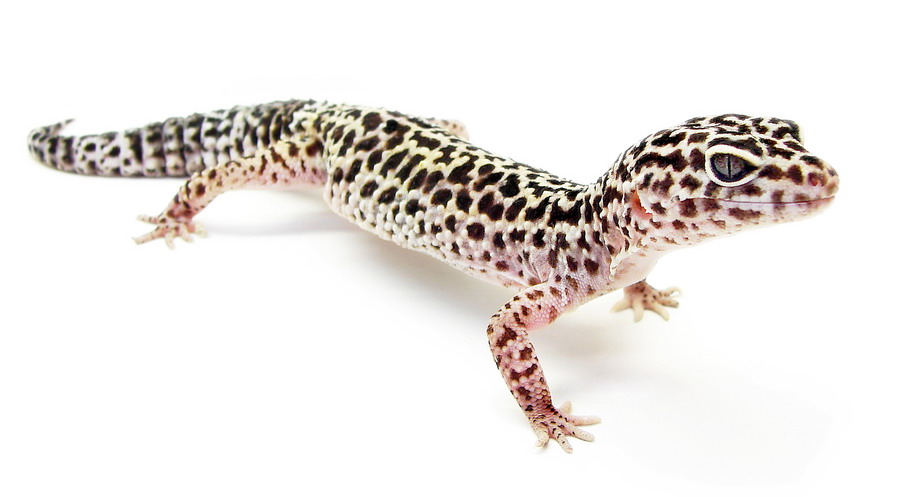
Geckos · Difficulty: Beginner
Key facts and care guidance for Leopard gecko (Eublepharis macularius) (origin: The Near East and South Asia). Adult size around 20–25 cm. Life expectancy 15–25 years. The values below are carefully researched guidance.
Short answers
Leopard gecko: How big does the enclosure need to be?
From 100×50×50 cm.
Leopard gecko: What temperature does it need?
Daytime 25–30 °C with a gradient (cooler end around 24 °C), basking spot 33–35 °C (local warm spot, from below), at night 20–22 °C.
Leopard gecko: Does it need UVB lighting?
UVB: Recommended (low).
Leopard gecko: How long do they live?
Life expectancy: 15–25 years.
Leopard gecko: Is it suitable for beginners?
Yes – it is considered suitable for beginners (difficulty: Beginner).
Climate
- Daytime temperature
- 25–30 °C with a gradient (cooler end around 24 °C)
- Night temperature
- 20–22 °C
- Basking spot
- 33–35 °C (local warm spot, from below)
- Humidity
- 40–50 %
- UVB
- Recommended (low)
Enclosure
- Minimum size
- from 100×50×50 cm
- Substrate
- Sand-loam or tiles (no loose sand for juveniles)
Feeding
- Food
- Insects (house crickets, roaches)
- Feeding interval
- Adults 2–3× a week
Key facts
- Adult size
- 20–25 cm
- Life expectancy
- 15–25 years
- Origin
- The Near East and South Asia
- Protection status
- No CITES Appendix, no EU Annex - no papers are needed to buy or sell. Practically all animals in the trade are captive-bred.
- Brumation
- Recommended: around 2 months between November and February at 15–20 °C, shortening lighting and stopping feeding. Anyone unable to cool the enclosure keeps the animals warm year-round — but without a rest period breeding won't happen, and many keepers report a shorter lifespan.
- Cohabitation
- Keeping a single animal is the least stressful option; leopard geckos do not need company. A small group of females is possible, but females also bite each other now and then and can lose their tails, so only in a clearly larger enclosure with separate basking and hiding spots for each, feed separately if they differ in size, and keep a way to separate them ready. Males always alone: several males fight over territory and the basking spot until one is injured or sits permanently in a corner.
Notes
Crepuscular and ground-active. A damp wet box for shedding. Heat from below plus a local spot.
Do you keep this species?
Add your animal to Reptoria – Reptoria reminds you about feeding and shedding. Add your animal for free →
Leopard gecko (Eublepharis macularius) currently offered
- Leopardgecko DNZ 2026 – Bold Stripe · Stadthagen · 70 €
- Leopardgecko DNZ 2026 – Bold stripe · Stadthagen · 70 €
- Leopardgecko DNZ 2026 – Bold Stripe · Stadthagen · 70 €
- Mandarin het Tremper Albino, het Eclipse Leopardgecko – Mandarin het Tremper, het Eclipse · Heiligenkreuz am Waasen · 180 €
- 0.1 Black Night Blood Mandarin Leopardgecko – Heiligenkreuz am Waasen · 150 €
- 0.1 Black Night Black Blood Leopardgecko – Black Night Black Blood · Heiligenkreuz am Waasen · 140 €
Related species
- Iranian leopard gecko (Eublepharis angramainyu) – Intermediate
- East Indian leopard gecko (Eublepharis hardwickii) – Intermediate
- Satpura leopard gecko (Eublepharis satpuraensis) – Intermediate
- Turkmenian leopard gecko (Eublepharis turcmenicus) – Intermediate
- West Indian leopard gecko (Eublepharis fuscus) – Intermediate
- African fat-tailed gecko (Hemitheconyx caudicinctus) – Beginner
- Bawangling leopard gecko (Goniurosaurus bawanglingensis) – Intermediate
- Cave gecko – Araneus (Goniurosaurus araneus) – Intermediate
What you need to start
To keep Leopard gecko (Eublepharis macularius) you typically need: a suitable enclosure (from 100×50×50 cm), substrate (Sand-loam or tiles (no loose sand for juveniles)), a heat source with a thermostat, UVB lighting, thermometer and hygrometer, a water dish and hides. You will find equipment in the Reptoria marketplace.
The complete, interactive care database is in the Reptoria app.
Last updated: 29 October 2026 · Editor: Reptoria editorial team · Sources include: Gutachten 1997, terraristikshop.net, CITES-Recherche, eigene Schwesterarten, moellner-leopardgeckos.de
All values are non-binding guidance and do not replace expert advice. Research thoroughly from several sources before acquiring and keeping an animal, and observe the applicable law (species and animal protection in particular).