West Indian leopard gecko (Eublepharis fuscus)
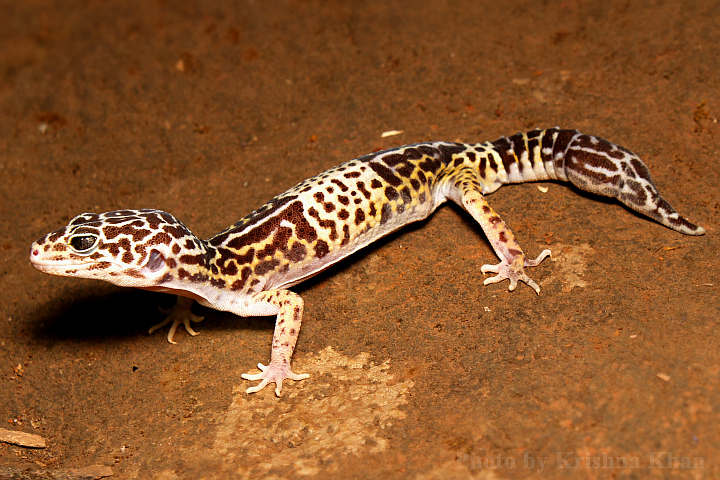
Geckos · Difficulty: Intermediate
Key facts and care guidance for West Indian leopard gecko (Eublepharis fuscus) (origin: Western India (Gujarat, Maharashtra)). Adult size around 25–33 cm total length (the largest species). Life expectancy 15–20 years. The values below are carefully researched guidance.
Short answers
West Indian leopard gecko: How big does the enclosure need to be?
100×50×50 cm.
West Indian leopard gecko: What temperature does it need?
Daytime 26–32 °C, basking spot 34 °C, at night 20–24 °C.
West Indian leopard gecko: Does it need UVB lighting?
UVB: Recommended (UVB 5.0).
West Indian leopard gecko: How long do they live?
Life expectancy: 15–20 years.
West Indian leopard gecko: Is it suitable for beginners?
Rather not – it is considered an intermediate species (difficulty: Intermediate).
Climate
- Daytime temperature
- 26–32 °C
- Night temperature
- 20–24 °C
- Basking spot
- 34 °C
- Humidity
- 45–60 %
- UVB
- Recommended (UVB 5.0)
Enclosure
- Minimum size
- 100×50×50 cm
- Substrate
- A sand-loam mix, stone slabs, a humid box
Feeding
- Food
- House crickets, crickets, roaches, mealworm larvae
- Feeding interval
- 2–3×/week
Key facts
- Adult size
- 25–33 cm total length (the largest species)
- Life expectancy
- 15–20 years
- Origin
- Western India (Gujarat, Maharashtra)
- Protection status
- Not listed under CITES; export from India is prohibited – only European captive-bred animals
- Brumation
- A cooler spell of 8–10 weeks
- Cohabitation
- Keeping them singly is the least stressful option — leopard geckos are solitary, and a second animal means competition for the basking spot, food and hides. Two females of similar size can live together in a correspondingly larger enclosure with a warm, cool and humid hide each; drawback: the dominant animal often quietly pushes the other away from heat and food, and an arrangement that looks peaceful at first can break down weeks later — monitor weights and separate immediately if they bite. Introduce a male only for mating; kept permanently, he strains the females with constant courtship and clutches. Never keep two males together.
Notes
The largest leopard gecko there is, markedly bulkier than E. macularius and with a darker ground colour. It needs correspondingly more floor area. In Europe in only a few breeding lines.
Do you keep this species?
Add your animal to Reptoria – Reptoria reminds you about feeding and shedding. Add your animal for free →
Look for West Indian leopard gecko (Eublepharis fuscus) in the marketplace →
Related species
- Iranian leopard gecko (Eublepharis angramainyu) – Intermediate
- Leopard gecko (Eublepharis macularius) – Beginner
- East Indian leopard gecko (Eublepharis hardwickii) – Intermediate
- Satpura leopard gecko (Eublepharis satpuraensis) – Intermediate
- Turkmenian leopard gecko (Eublepharis turcmenicus) – Intermediate
- African fat-tailed gecko (Hemitheconyx caudicinctus) – Beginner
- Bawangling leopard gecko (Goniurosaurus bawanglingensis) – Intermediate
- Cave gecko – Araneus (Goniurosaurus araneus) – Intermediate
What you need to start
To keep West Indian leopard gecko (Eublepharis fuscus) you typically need: a suitable enclosure (100×50×50 cm), substrate (A sand-loam mix, stone slabs, a humid box), a heat source with a thermostat, UVB lighting, thermometer and hygrometer, a water dish and hides. You will find equipment in the Reptoria marketplace.
The complete, interactive care database is in the Reptoria app.
Last updated: 9 October 2026 · Editor: Reptoria editorial team · Sources include: https://en.wikipedia.org/wiki/Eublepharis, https://en.wikipedia.org/wiki/West_Indian_leopard_gecko, https://reptifiles.com/leopard-gecko-care/leopard-gecko-temperatures-humidity/, https://reptile-database.reptarium.cz/species?genus=Eublepharis&species=fuscus, https://reptiledirect.com/can-leopard-geckos-live-together/
All values are non-binding guidance and do not replace expert advice. Research thoroughly from several sources before acquiring and keeping an animal, and observe the applicable law (species and animal protection in particular).