New Guinea crocodile skink (Tribolonotus novaeguineae)
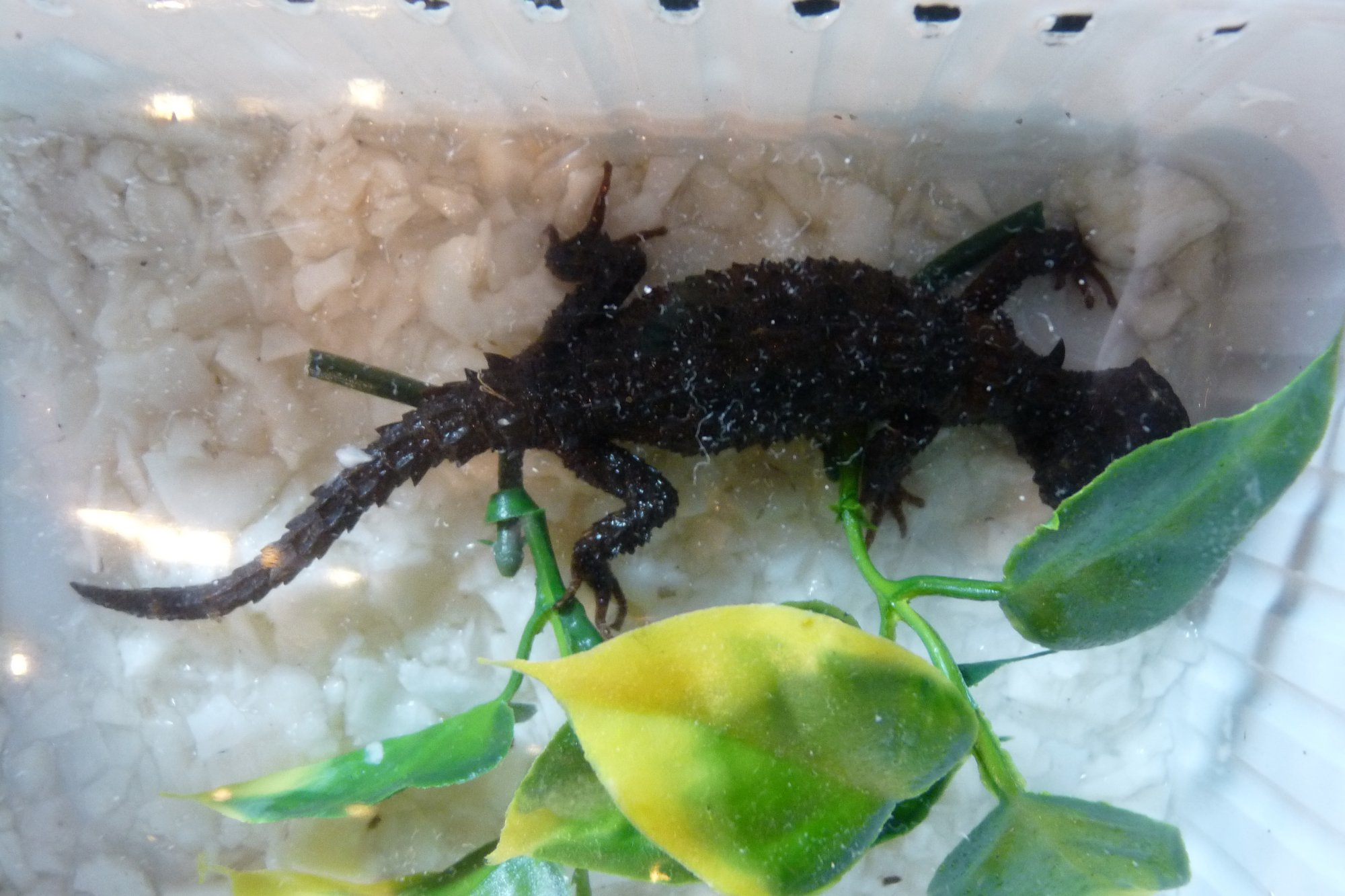
Skinks · Difficulty: Intermediate
Key facts and care guidance for New Guinea crocodile skink (Tribolonotus novaeguineae) (origin: New Guinea – Indonesia (West Papua) and Papua New Guinea; humid rainforest and stream banks. NOT the Solomon Islands (the trade name is misleading)). Adult size around 18–23 cm total length (SVL 8–10 cm, the tail about as long as the body). Life expectancy ~10–15 years in captivity. The values below are carefully researched guidance.
Short answers
New Guinea crocodile skink: How big does the enclosure need to be?
60×45×45 cm for one animal (minimum), better 90×45×45 cm; a large water zone matters.
New Guinea crocodile skink: What temperature does it need?
Daytime 22–26 °C ambient (warm side 26–28 °C) – deliberately cool, basking spot 27–29 °C weak hot spot, max. ~30 °C; strong heat lamps and heat mats are not advised, at night 20–22 °C (not permanently below 18–20 °C).
New Guinea crocodile skink: Does it need UVB lighting?
UVB: Low UVB recommended and beneficial (Ferguson zone 1–2, UV index 1–2; a 2–3 % T5).
New Guinea crocodile skink: How long do they live?
Life expectancy: ~10–15 years in captivity.
New Guinea crocodile skink: Is it suitable for beginners?
Rather not – it is considered an intermediate species (difficulty: Intermediate).
Climate
- Daytime temperature
- 22–26 °C ambient (warm side 26–28 °C) – deliberately cool
- Night temperature
- 20–22 °C (not permanently below 18–20 °C)
- Basking spot
- 27–29 °C weak hot spot, max. ~30 °C; strong heat lamps and heat mats are not advised
- Humidity
- 70–90 % by day, up to 85–100 % at night, but with good ventilation (no stale waterlogging)
- UVB
- Low UVB recommended and beneficial (Ferguson zone 1–2, UV index 1–2; a 2–3 % T5)
Enclosure
- Minimum size
- 60×45×45 cm for one animal (minimum), better 90×45×45 cm; a large water zone matters
- Substrate
- Damp tropical substrate (soil, coco humus or sphagnum) with a thick layer of leaf litter and moss, cork tubes and bark, 10 cm or more, moisture-retaining with drainage
Feeding
- Food
- Insectivorous: crickets, roaches, earthworms, isopods, springtails (mainly for juveniles), black soldier fly larvae; meal or wax worms for variety; prey no wider than half the head, with calcium and D3
- Feeding interval
- adults every 2–3 days; juveniles daily
Key facts
- Adult size
- 18–23 cm total length (SVL 8–10 cm, the tail about as long as the body)
- Life expectancy
- ~10–15 years in captivity
- Origin
- New Guinea – Indonesia (West Papua) and Papua New Guinea; humid rainforest and stream banks. NOT the Solomon Islands (the trade name is misleading)
- Protection status
- Not listed under CITES, no EU annex, no special German protection. BUT: Indonesia and Papua New Guinea work with export quotas → many animals are wild-caught; prefer captive-bred animals, and proof of origin makes sense
- Brumation
- No real winter rest (tropical, constant all year); at most a slight seasonal variation in temperature and humidity to stimulate breeding
- Cohabitation
- Pair housing (1.1) is possible and more tolerant than in many other skinks - pairs sometimes even share the nest and guard the egg together. Plenty of hiding spots, visual barriers, a generous water area and retreat space are needed; 1.2 housing only with plenty of space and caution. Two males never go together, leading to chasing and chronic stress. Solitary housing works just as well and is less stressful.
Notes
Taxonomy and naming note: T. novaeguineae is the white-eyed / New Guinea helmeted skink (with a pale eye ring), NOT the red-eyed crocodile skink (T. gracilis), and it comes from New Guinea, not the Solomons. Very shy, and no handling (an animal to watch); playing dead, vocalisations and tail-shedding under stress. It lays single eggs about every 5–6 weeks, with brood care. Success stands or falls on a stable humid, cool climate plus ventilation; sudden deaths occur mainly in wild-caught animals. Many of the finer care values are taken genus-wide from T. gracilis.
Do you keep this species?
Add your animal to Reptoria – Reptoria reminds you about feeding and shedding. Add your animal for free →
Look for New Guinea crocodile skink (Tribolonotus novaeguineae) in the marketplace →
Related species
- Poncelet's crocodile skink (Tribolonotus ponceleti) – Expert
- Red-eyed crocodile skink (Tribolonotus gracilis) – Intermediate
- Schmidt's crocodile skink (Tribolonotus schmidti) – Intermediate
- Prehensile-tailed skink (Corucia zebrata) – Intermediate to expert
- Northern monkey-tailed skink (Corucia zebrata alfredschmidti) – Expert
- African five-lined skink (Trachylepis quinquetaeniata) – Intermediate
- Algerian skink (Eumeces algeriensis) – Intermediate
- Centralian blue-tongued skink (Tiliqua multifasciata) – Intermediate
What you need to start
To keep New Guinea crocodile skink (Tribolonotus novaeguineae) you typically need: a suitable enclosure (60×45×45 cm for one animal (minimum), better 90×45×45 cm; a large water zone matters), substrate (Damp tropical substrate (soil, coco humus or sphagnum) with a thick layer of leaf litter and moss, cork tubes and bark, 10 cm or more, moisture-retaining with drainage), a heat source with a thermostat, UVB lighting, thermometer and hygrometer, a water dish and hides. You will find equipment in the Reptoria marketplace.
The complete, interactive care database is in the Reptoria app.
Last updated: 9 October 2026 · Editor: Reptoria editorial team · Sources include: https://en.wikipedia.org/wiki/White-eyed_crocodile_skink, https://exoticskeeper.com/blog/red-eyed-crocodile-skink-care-guide/, https://reptile-database.reptarium.cz/species?genus=Tribolonotus&species=novaeguineae
All values are non-binding guidance and do not replace expert advice. Research thoroughly from several sources before acquiring and keeping an animal, and observe the applicable law (species and animal protection in particular).