Prehensile-tailed skink (Corucia zebrata)
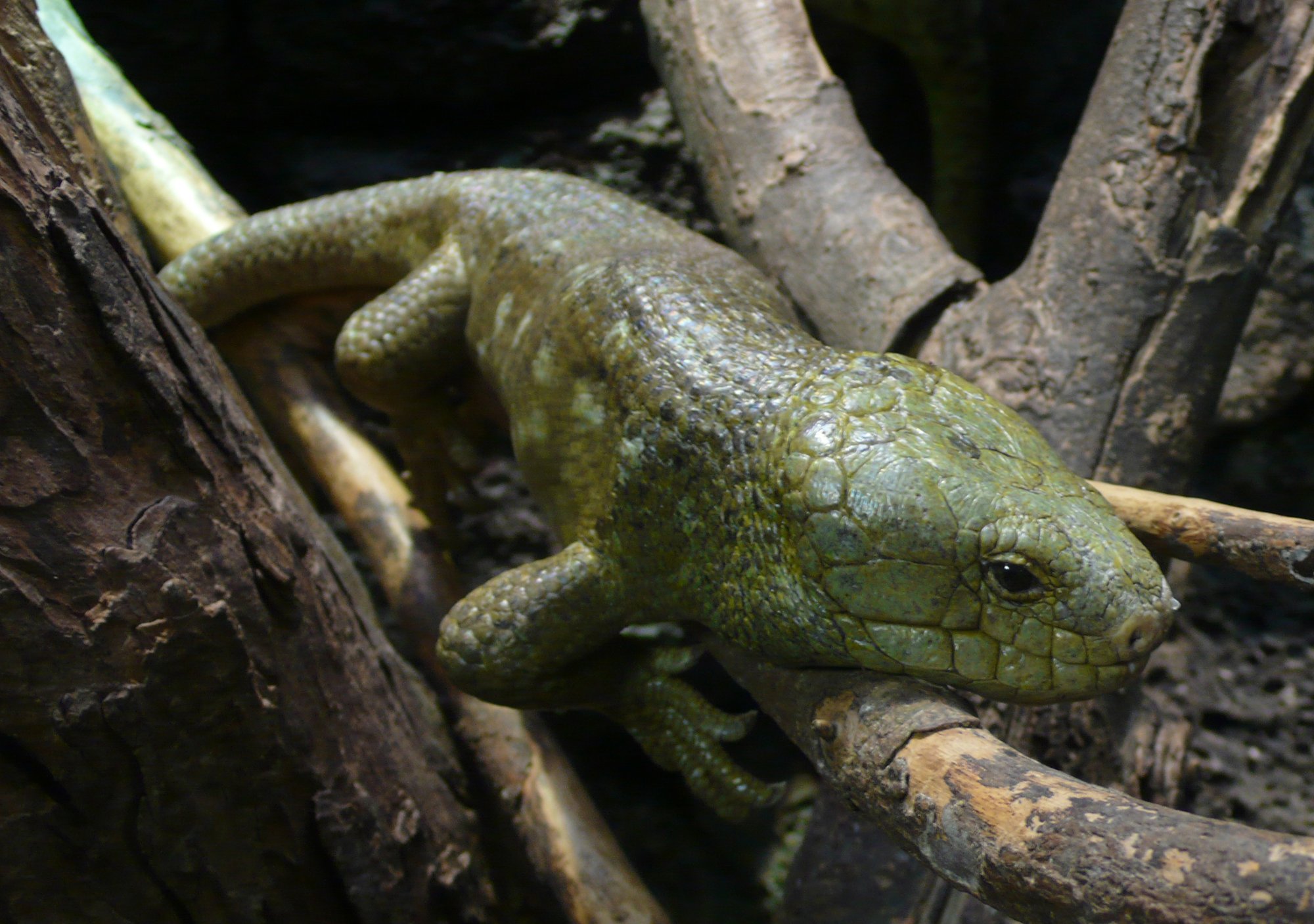
Skinks · Difficulty: Intermediate to expert
Key facts and care guidance for Prehensile-tailed skink (Corucia zebrata) (origin: Solomon Islands as well as Bougainville and Buka (Papua New Guinea) — coastal and montane rainforests up to approx. 1,000 m). Adult size around up to 75–80 cm including the prehensile tail (the largest skink). Life expectancy 15–25 years, up to 30. The values below are carefully researched guidance.
Short answers
Prehensile-tailed skink: How big does the enclosure need to be?
From 175×105×175 cm for one animal; for a pair from 200×105×175 cm (15 % more floor space per additional animal, as in the 1997 expert report).
Prehensile-tailed skink: What temperature does it need?
Daytime 24–30 °C, basking spot about 30 °C at a basking spot, at night 20–24 °C.
Prehensile-tailed skink: Does it need UVB lighting?
UVB: Yes (UVB 5–6%, 12 h in summer, 8 h in winter).
Prehensile-tailed skink: How long do they live?
Life expectancy: 15–25 years, up to 30.
Prehensile-tailed skink: Is it suitable for beginners?
No – better suited to experienced keepers (difficulty: Intermediate to expert).
Climate
- Daytime temperature
- 24–30 °C
- Night temperature
- 20–24 °C
- Basking spot
- about 30 °C at a basking spot
- Humidity
- 60–80 %, higher at night than during the day
- UVB
- Yes (UVB 5–6%, 12 h in summer, 8 h in winter)
Enclosure
- Minimum size
- from 175×105×175 cm for one animal; for a pair from 200×105×175 cm (15 % more floor space per additional animal, as in the 1997 expert report)
- Substrate
- Coco humus or forest floor, plenty of stable climbing branches
Feeding
- Food
- A pure plant-eater – leaves (pothos, hibiscus), vegetables, little fruit
- Feeding interval
- Daily to several times a week on plant food
Key facts
- Adult size
- up to 75–80 cm including the prehensile tail (the largest skink)
- Life expectancy
- 15–25 years, up to 30
- Origin
- Solomon Islands as well as Bougainville and Buka (Papua New Guinea) — coastal and montane rainforests up to approx. 1,000 m
- Protection status
- CITES Appendix II / EU B – paperwork required
- Brumation
- None
- Cohabitation
- Sociable – stable family groups or a pair are possible, but they are territorial towards strangers
Notes
A nocturnal, arboreal strict herbivore – it needs a large, tall, densely structured climbing terrarium. A CITES II species and not one for beginners.
Do you keep this species?
Add your animal to Reptoria – Reptoria reminds you about feeding and shedding. Add your animal for free →
Look for Prehensile-tailed skink (Corucia zebrata) in the marketplace →
Related species
- Northern monkey-tailed skink (Corucia zebrata alfredschmidti) – Expert
- Poncelet's crocodile skink (Tribolonotus ponceleti) – Expert
- Red-eyed crocodile skink (Tribolonotus gracilis) – Intermediate
- New Guinea crocodile skink (Tribolonotus novaeguineae) – Intermediate
- Schmidt's crocodile skink (Tribolonotus schmidti) – Intermediate
- African five-lined skink (Trachylepis quinquetaeniata) – Intermediate
- Algerian skink (Eumeces algeriensis) – Intermediate
- Tree skink (Egernia striolata) – Beginner
What you need to start
To keep Prehensile-tailed skink (Corucia zebrata) you typically need: a suitable enclosure (from 175×105×175 cm for one animal; for a pair from 200×105×175 cm (15 % more floor space per additional animal, as in the 1997 expert report)), substrate (Coco humus or forest floor, plenty of stable climbing branches), a heat source with a thermostat, UVB lighting, thermometer and hygrometer, a water dish and hides. You will find equipment in the Reptoria marketplace.
The complete, interactive care database is in the Reptoria app.
Last updated: 9 October 2026 · Editor: Reptoria editorial team · Sources include: dubiaroaches.com, reptilesupply.com, Wikipedia EN, Wikipedia DE, eu_annex.txt (VO (EU) 2026/1383, lokal)
All values are non-binding guidance and do not replace expert advice. Research thoroughly from several sources before acquiring and keeping an animal, and observe the applicable law (species and animal protection in particular).