Philippine sailfin lizard (Hydrosaurus pustulatus)
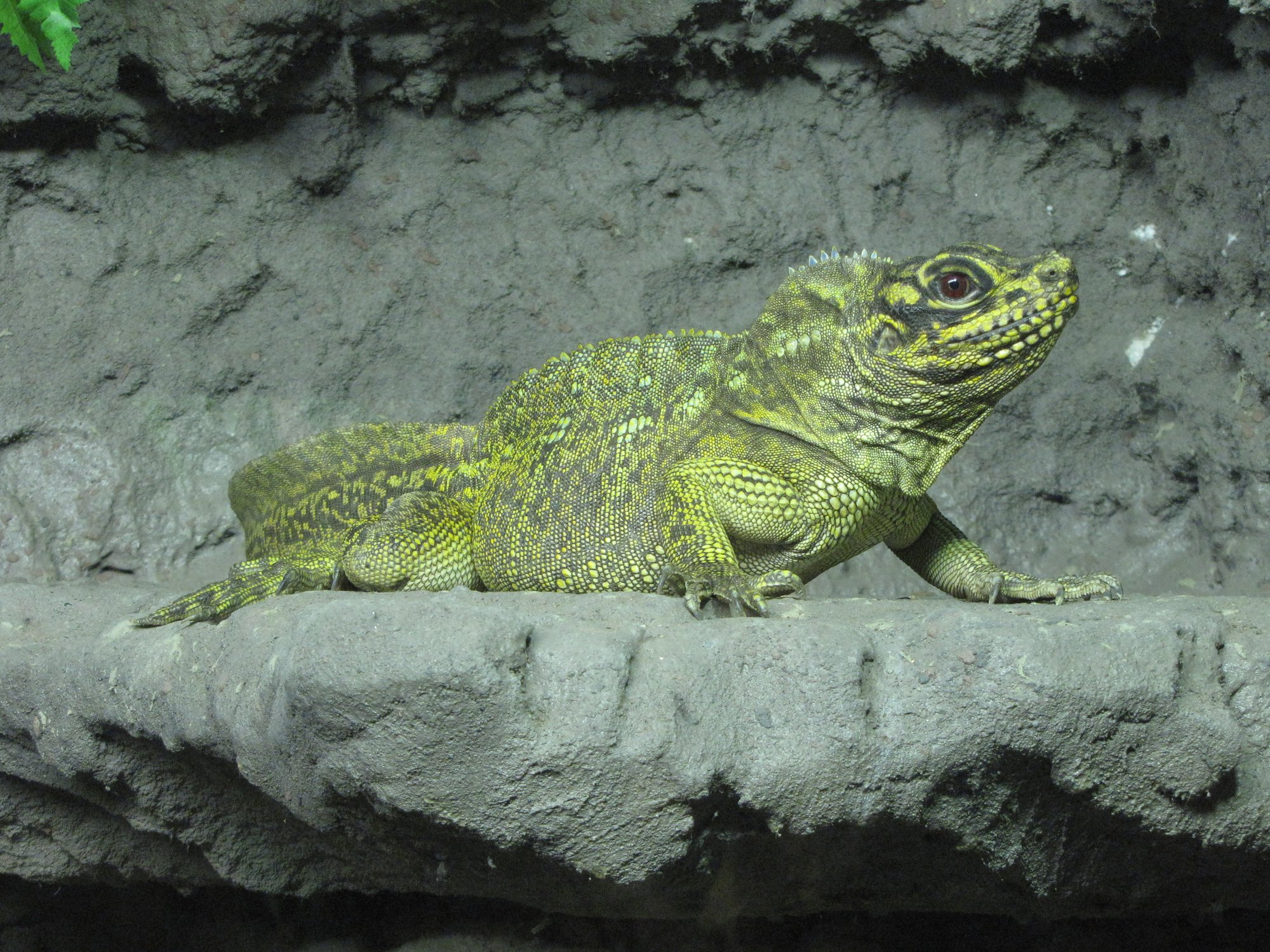
Agamas · Difficulty: Expert
Key facts and care guidance for Philippine sailfin lizard (Hydrosaurus pustulatus) (origin: The Philippines). Adult size around males 90–120 cm total length, females about a third smaller. Life expectancy 12–20 years, up to 25 years with good care. The values below are carefully researched guidance.
Short answers
Philippine sailfin lizard: How big does the enclosure need to be?
250×150×200 cm (a room-sized enclosure).
Philippine sailfin lizard: What temperature does it need?
Daytime 27–33 °C, basking spot 40 °C, at night 22–25 °C.
Philippine sailfin lizard: Does it need UVB lighting?
UVB: Essential (UVB 10.0).
Philippine sailfin lizard: How long do they live?
Life expectancy: 12–20 years, up to 25 years with good care.
Philippine sailfin lizard: Is it suitable for beginners?
No – better suited to experienced keepers (difficulty: Expert).
Climate
- Daytime temperature
- 27–33 °C
- Night temperature
- 22–25 °C
- Basking spot
- 40 °C
- Humidity
- 70–85 %
- UVB
- Essential (UVB 10.0)
Enclosure
- Minimum size
- 250×150×200 cm (a room-sized enclosure)
- Substrate
- Coco humus soil, sturdy climbing branches, a very large water section
Feeding
- Food
- Leafy greens, fruit, insects, occasionally fish
- Feeding interval
- daily (mostly plant food)
Key facts
- Adult size
- males 90–120 cm total length, females about a third smaller
- Life expectancy
- 12–20 years, up to 25 years with good care
- Origin
- The Philippines
- Protection status
- CITES II; IUCN "Vulnerable" – export from the Philippines is prohibited
- Brumation
- None
- Cohabitation
- A pair; keep males strictly apart. The reason: several males fight over territory and the warm spot until one is injured or spends its life in a corner. Females usually get on, but each needs its own warm spot and hide; feed them separately once they differ in size.
Notes
The space requirement is enormous: adult animals need a walk-in room terrarium with a large swimming basin. Skittish – when disturbed it runs into the glass and injures its snout. Only for experienced keepers with plenty of room.
Do you keep this species?
Add your animal to Reptoria – Reptoria reminds you about feeding and shedding. Add your animal for free →
Look for Philippine sailfin lizard (Hydrosaurus pustulatus) in the marketplace →
Related species
- Amboina sailfin lizard (Hydrosaurus amboinensis) – Intermediate to expert
- Papuan sailfin lizard (Hydrosaurus microlophus) – Expert
- Sulawesi sailfin lizard (Hydrosaurus celebensis) – Expert
- Weber's sailfin lizard (Hydrosaurus weberi) – Expert
- Frilled lizard (Chlamydosaurus kingii) – Intermediate
- Eared forest dragon (Hypsilurus auritus) – Expert
- Inland earless dragon (Tympanocryptis intima) – Expert
- Blanford's flying lizard (Draco blanfordii) – Expert
What you need to start
To keep Philippine sailfin lizard (Hydrosaurus pustulatus) you typically need: a suitable enclosure (250×150×200 cm (a room-sized enclosure)), substrate (Coco humus soil, sturdy climbing branches, a very large water section), a heat source with a thermostat, UVB lighting, thermometer and hygrometer, a water dish and hides. You will find equipment in the Reptoria marketplace.
The complete, interactive care database is in the Reptoria app.
Last updated: 9 October 2026 · Editor: Reptoria editorial team · Sources include: bmleh.de, de.wikipedia.org, einrichtungsbeispiele.de, en.wikipedia.org, reptile-database.reptarium.cz
All values are non-binding guidance and do not replace expert advice. Research thoroughly from several sources before acquiring and keeping an animal, and observe the applicable law (species and animal protection in particular).