Weber's sailfin lizard (Hydrosaurus weberi)
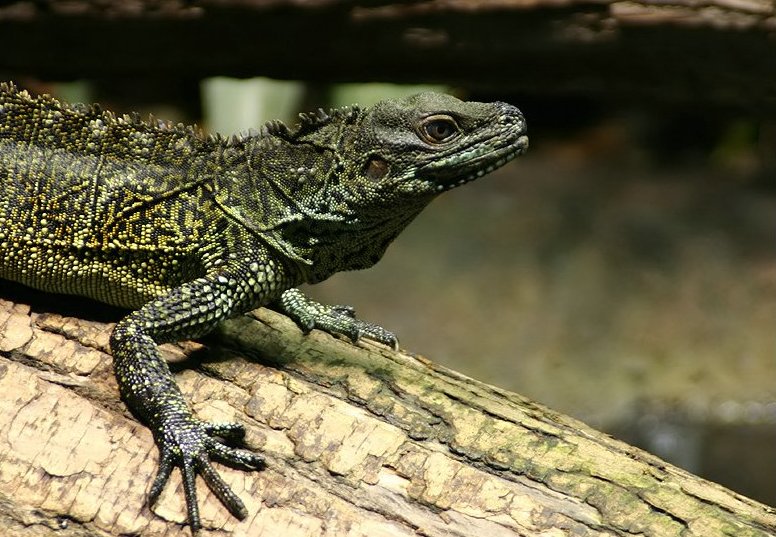
Agamas · Difficulty: Expert
Key facts and care guidance for Weber's sailfin lizard (Hydrosaurus weberi) (origin: Halmahera and the neighbouring islands (the northern Moluccas, Indonesia); the trade name "Philippine" is misleading (the Philippine species is H. pustulatus)). Adult size around Males 110–120 cm, females around 90 cm total length. Life expectancy 15–20 years (up to 25). The values below are carefully researched guidance.
Short answers
Weber's sailfin lizard: How big does the enclosure need to be?
Approx. 200×100×180 cm (one adult animal), height matters; a large water section covering at least a third of the floor area.
Weber's sailfin lizard: What temperature does it need?
Daytime 28–32 °C, basking spot 38–45 °C (basking spot), at night 24–26 °C.
Weber's sailfin lizard: Does it need UVB lighting?
UVB: A high UVB requirement (Ferguson zone 2–3, UV index 3–5); a strong UVB lamp for D3 and calcium metabolism.
Weber's sailfin lizard: How long do they live?
Life expectancy: 15–20 years (up to 25).
Weber's sailfin lizard: Is it suitable for beginners?
No – better suited to experienced keepers (difficulty: Expert).
Climate
- Daytime temperature
- 28–32 °C
- Night temperature
- 24–26 °C
- Basking spot
- 38–45 °C (basking spot)
- Humidity
- 70–90 %
- UVB
- A high UVB requirement (Ferguson zone 2–3, UV index 3–5); a strong UVB lamp for D3 and calcium metabolism
Enclosure
- Minimum size
- approx. 200×100×180 cm (one adult animal), height matters; a large water section covering at least a third of the floor area
- Substrate
- A soil, sand and leaf-litter mix, moisture-retaining and diggable; a large, deep water basin
Feeding
- Food
- Omnivorous: insects, earthworms, fish plus leafy greens, herbs, flowers and fruit (increasingly plant-based as adults)
- Feeding interval
- juveniles daily, adults animal food 3–4×/week plus plant food offered daily
Key facts
- Adult size
- Males 110–120 cm, females around 90 cm total length
- Life expectancy
- 15–20 years (up to 25)
- Origin
- Halmahera and the neighbouring islands (the northern Moluccas, Indonesia); the trade name "Philippine" is misleading (the Philippine species is H. pustulatus)
- Protection status
- No CITES status (as of research in 2024/25); mostly wild-caught, threatened by trade and habitat loss → mind the origin and captive breeding
- Brumation
- None (tropical)
- Cohabitation
- Keep them singly, or as a pair only in very large facilities; territorial, nervous animals that flee; never keep males together
Notes
H. weberi comes from the Moluccas (Weber's sailfin lizard), NOT from the Philippines – correct the trade name so keepers are not confused. A very large, shy flight animal; the husbandry figures come from genus-level care.
Do you keep this species?
Add your animal to Reptoria – Reptoria reminds you about feeding and shedding. Add your animal for free →
Look for Weber's sailfin lizard (Hydrosaurus weberi) in the marketplace →
Related species
- Amboina sailfin lizard (Hydrosaurus amboinensis) – Intermediate to expert
- Papuan sailfin lizard (Hydrosaurus microlophus) – Expert
- Philippine sailfin lizard (Hydrosaurus pustulatus) – Expert
- Sulawesi sailfin lizard (Hydrosaurus celebensis) – Expert
- Frilled lizard (Chlamydosaurus kingii) – Intermediate
- Eared forest dragon (Hypsilurus auritus) – Expert
- Inland earless dragon (Tympanocryptis intima) – Expert
- Blanford's flying lizard (Draco blanfordii) – Expert
What you need to start
To keep Weber's sailfin lizard (Hydrosaurus weberi) you typically need: a suitable enclosure (approx. 200×100×180 cm (one adult animal), height matters; a large water section covering at least a third of the floor area), substrate (A soil, sand and leaf-litter mix, moisture-retaining and diggable; a large, deep water basin), a heat source with a thermostat, UVB lighting, thermometer and hygrometer, a water dish and hides. You will find equipment in the Reptoria marketplace.
The complete, interactive care database is in the Reptoria app.
Last updated: 2 November 2026 · Editor: Reptoria editorial team · Sources include: https://de.wikipedia.org/wiki/Molukkensegelechse, https://reptile-database.reptarium.cz/species?genus=Hydrosaurus&species=weberi
All values are non-binding guidance and do not replace expert advice. Research thoroughly from several sources before acquiring and keeping an animal, and observe the applicable law (species and animal protection in particular).