Philippine stick insect (Anarchodes annulipes)
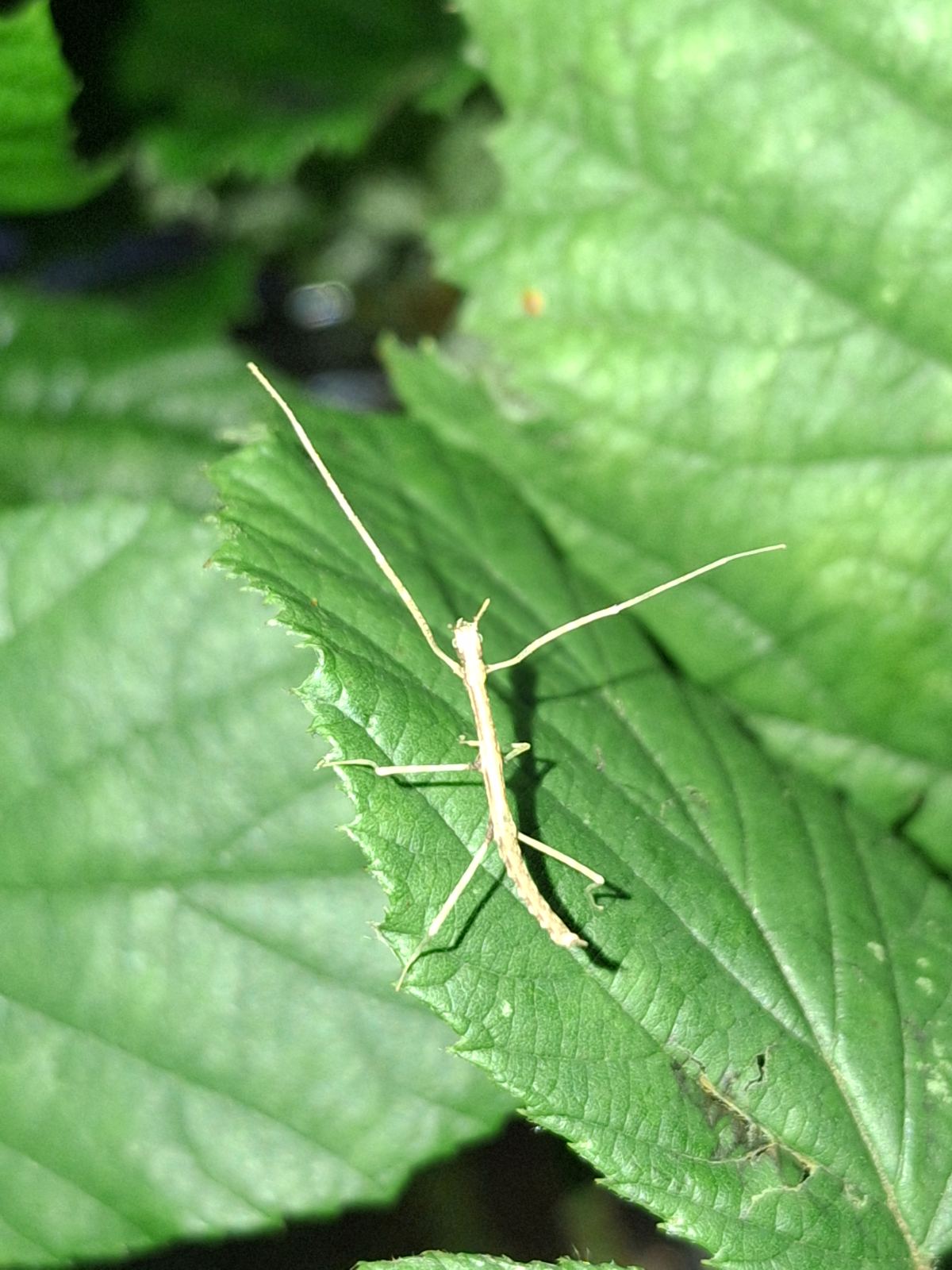
Invertebrates · Difficulty: Intermediate
Key facts and care guidance for Philippine stick insect (Anarchodes annulipes) (origin: Malaiische Halbinsel, Singapur, Thailand, Sumatra (Strauchvegetation)). Adult size around females ~8–8.5 cm, males ~5–6 cm. Life expectancy approx. 6 months as an adult. The values below are carefully researched guidance.
Short answers
Philippine stick insect: How big does the enclosure need to be?
30×30×40 cm (a small group).
Philippine stick insect: What temperature does it need?
Daytime 22–28 °C, at night ~20 °C.
Philippine stick insect: Does it need UVB lighting?
UVB: No UVB needed.
Philippine stick insect: How long do they live?
Life expectancy: approx. 6 months as an adult.
Philippine stick insect: Is it suitable for beginners?
Rather not – it is considered an intermediate species (difficulty: Intermediate).
Climate
- Daytime temperature
- 22–28 °C
- Night temperature
- ~20 °C
- Basking spot
- —
- Humidity
- 60–80 %
- UVB
- No UVB needed
Enclosure
- Minimum size
- 30×30×40 cm (a small group)
- Substrate
- Slightly damp coco humus plus a layer of leaf litter (oak, for example), at least 10 cm; cork tubes as hides
Feeding
- Food
- Leaves: privet (which gives it its name, and readily taken), bramble, oak, ivy; also windfall fruit
- Feeding interval
- fresh leaves at all times; mist daily
Key facts
- Adult size
- females ~8–8.5 cm, males ~5–6 cm
- Life expectancy
- approx. 6 months as an adult
- Origin
- Malaiische Halbinsel, Singapur, Thailand, Sumatra (Strauchvegetation)
- Protection status
- Not protected (not listed under CITES or German nature conservation law); commonly available captive-bred
- Brumation
- None
- Cohabitation
- Group: a peaceful species, several animals of different ages tolerate each other well in a group. Reproduction is parthenogenetic or bisexual, so a male is not strictly required.
Notes
Uncertain in taxonomy and origin: formerly Necroscia annulipes; the trade name is "privet stick insect". The sources contradict each other on its origin (Philippines versus Malaysia) – the climate and size figures follow keeper reports conservatively. A delicate, partly winged species; nocturnal.
Do you keep this species?
Add your animal to Reptoria – Reptoria reminds you about feeding and shedding. Add your animal for free →
Look for Philippine stick insect (Anarchodes annulipes) in the marketplace →
Related species
- Annam stick insect (Ramulus artemis) – Beginner
- Giant prickly stick insect (Extatosoma tiaratum) – Beginner
- Brueckner's stick insect (Trachyaretaon brueckneri) – Beginner
- Ceylon leaf insect (Phyllium bioculatum) – Intermediate
- Chan's megastick (Phobaeticus chani) – Expert
- Giant spiny stick insect (Aretaon asperrimus) – Beginner
- Giant spiny stick insect (Eurycantha calcarata) – Beginner
- Jungle nymph (Heteropteryx dilatata) – Intermediate
What you need to start
To keep Philippine stick insect (Anarchodes annulipes) you typically need: a suitable enclosure (30×30×40 cm (a small group)), substrate (Slightly damp coco humus plus a layer of leaf litter (oak, for example), at least 10 cm; cork tubes as hides), a heat source with a thermostat, UVB lighting, thermometer and hygrometer, a water dish and hides. You will find equipment in the Reptoria marketplace.
The complete, interactive care database is in the Reptoria app.
Last updated: 25 September 2026 · Editor: Reptoria editorial team · Sources include: https://phasmida.speciesfile.org/otus/855559, https://danio.at/necroscia-annulipes, https://phasmatodea.com/anarchodes-annulipes-gray-1835
All values are non-binding guidance and do not replace expert advice. Research thoroughly from several sources before acquiring and keeping an animal, and observe the applicable law (species and animal protection in particular).