Pink springtail (Sinella curviseta)
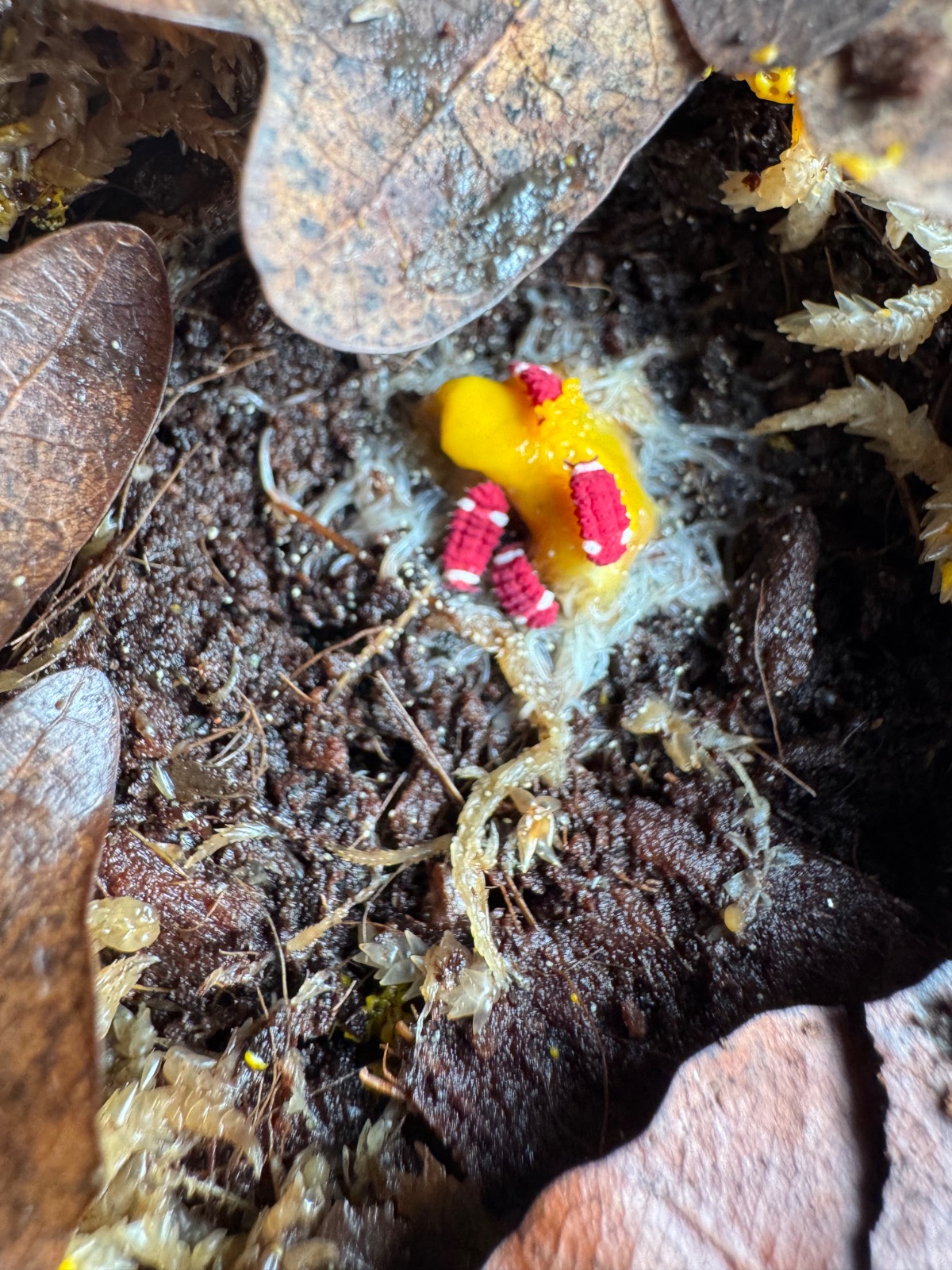
Invertebrates · Difficulty: Beginner
Key facts and care guidance for Pink springtail (Sinella curviseta) (origin: Cosmopolitan (originally East Asia); cultured worldwide as a clean-up crew). Adult size around approx. 1.5–3 mm. Life expectancy an individual lives weeks to months; the colony sustains itself indefinitely. The values below are carefully researched guidance.
Short answers
Pink springtail: How big does the enclosure need to be?
A breeding box or a closed culture container from ~1–2 l; also as a clean-up crew in a bioactive terrarium.
Pink springtail: What temperature does it need?
Daytime 20–30 °C (tropical, heat-tolerant; also breeds at cooler temperatures), at night 18–24 °C.
Pink springtail: Does it need UVB lighting?
UVB: No UVB needed.
Pink springtail: How long do they live?
Life expectancy: an individual lives weeks to months; the colony sustains itself indefinitely.
Pink springtail: Is it suitable for beginners?
Yes – it is considered suitable for beginners (difficulty: Beginner).
Climate
- Daytime temperature
- 20–30 °C (tropical, heat-tolerant; also breeds at cooler temperatures)
- Night temperature
- 18–24 °C
- Basking spot
- —
- Humidity
- high (humid, not wet)
- UVB
- No UVB needed
Enclosure
- Minimum size
- a breeding box or a closed culture container from ~1–2 l; also as a clean-up crew in a bioactive terrarium
- Substrate
- Damp coco humus with activated charcoal, leaf litter (beech or oak), moss
Feeding
- Food
- Yeast, mould and fungi, detritus, fine organic material
- Feeding interval
- a small pinch of yeast every few days – avoid overfeeding
Key facts
- Adult size
- approx. 1.5–3 mm
- Life expectancy
- an individual lives weeks to months; the colony sustains itself indefinitely
- Origin
- Cosmopolitan (originally East Asia); cultured worldwide as a clean-up crew
- Protection status
- Not protected
- Brumation
- —
- Cohabitation
- Colony and group housing is the only sensible way to keep this species – a mass-culture animal with no individual behaviour, which can be safely combined with reptiles and amphibians in a bioactive vivarium as a clean-up crew.
Notes
A very fast and densely breeding tropical species (ideal for large populations and feeder cultures), and it takes warmth up to about 30 °C. It eats mould and biofilm and stabilises bioactive setups. In the trade also as "Tropical Pink/White".
Do you keep this species?
Add your animal to Reptoria – Reptoria reminds you about feeding and shedding. Add your animal for free →
Look for Pink springtail (Sinella curviseta) in the marketplace →
Related species
- Orange springtail (Bilobella braunerae) – Beginner
- Silver springtail (Tomocerus sp.) – Beginner
- Tropical springtail (Collembola sp.) – Beginner
- White springtail (Folsomia candida) – Beginner
- African giant mantis (Sphodromantis lineola) – Beginner
- African giant mantis (Sphodromantis viridis) – Beginner
- Giant African millipede (Archispirostreptus gigas) – Beginner
- Dubia roach (Blaptica dubia) – Beginner
What you need to start
To keep Pink springtail (Sinella curviseta) you typically need: a suitable enclosure (a breeding box or a closed culture container from ~1–2 l; also as a clean-up crew in a bioactive terrarium), substrate (Damp coco humus with activated charcoal, leaf litter (beech or oak), moss), a heat source with a thermostat, UVB lighting, thermometer and hygrometer, a water dish and hides. You will find equipment in the Reptoria marketplace.
The complete, interactive care database is in the Reptoria app.
Last updated: 25 September 2026 · Editor: Reptoria editorial team · Sources include: https://en.wikipedia.org/wiki/Sinella, https://en.wikipedia.org/wiki/Sinella_curviseta
All values are non-binding guidance and do not replace expert advice. Research thoroughly from several sources before acquiring and keeping an animal, and observe the applicable law (species and animal protection in particular).