Scorpion-tailed gecko (Pristurus carteri)
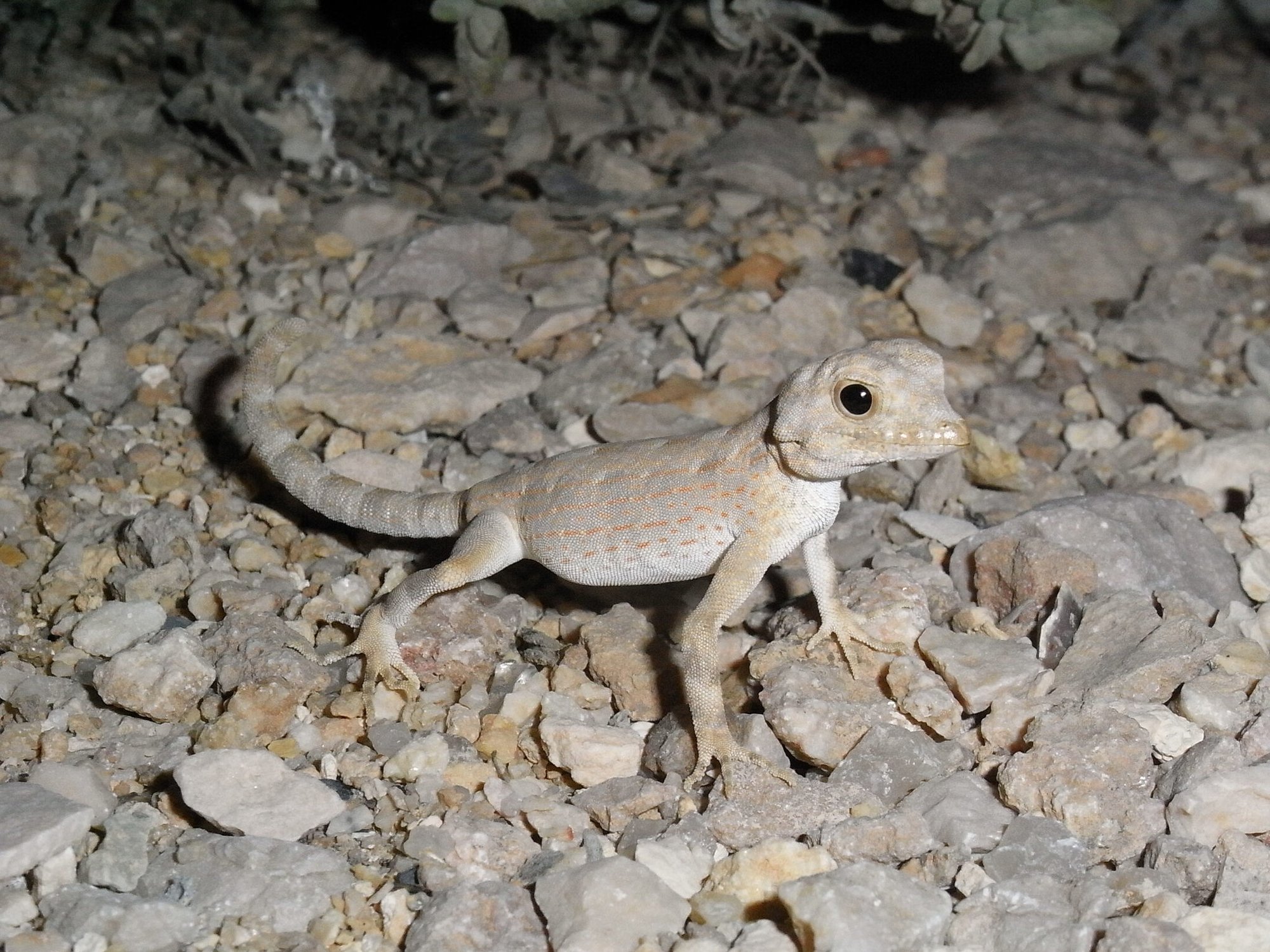
Geckos · Difficulty: Intermediate
Key facts and care guidance for Scorpion-tailed gecko (Pristurus carteri) (origin: The Arabian Peninsula (Oman, Yemen, the UAE among others), arid habitats). Adult size around approx. 8–10 cm total length (SVL ~5 cm). Life expectancy 5–10 years. The values below are carefully researched guidance.
Short answers
Scorpion-tailed gecko: How big does the enclosure need to be?
60×40×40 cm for one animal (a desert enclosure with stones and branches).
Scorpion-tailed gecko: What temperature does it need?
Daytime 28–35 °C, basking spot up to 40 °C (local basking spot), at night 20–25 °C.
Scorpion-tailed gecko: Does it need UVB lighting?
UVB: UVB needed (diurnal and sun-loving; Ferguson zone 3, UV index 3–5).
Scorpion-tailed gecko: How long do they live?
Life expectancy: 5–10 years.
Scorpion-tailed gecko: Is it suitable for beginners?
Rather not – it is considered an intermediate species (difficulty: Intermediate).
Climate
- Daytime temperature
- 28–35 °C
- Night temperature
- 20–25 °C
- Basking spot
- up to 40 °C (local basking spot)
- Humidity
- 30–50 % (dry; one spot-sized humid hide)
- UVB
- UVB needed (diurnal and sun-loving; Ferguson zone 3, UV index 3–5)
Enclosure
- Minimum size
- 60×40×40 cm for one animal (a desert enclosure with stones and branches)
- Substrate
- A sand-loam mix with rock structures and clay caves, dry
Feeding
- Food
- Small insects (micro crickets, small crickets, fruit flies, firebrats); calcium and vitamins matter
- Feeding interval
- adults 2–3×/week, juveniles (almost) daily
Key facts
- Adult size
- approx. 8–10 cm total length (SVL ~5 cm)
- Life expectancy
- 5–10 years
- Origin
- The Arabian Peninsula (Oman, Yemen, the UAE among others), arid habitats
- Protection status
- No CITES; no special protected status – no registration duty
- Brumation
- No strict winter rest; a slight seasonal drop in temperature or photoperiod is possible (not essential)
- Cohabitation
- Keeping it singly is the least stressful option. A harem/group of one male with several females is also possible; males are strongly territorial (threatening with the tail rolled over the back) and must never be housed together.
Notes
A diurnal small gecko, very fast and shy – not an animal to stroke, and it takes stress badly. Markedly less keeper data than for the standard species; the figures are cross-checked conservatively from several care sheets.
Do you keep this species?
Add your animal to Reptoria – Reptoria reminds you about feeding and shedding. Add your animal for free →
Scorpion-tailed gecko (Pristurus carteri) currently offered
- 1.1 Skorpionschwanzgecko - Pristurus carteri "Masirah island" – Auerbach in der Oberpfalz · 400 €
Related species
- Arabian short-fingered gecko (Stenodactylus arabicus) – Beginner with some knowledge
- Bastard's big-headed gecko (Paroedura bastardi) – Beginner
- Common barking gecko (Ptenopus garrulus) – Intermediate
- Boettger's wall gecko (Tarentola boettgeri) – Beginner
- Bibron's thick-toed gecko (Pachydactylus bibronii) – Beginner
- Elegant gecko (Stenodactylus stenodactylus) – Beginner to intermediate
- Fan-fingered gecko (Ptyodactylus hasselquistii) – Intermediate
- Eastern Canary gecko (Tarentola angustimentalis) – Beginner with some knowledge
What you need to start
To keep Scorpion-tailed gecko (Pristurus carteri) you typically need: a suitable enclosure (60×40×40 cm for one animal (a desert enclosure with stones and branches)), substrate (A sand-loam mix with rock structures and clay caves, dry), a heat source with a thermostat, UVB lighting, thermometer and hygrometer, a water dish and hides. You will find equipment in the Reptoria marketplace.
The complete, interactive care database is in the Reptoria app.
Last updated: 30 October 2026 · Editor: Reptoria editorial team · Sources include: https://en.wikipedia.org/wiki/Pristurus_carteri, https://reptile-database.reptarium.cz/species?genus=Pristurus&species=carteri
All values are non-binding guidance and do not replace expert advice. Research thoroughly from several sources before acquiring and keeping an animal, and observe the applicable law (species and animal protection in particular).