Sheltopusik (Pseudopus apodus)
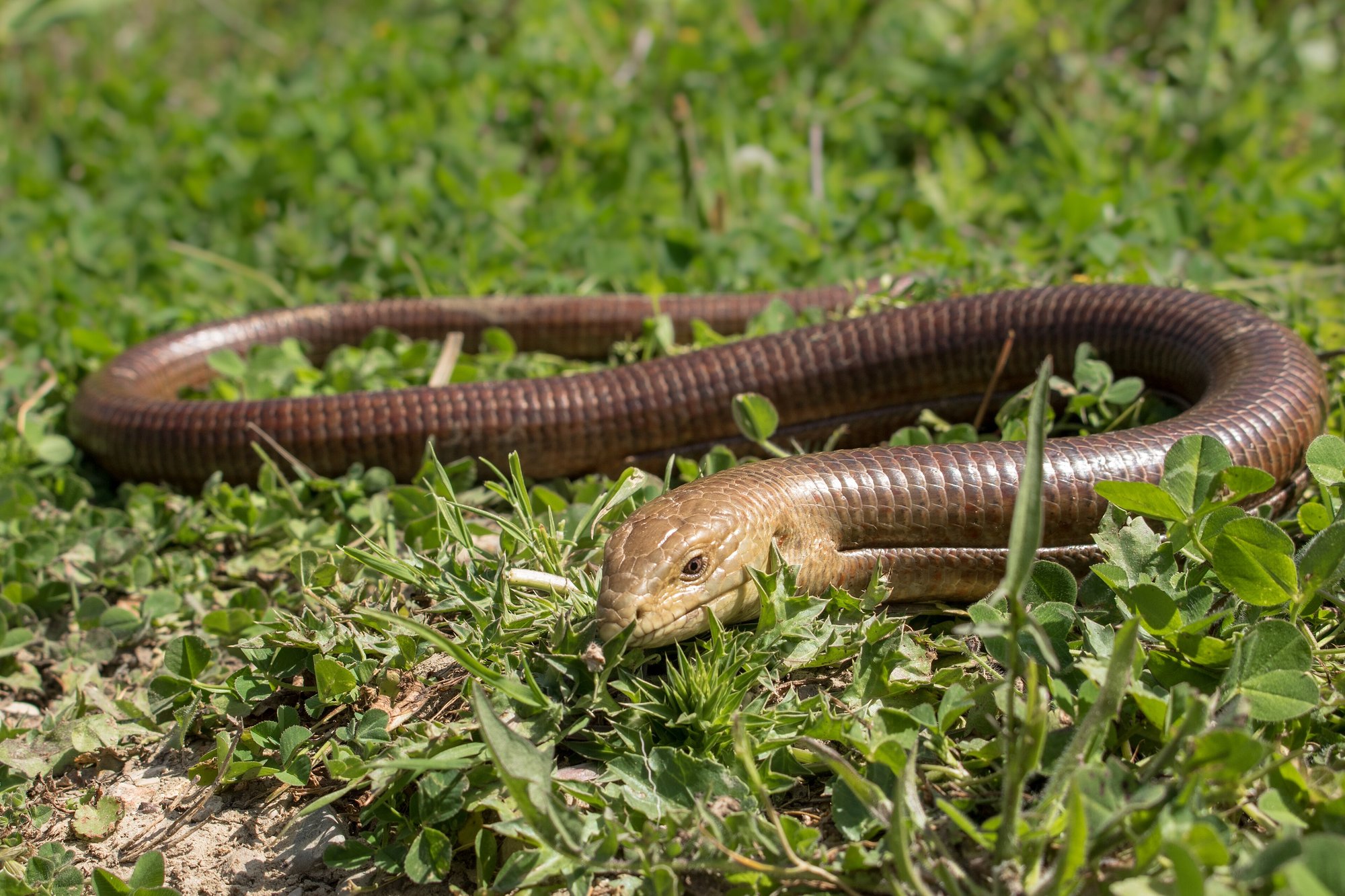
Lizards · Difficulty: Beginner to intermediate
Key facts and care guidance for Sheltopusik (Pseudopus apodus) (origin: South-eastern Europe to Central Asia). Adult size around 90–140 cm. Life expectancy 20–50+ years. The values below are carefully researched guidance.
Short answers
Sheltopusik: How big does the enclosure need to be?
From 180 × 60 × 60 cm for 1 adult animal (ground-oriented); more floor area is considerably better for this very active, roaming species.
Sheltopusik: What temperature does it need?
Daytime 25–30 °C, basking spot ~35 °C, at night 18–20 °C.
Sheltopusik: Does it need UVB lighting?
UVB: Essential (10–12% T5 HO tube, UV index 3–4 at the basking spot).
Sheltopusik: How long do they live?
Life expectancy: 20–50+ years.
Sheltopusik: Is it suitable for beginners?
Partly – manageable with some prior knowledge (difficulty: Beginner to intermediate).
Climate
- Daytime temperature
- 25–30 °C
- Night temperature
- 18–20 °C
- Basking spot
- ~35 °C
- Humidity
- 40–60 %
- UVB
- Essential (10–12% T5 HO tube, UV index 3–4 at the basking spot)
Enclosure
- Minimum size
- from 180 × 60 × 60 cm for 1 adult animal (ground-oriented); more floor area is considerably better for this very active, roaming species
- Substrate
- A sand-soil mix at least 15 cm deep (roughly 60% soil, 40% sand) with a leaf-litter topping, that holds burrows; plus a damp hide and hides made of stones, bark and roots
Feeding
- Food
- Snails (its favourite food), insects, worms, occasionally young rodents
- Feeding interval
- 2–3×/week
Key facts
- Adult size
- 90–140 cm
- Life expectancy
- 20–50+ years
- Origin
- South-eastern Europe to Central Asia
- Protection status
- —
- Brumation
- Winter dormancy of around 3–5 months at 8–10 °C in the dark (natural rhythm October to March), with about a month each for ramping down and back up
- Cohabitation
- Keeping them singly is best. Never keep males together. Females can get along in very large enclosures, but fights are possible; in that case provide separate basking and hiding spots for each and feed separately if sizes differ.
Notes
The largest legless lizard, with powerful jaws for cracking snails. Very robust and extremely long-lived. It can shed its tail under stress.
Do you keep this species?
Add your animal to Reptoria – Reptoria reminds you about feeding and shedding. Add your animal for free →
Look for Sheltopusik (Pseudopus apodus) in the marketplace →
Related species
- Thracian sheltopusik (Pseudopus apodus thracius) – Intermediate
- Madrean alligator lizard (Elgaria kingii) – Intermediate
- Asian glass lizard (Dopasia gracilis) – Intermediate
- Slow worm (Anguis fragilis) – Intermediate
- Hart's glass lizard (Dopasia harti) – Intermediate
- Italian slow worm (Anguis veronensis) – Intermediate
- California legless lizard (Anniella pulchra) – Intermediate
- Moroccan glass lizard (Ophisaurus koellikeri) – Intermediate
What you need to start
To keep Sheltopusik (Pseudopus apodus) you typically need: a suitable enclosure (from 180 × 60 × 60 cm for 1 adult animal (ground-oriented); more floor area is considerably better for this very active, roaming species), substrate (A sand-soil mix at least 15 cm deep (roughly 60% soil, 40% sand) with a leaf-litter topping, that holds burrows; plus a damp hide and hides made of stones, bark and roots), a heat source with a thermostat, UVB lighting, thermometer and hygrometer, a water dish and hides. You will find equipment in the Reptoria marketplace.
The complete, interactive care database is in the Reptoria app.
Last updated: 9 October 2026 · Editor: Reptoria editorial team · Sources include: reptifiles.com, dubiaroaches.com, Wikipedia DE, Wikipedia EN, eur-lex.europa.eu (FFH-Richtlinie 92/43/EWG, Anhang IV)
All values are non-binding guidance and do not replace expert advice. Research thoroughly from several sources before acquiring and keeping an animal, and observe the applicable law (species and animal protection in particular).