Tiger salamander (Ambystoma tigrinum)
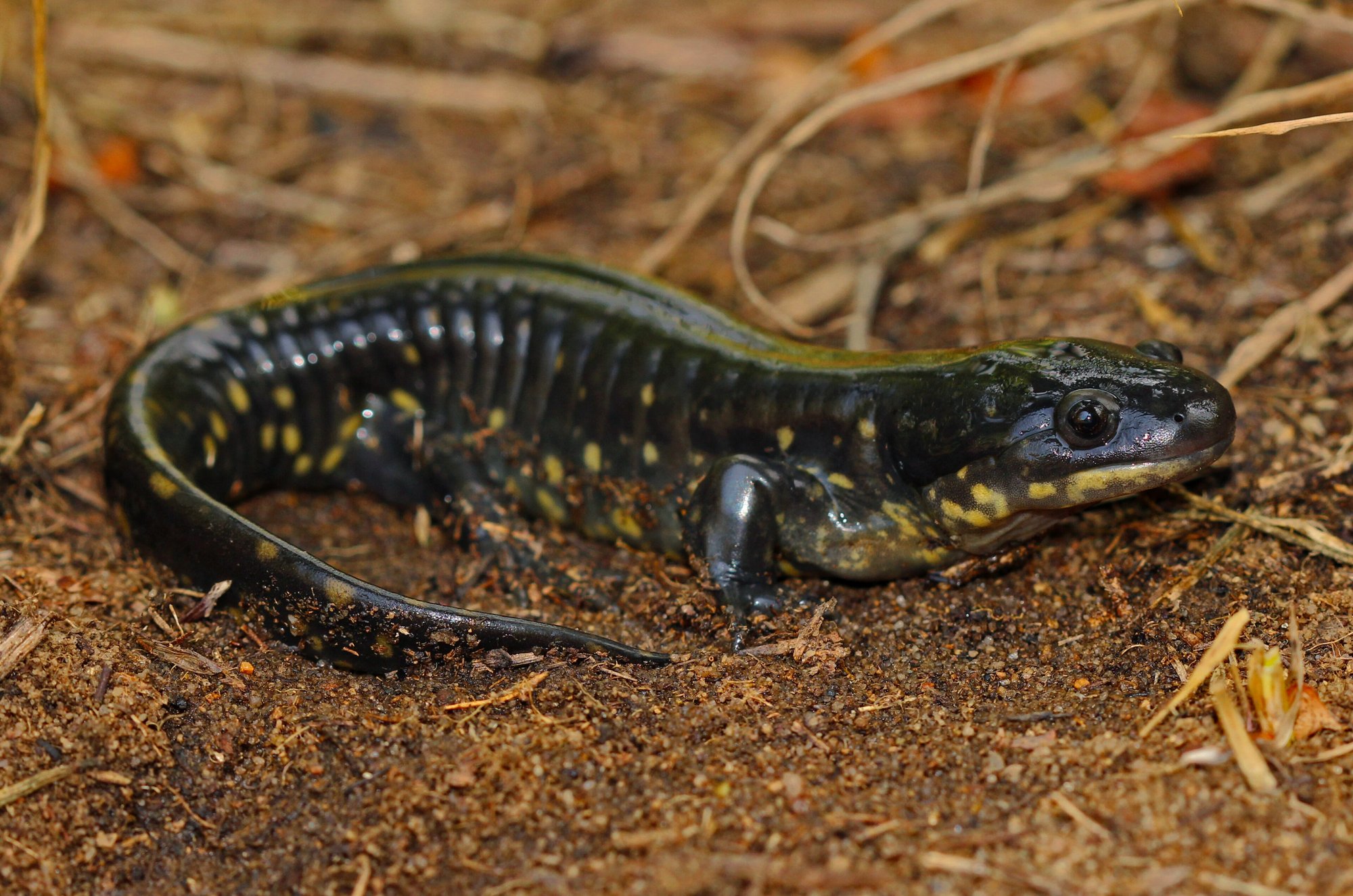
Amphibians · Difficulty: Beginner
Key facts and care guidance for Tiger salamander (Ambystoma tigrinum) (origin: North America (the USA, southern Canada, northern Mexico)). Adult size around 20–30 cm (up to over 35 cm), heavily built. Life expectancy approx. 15–25 years (very long-lived). The values below are carefully researched guidance.
Short answers
Tiger salamander: How big does the enclosure need to be?
For one animal from ~60–80×40×40 cm; for a group of three ~100×40×40 cm; substrate they can dig in plus a water dish.
Tiger salamander: What temperature does it need?
Daytime cool: 15–20 °C (not permanently above 22 °C), at night 10–18 °C.
Tiger salamander: Does it need UVB lighting?
UVB: UVB not essential (nocturnal, burrowing).
Tiger salamander: How long do they live?
Life expectancy: approx. 15–25 years (very long-lived).
Tiger salamander: Is it suitable for beginners?
Yes – it is considered suitable for beginners (difficulty: Beginner).
Climate
- Daytime temperature
- cool: 15–20 °C (not permanently above 22 °C)
- Night temperature
- 10–18 °C
- Basking spot
- —
- Humidity
- high and humid (damp substrate)
- UVB
- UVB not essential (nocturnal, burrowing)
Enclosure
- Minimum size
- for one animal from ~60–80×40×40 cm; for a group of three ~100×40×40 cm; substrate they can dig in plus a water dish
- Substrate
- Loose, at least 10 cm deep (coco, forest soil, moss, leaf litter), damp – the animals bury themselves
Feeding
- Food
- Earthworms, insects, snails, maggots; large adults occasionally a pinkie
- Feeding interval
- adults 2–3×/week, juveniles more often
Key facts
- Adult size
- 20–30 cm (up to over 35 cm), heavily built
- Life expectancy
- approx. 15–25 years (very long-lived)
- Origin
- North America (the USA, southern Canada, northern Mexico)
- Protection status
- No CITES protection; captive-bred animals are freely tradable
- Brumation
- A winter rest of ~2–3 months at 4–8 °C is recommended (it benefits health and breeding)
- Cohabitation
- Keeping them singly is preferable. Group keeping is possible only with similarly sized animals, but be careful: cannibalism and bite injuries occur mainly around feeding (they snap at anything that moves). Never keep animals of different sizes; feed them separately.
Notes
Common mistakes: too warm (it is heat-sensitive!), overfeeding (obesity), and housing animals of different sizes together. Burrowing, usually hidden, and long-lived. A keen feeder that can bite while being fed. Keep it cool and humid.
Do you keep this species?
Add your animal to Reptoria – Reptoria reminds you about feeding and shedding. Add your animal for free →
Look for Tiger salamander (Ambystoma tigrinum) in the marketplace →
Related species
- Anderson's salamander (Ambystoma andersoni) – Intermediate
- Axolotl (Ambystoma mexicanum) – Beginner to intermediate
- Spotted salamander (Ambystoma maculatum) – Intermediate
- Marbled salamander (Ambystoma opacum) – Intermediate
- Italian crested newt (Triturus carnifex) – Intermediate
- Alpine salamander (Salamandra atra) – Expert
- Anderson's crocodile newt (Echinotriton andersoni) – Expert
- Alpine newt (Ichthyosaura alpestris) – Beginner
What you need to start
To keep Tiger salamander (Ambystoma tigrinum) you typically need: a suitable enclosure (for one animal from ~60–80×40×40 cm; for a group of three ~100×40×40 cm; substrate they can dig in plus a water dish), substrate (Loose, at least 10 cm deep (coco, forest soil, moss, leaf litter), damp – the animals bury themselves), a heat source with a thermostat, UVB lighting, thermometer and hygrometer, a water dish and hides. You will find equipment in the Reptoria marketplace.
The complete, interactive care database is in the Reptoria app.
Last updated: 9 October 2026 · Editor: Reptoria editorial team · Sources include: https://de.wikipedia.org/wiki/Marmor-Querzahnmolch, https://de.wikipedia.org/wiki/Tigersalamander, https://en.wikipedia.org/wiki/Eastern_mud_turtle
All values are non-binding guidance and do not replace expert advice. Research thoroughly from several sources before acquiring and keeping an animal, and observe the applicable law (species and animal protection in particular).